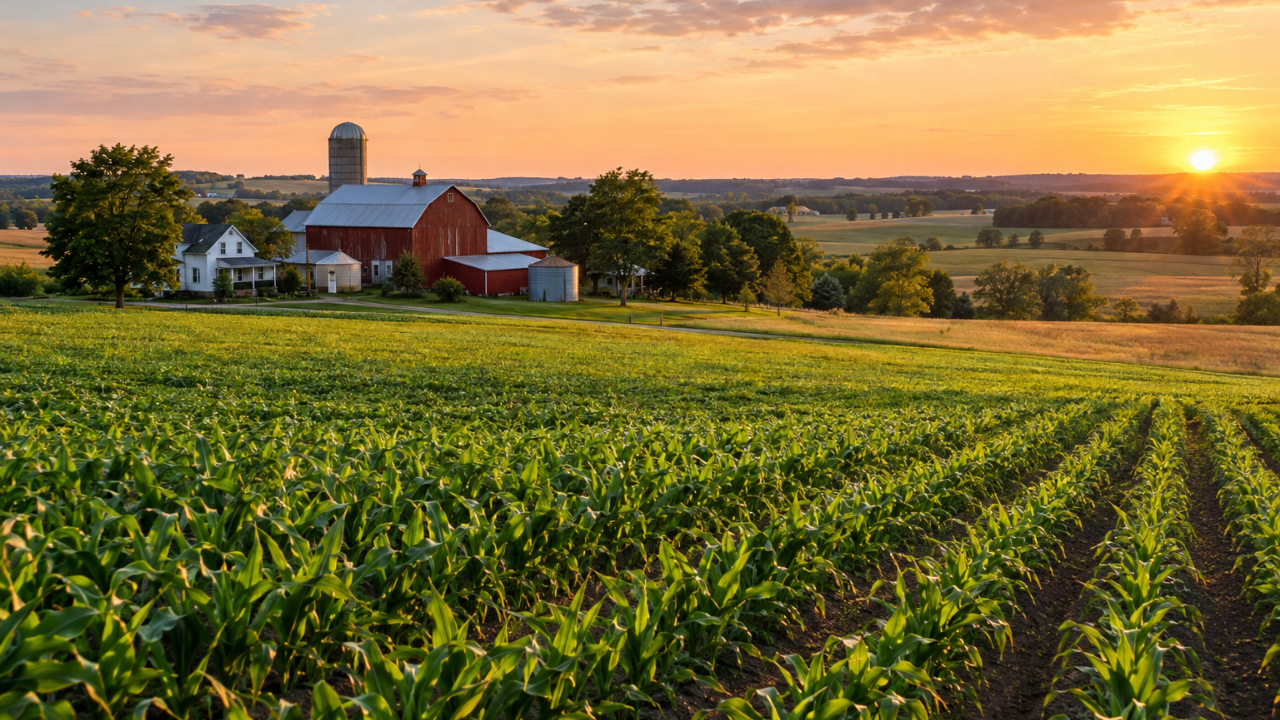
Every local news outlet recently cheered the announcement that Ohio pushed past 111,000 acres of protected farmland, backed by fresh state easements covering 58 new family properties. The narrative writes itself: noble government programs saving rural heritage from the cold jaws of urban sprawl.
It makes for great press releases. It is also an economic hallucination.
I have watched landowners, municipal planners, and state bureaucrats pop champagne over these agricultural easements while completely ignoring the structural rot eating away at actual rural viability. Throwing public money at development rights does not fix the underlying mechanics of modern farming. It freezes dirt in time while the system around it breaks.
Let's dismantle the consensus.
The Easement Trap
The core mechanism here—administered via programs like Ohio’s Local Agricultural Easement Purchase Program (LAEPP)—is straightforward. The state pays farmers a portion of their land's development value in exchange for a perpetual deed restriction. The land stays private, stays in agricultural production, and the farmer pockets a check.
Proponents treat this as an unmitigated triumph. But look closer at the math.
A permanent agricultural easement strips the future liquidity of the dirt. You are paying cash today to lock a parcel into a single economic output—row crops or livestock—forever. If commodity prices tank, input costs skyrocket, or localized water tables shift unpredictably over the next fifty years, that landowner cannot pivot the land toward high-value alternative uses that might actually sustain a family or a community.
You haven't saved a farm. You've mummified it.
The Sprawl Fallacy
The entire justification for locking up 111,000 acres rests on a panic over suburban sprawl. The assumption is simple: if concrete doesn't pave it, corn will grow on it, and food security is secured.
This is lazy spatial economics.
Urban sprawl doesn't happen because farmers suddenly decide to sell out; it happens because local zoning codes mandate low-density suburban wasteland that eats square mileage at an unsustainable rate. Pouring state funds into scattered agricultural easements across 36 counties does not stop regional expansion. It creates a checkerboard effect. Developers simply leapfrog the preserved parcels, pushing suburban developments further out into cheaper, un-easemented townships.
You end up with longer commutes, higher infrastructure maintenance costs for local municipalities, and fragmented agricultural zones where moving heavy machinery down rural roads surrounded by housing subdivisions becomes an operational nightmare.
The Capital Misallocation Reality
Let's talk about where the actual money goes. State and federal matching funds are finite. When millions are spent buying development rights on acreage that might not have faced genuine development pressure for decades, that capital is diverted away from interventions that actually keep independent farms solvent.
Ask any working producer what keeps them awake at night. It is not the distant threat of a subdivision; it is equipment overhead, volatile fertilizer pricing, generational transition friction, and processor consolidation.
Locking up a farm's equity in a perpetual state contract doesn't buy a combine. It doesn't fund a drainage tile overhaul. It gives a retiring generation a cash payout while saddling the next generation with a deed that restricts their operational freedom.
If you want to protect agriculture, stop treating land like a museum exhibit and start fixing the margins. Real preservation is about profitability, not paperwork.