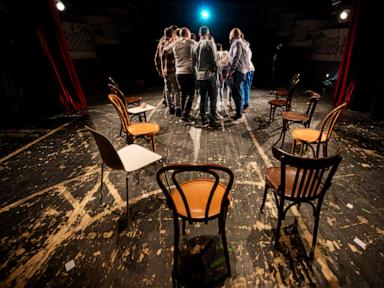
Carceral arts programs are routinely mischaracterized by mainstream media as human-interest novelties rather than structured behavioral interventions. The 15th edition of Romania’s MultiArt Dana Cenușă prison theater festival—an annual event bringing dozens of incarcerated individuals from multiple penitentiaries onto a public stage in Bucharest—provides an operational blueprint for institutional rehabilitation. Evaluating this initiative requires stripping away sentimental framing to examine its underlying mechanics: cognitive restructuring, institutional incentivization, and the mitigation of post-release social friction. When executed with clinical rigor, theatrical production functions as a high-stress behavioral simulation that directly addresses the deficits driving criminal recidivism.
The Structural Deficit of Standard Incarceration
To understand why a 15-year institutional commitment to prison theater exists within Romania’s National Administration of Penitentiaries (ANP), one must first examine the failure modes of conventional custodial models. Standard incarceration optimizes for incapacitation and immediate compliance, often at the expense of long-term behavioral adaptation.
Inmates operate within a rigid command-and-control environment where decision-making autonomy is systematically removed. This creates a profound structural paradox: institutions strip individuals of agency for years, then release them into complex socio-economic environments requiring high levels of self-regulation, emotional intelligence, and collaborative problem-solving.
Standard rehabilitative programming—typically passive educational lectures or basic vocational training—frequently fails to bridge this gap because it does not replicate the cognitive and interpersonal stressors of free society. Passive consumption of information rarely alters deeply entrenched behavioral heuristics. Without an active mechanism to practice emotional regulation and deferred gratification under pressure, inmates default to maladaptive survival strategies upon release.
The Four Mechanisms of Carceral Theater
The MultiArt Dana Cenușă festival—named after the late Romanian cultural figure who championed prison arts—operates not as a recreational diversion, but as a multi-stage behavioral conditioning pipeline. Preparing a theatrical production for public performance at venues like the Nottara Theatre in Bucharest imposes strict operational constraints that force cognitive and behavioral adaptation.
1. Cognitive Empathy and Perspective-Taking
Criminal behavior frequently correlates with deficits in cognitive empathy—the ability to accurately model the internal mental states, intentions, and emotional reactions of others. Theatrical performance mandates this exact cognitive operation. To portray a character credibly, an inmate must analyze text, deconstruct psychological motivations, and inhabit a worldview distinct from their own.
This is not an abstract exercise. It requires sustained mentalization over months of rehearsal. By repeatedly simulating alternative perspectives, participants strengthen the neural pathways associated with empathy and impulse control, disrupting the egocentric cognitive distortions that underpin antisocial behavior.
2. High-Stakes Collaborative Interdependence
In a typical penitentiary yard, social hierarchies are often governed by zero-sum dynamics, intimidation, and hyper-vigilance. Theatrical production inverts this incentive structure entirely. A stage performance is a tightly coupled system; if one actor misses a cue, forgets lines, or loses emotional control, the entire production fails publicly.
Participants must transition from competitive survivalism to radical interdependence. Trust is built not through ideological persuasion, but through shared operational risk. Inmates from disparate backgrounds—and often different security classifications—must rely on one another to execute complex sequences under live conditions.
3. Controlled Stress Inoculation
Performing live before an audience of civilians, judicial officials, family members, and media representatives induces acute psychological stress. For individuals accustomed to masking vulnerability behind aggression or detachment, stepping onto a stage represents a massive exposure event.
In behavioral psychology, this functions as stress inoculation. Participants learn to experience elevated cortisol and adrenaline levels without resorting to fight-or-flight responses. They must channel physiological arousal into disciplined physical and vocal execution. Mastering this response in a controlled environment builds the emotional regulation necessary to navigate high-conflict situations post-release, such as job interviews, familial disputes, or bureaucratic hurdles.
4. Pro-Social Identity Reconstruction
Desistance theory—the criminological study of why individuals stop offending—identifies identity transformation as a primary driver of long-term rehabilitation. As long as an individual self-identifies primarily as a convict or an outcast, behavioral change remains superficial and fragile.
Participation in a recognized cultural festival provides an immediate, validated alternative identity: the artist or performer. When inmates receive applause from a civilian audience in a prestigious cultural venue, the social feedback loop is altered. They experience positive reinforcement for pro-social effort, discipline, and vulnerability, creating a psychological anchor that competes directly with criminal self-concepts.
Institutional Mechanics and Incentive Alignment
The longevity of the Romanian prison theater festival—reaching its 15th iteration despite chronic budgetary constraints within Eastern European penal systems—indicates a precise alignment of institutional incentives. The program survives because it solves acute operational problems for prison administrators.
First, participation serves as a powerful behavioral management tool. Eligibility for the theater troupe requires sustained disciplinary compliance. Penitentiary directors use access to these rehearsals as a non-coercive incentive to maintain order within facilities, reducing violent incidents and infractions without increasing guard ratios.
Second, the program relies on a hybrid resource model that minimizes state expenditure. By partnering with external non-governmental organizations, independent theater directors, and state-funded cultural institutions like the Nottara Theatre, the ANP outsources specialized pedagogical labor. Professional directors bring authentic artistic standards—refusing to grade inmates on a curve—which preserves the psychological legitimacy of the achievement while keeping direct payroll costs off the prison system's balance sheet.
Third, the festival functions as a strategic public relations mechanism. Penal systems routinely suffer from public skepticism and political neglect. By bringing incarcerated individuals into mainstream cultural spaces and demonstrating tangible humanization, the ANP generates political capital and shifts public perception away from purely punitive frameworks.
The Verification Problem: Measuring Rehabilitative ROI
While the psychological mechanisms of carceral theater are theoretically sound, evaluating the return on investment (ROI) presents severe methodological challenges. Mainstream reporting typically relies on anecdotal evidence—emotional reactions from the audience or expressions of gratitude from participants—which holds zero predictive validity for public safety.
To assess the true efficacy of the MultiArt festival, analysts must account for three distinct data limitations:
- Selection Bias: The dozens of inmates who reach the stage in Bucharest are not a random sample of the Romanian prison population. They are self-selected individuals who possess baseline literacy, sufficient emotional stability to endure months of rehearsal, and the disciplinary record required to earn external transport privileges. Comparing their post-release outcomes against the general prison population without controlling for these baseline traits produces artificially inflated success metrics.
- Longitudinal Tracking Gaps: True rehabilitative success is measured in multi-year recidivism rates (typically 3-year and 5-year post-release windows). Cultural festivals rarely maintain the longitudinal data infrastructure required to track participants after they exit the penal system, leaving administrators without empirical proof of long-term behavioral durability.
- Confounding Variables: Inmates involved in high-profile arts programs often receive concurrent support, such as increased family visitation, heightened attention from prison psychologists, and better access to post-release NGO networks. Isolating the causal impact of the theater program from these secondary interventions is statistically complex.
Operational Risks and Implementation Bottlenecks
Scaling a program like the Romanian prison theater festival from dozens of participants to a systemic intervention introduces significant operational friction. Administrators attempting to replicate or expand this model must navigate four primary bottlenecks:
- Security Protocol Friction: Transporting incarcerated individuals—particularly those serving lengthy sentences for violent offenses—to civilian theaters in major urban centers requires massive logistical coordination. The cost of armed escorts, perimeter security, and risk assessments can rapidly outpace the artistic budget of the production.
- Practitioner Burnout: Directing incarcerated amateurs requires a rare combination of artistic rigor, psychological resilience, and institutional fluency. External directors often face bureaucratic obstruction from prison staff who view arts programming as a security liability or an unwarranted privilege for offenders. Without institutional protection, external practitioners suffer high turnover.
- The "Cliff Effect" Post-Release: Generating pro-social identity and emotional openness inside a prison creates a acute vulnerability if the individual is released into an environment devoid of support. Returning a newly sensitized individual to an impoverished community with high unemployment and active criminal networks—without transitional housing or continued community arts engagement—often results in rapid psychological regression and reoffending.
- Performative Tokenism: When festivals prioritize public spectacle over rigorous rehearsal processes, the rehabilitative mechanism breaks down. If productions are rushed or overly sanitized to appease institutional censors, inmates recognize the exercise as performative propaganda rather than authentic self-expression, leading to cynicism and disengagement.
Strategic Imperatives for Penal Administrators
To transition prison theater from an annual showcase for a select few into a measurable driver of systemic recidivism reduction, penal authorities and partner NGOs must execute a disciplined operational pivot.
First, administrations must decouple the therapeutic process from the public spectacle. The primary behavioral value occurs during the months of closed-door rehearsal, not the single night on a Bucharest stage. Systems should expand internal, non-public theatrical workshops across all penitentiary tiers, removing the security bottleneck of external transport while scaling cognitive empathy training to hundreds of inmates simultaneously.
Second, program evaluators must establish randomized controlled trials (RCTs) or matched-pair longitudinal studies. By tracking participants against control groups with identical offense profiles, sentence lengths, and baseline disciplinary records over a 36-month post-release period, administrators can quantify the exact reduction in reoffending and justify dedicated state funding through projected incarceration cost savings.
Finally, carceral arts programs must integrate directly with post-release community infrastructure. Before an inmate steps onto a festival stage, case managers should link them with civilian community theaters, municipal cultural centers, and vocational apprenticeships in their release municipality. Sustaining the pro-social identity forged in prison requires an immediate, structured landing zone in free society.