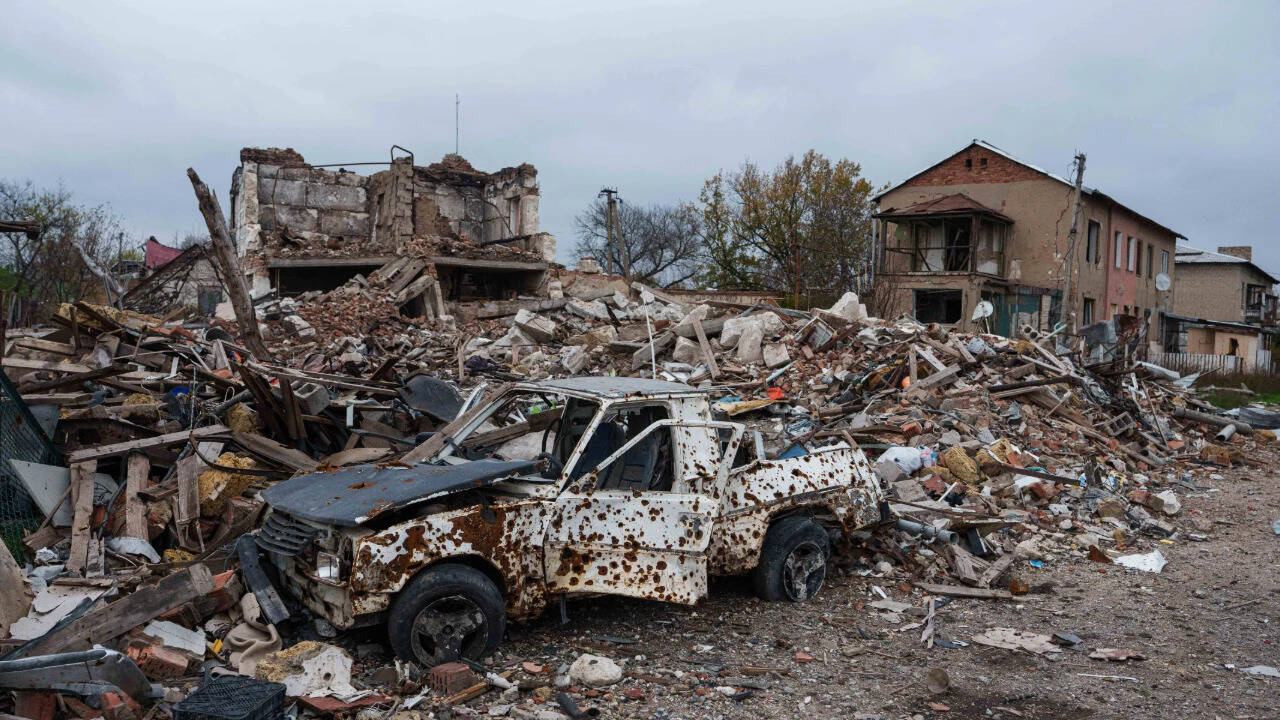
The secondary bombardment of emergency personnel following an initial mass-casualty strike in Zaporizhzhia—an event claiming 55 lives—is not a random battlefield anomaly. Standard reporting frames these incidents purely through the lens of immediate tragedy and diplomatic condemnation, missing the underlying operational calculus. In modern asymmetric and attritional warfare, targeting first responders represents a deliberate tactical doctrine known as a "double-tap" strike. This methodology aims to degrade a state’s civil defense infrastructure, induce systemic paralysis in urban logistics, and impose an unsustainable attrition rate on specialized human capital that cannot be rapidly replaced.
Understanding this event requires separating the kinetic facts from the broader strategic mechanisms. While the immediate humanitarian toll is severe, the military logic driving the strike relies on predictable patterns of human behavior, emergency response protocols, and the economic asymmetry between offensive munitions and defensive recovery systems.
The Anatomy of the Double-Tap Doctrine
A double-tap strike consists of two distinct phases separated by a calculated temporal interval. The initial strike creates a localized crisis—in this instance, a high-casualty structural collapse in an urban center. The second strike occurs within a specific window designed to maximize exposure for the State Emergency Service (SES), medical personnel, and municipal utility crews arriving on the scene.
This tactic operates on three core variables:
- Predictable Convergence: Emergency response protocols mandate rapid deployment to blast sites to extract trapped civilians within the "golden hour" of trauma survival. The attacker exploits this institutional predictability, using the initial impact zone as a fixed coordinate for follow-on fires.
- The Vulnerability Window: First responders operate without heavy armor, dispersed formations, or active air defense umbrellas. Once they begin heavy extraction operations—using hydraulic tools, cranes, and floodlights—their situational awareness drops while their acoustic and visual signatures spike.
- Intelligence, Surveillance, and Reconnaissance (ISR) Synchronization: Modern double-tap execution relies on persistent loitering munitions or high-altitude reconnaissance drones. Rather than firing blindly on a timer, operators observe the live feed of the rescue operation, triggering the secondary strike only when personnel density reaches a critical threshold.
The cause-and-effect chain here is direct. Standard reporting often treats the second strike as an escalation of the first. Operationally, the first strike is merely the bait; the second strike is the primary mission objective aimed at dismantling institutional resilience.
The Attrition Cost Function of Civil Defense
To evaluate the strategic impact of targeting rescue workers, one must examine the replacement cost of specialized labor versus the marginal cost of artillery or missile systems.
- Human Capital Scarcity: Training a combat-ready firefighter, structural collapse specialist, or combat medic requires months of technical instruction and years of field experience. Unlike infantry conscripts who can be cycled through basic training pipelines, senior emergency personnel possess localized institutional knowledge of municipal grids, gas lines, and structural vulnerabilities. Eliminating a veteran rescue squad creates a capability vacuum that lowers the survival rate of all subsequent strikes in that sector.
- Equipment Bottlenecks: Heavy rescue vehicles, mobile command posts, and specialized extrication gear are high-value, low-density assets. Destroying a single ladder truck or heavy crane degrades a municipality's disaster response capacity across multiple districts, forcing remaining units to cover wider geographic perimeters with longer transit times.
- Psychological Friction and Operational Hesitation: When first responders know they are primary targets, institutional friction increases. Command structures must choose between delaying entry until airspace is confirmed clear—which guarantees higher civilian mortality under the rubble—or deploying immediately and risking catastrophic unit losses. Either choice achieves the attacker's objective of degrading state efficacy.
This creates a compounding deficit. Every successful strike against rescue personnel reduces the defensive system's capacity to absorb the next shock, accelerating urban degradation even if the overall volume of fire remains constant.
International Humanitarian Law Versus Battlefield Reality
Under the Geneva Conventions and Additional Protocol I, medical personnel, humanitarian workers, and civil defense organizations performing their duties are explicitly protected persons. Deliberately directing attacks against them constitutes a grave breach of International Humanitarian Law (IHL) and is classified as a war crime.
However, a rigorous analysis must distinguish between legal frameworks and operational enforcement mechanisms. IHL functions on deterrence, reciprocity, and post-conflict accountability. When a belligerent state concludes that the immediate tactical benefit of degrading enemy civil defense outweighs the delayed, uncertain cost of international sanctions or war crimes tribunals, legal prohibitions fail to alter battlefield behavior.
The operational reality in Zaporizhzhia demonstrates a rational—albeit brutal—cost-benefit calculation by the aggressor. By neutralizing the civil defense apparatus, the attacking force degrades the morale of the rear-area population, strains the national healthcare system with complex, untreated trauma cases, and forces the defender to divert scarce air defense interceptors away from frontline troops to protect municipal workers.
Counter-Tactical Adaptations for Civil Defense
Mitigating the double-tap threat requires restructuring emergency response protocols from standard peacetime models to contested-airspace doctrines. Because absolute air superiority over frontline cities like Zaporizhzhia is unachievable, survival depends on procedural discipline and technological decentralization.
Staged Entry Protocols
Commanders must abandon the immediate mass-convergence model. Initial reconnaissance at a blast site should be conducted by minimal, fast-moving forward teams—ideally supplemented by ground robotics or tethered drones—to assess structural stability and ongoing aerial threats before heavy machinery and large personnel groups are committed.
Acoustic and RF Early Warning Integration
Rescue units cannot rely solely on city-wide air raid sirens, which often lag behind tactical missile launches or low-flying drone approaches. Squads operating in high-risk zones require localized, vehicle-mounted radio frequency (RF) detectors and acoustic sensors capable of identifying incoming loitering munitions seconds before impact, providing a narrow window to seek hard cover.
Dispersal and Micro-Staging
Instead of staging ambulances, fire engines, and command vehicles directly adjacent to the collapse site, logistics must operate on a hub-and-spoke model. Vehicles remain dispersed under hard cover several blocks away, rotating into the hot zone individually only when extraction teams have a casualty ready for immediate transport.
Limitation of Countermeasures
These adaptations carry an unavoidable trade-off: time. Staged entries and dispersed logistics slow down the extraction process. In structural collapses, every minute of delay increases mortality among trapped civilians due to crush syndrome, internal hemorrhage, and asphyxiation. There is no tactical solution that simultaneously maximizes civilian rescue speed and guarantees zero responder casualties under persistent ISR observation.
Strategic Forecast for Urban Attrition
The strike in Zaporizhzhia confirms that rear-area municipal infrastructure and human capital are fully integrated into the active target list. As long as reconnaissance drones can loiter over frontline cities unchallenged by local electronic warfare or short-range air defenses, double-tap strikes will remain a standard operating procedure rather than an exception.
To counter this trajectory, defensive planners must reclassify emergency service infrastructure as critical military-grade assets. Protecting Zaporizhzhia's rescue capacity requires deploying dedicated, mobile electronic warfare jammers and short-range kinetic air defense systems directly alongside State Emergency Service battalions—treating every rescue deployment as a contested combat operation rather than a routine civilian emergency.