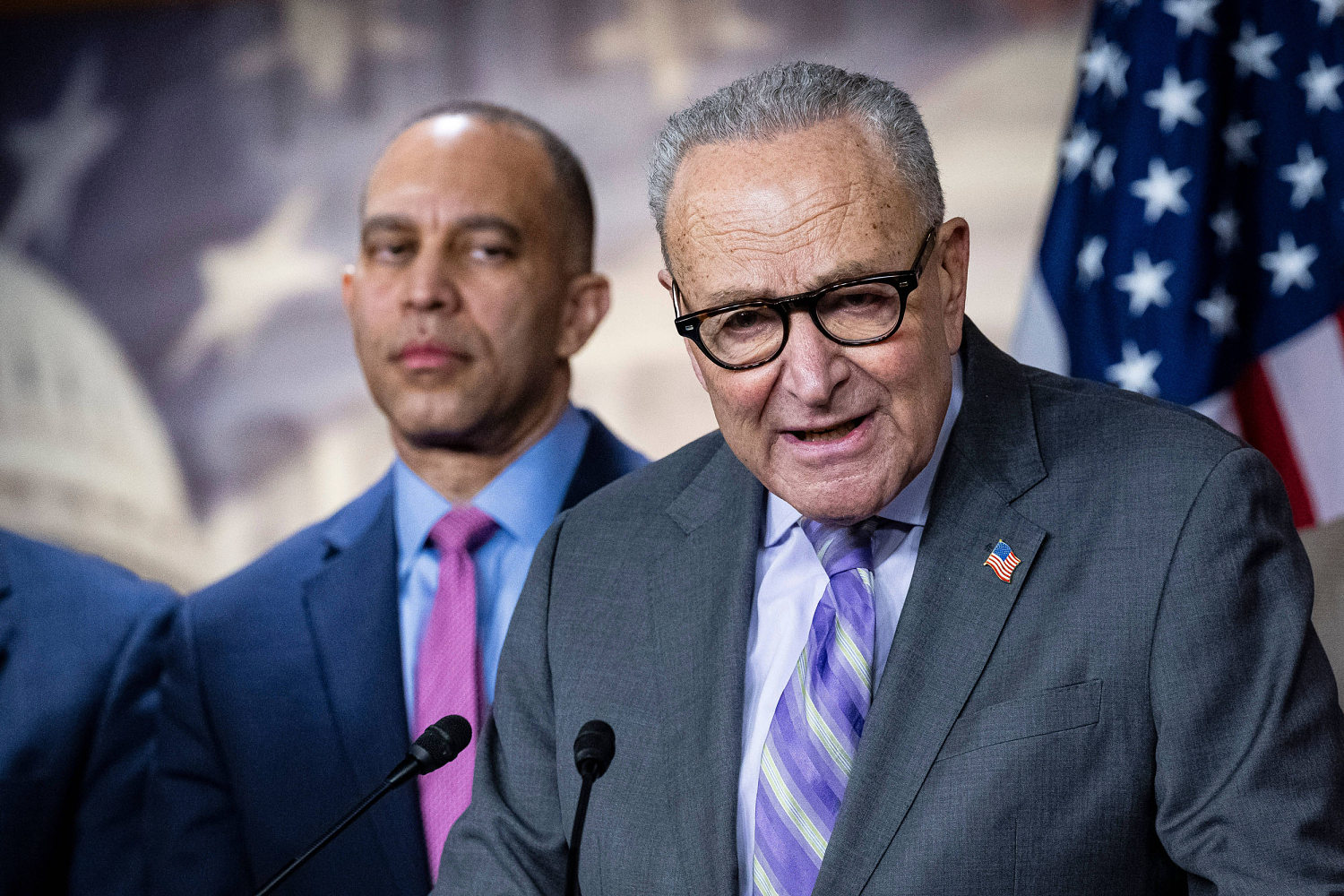
Media coverage surrounding California Governor Gavin Newsom and the state's death row population frequently relies on emotional binary framing. When headlines focus exclusively on victims' families lashing out over the fate of individuals convicted of heinous crimes, they often obscure the complex constitutional, fiscal, and administrative realities driving executive clemency and capital punishment policy in California.
To understand the debate over death row commutations, one must examine both the profound grief of victims' families and the legal architecture of the California justice system. Critics of executive clemency argue from a position of retributive justice and finality, while supporters and legal scholars point to systemic inequities, staggering financial costs, and the functional non-existence of executions in the state.
The Argument Against Commutations and the Voice of Victims
Opponents of mass commutations—including many victims' advocacy groups, district attorneys, and law enforcement associations—argue that reducing death sentences to life without the possibility of parole (LWOP) undermines the rule of law and disrespects the verdicts of California juries.
From the perspective of victims' families, the death penalty represents a solemn promise made by the state at the conclusion of agonizing trials. According to statements frequently issued by victim advocacy organizations such as the Criminal Justice Legal Foundation, altering a lawfully imposed sentence years or decades after the fact inflicts secondary trauma on survivors. For these families, the distinction between a death sentence and life without parole is not merely symbolic; it represents society's highest moral condemnation of extreme violence.
Furthermore, prosecutors and critics contend that broad clemency actions bypass the individualized review process intended by the state constitution. Under California law, the governor holds broad clemency powers, yet critics maintain that exercising that power across an entire class of inmates—rather than evaluating mitigating circumstances case-by-case—functions as a unilateral repeal of a penalty that California voters have repeatedly declined to abolish at the ballot box, including in 2012 (Proposition 34) and 2016 (Proposition 62).
The Legal and Fiscal Reality of California's Death Row
While critics focus on moral accountability and voter intent, legal analysts and criminal justice researchers point to a starkly different reality on the ground: California's death penalty system has been effectively non-operational for decades.
According to the California Department of Corrections and Rehabilitation (CDCR), California has not executed an inmate since 2006. Even prior to Governor Newsom's 2019 executive order imposing a moratorium on executions and dismantling the execution chamber at San Quentin State Prison, the system was stalled by federal court challenges over lethal injection protocols and decades-long appellate backlogs.
Legal scholars, including researchers affiliated with the Death Penalty Information Center and Stanford Law School, note that inmates on California's death row are far more likely to die of natural causes or suicide than by state execution. Consequently, proponents of commutation argue that a death sentence in California is already a de facto sentence of life without parole, albeit one maintained at an exponentially higher financial cost to taxpayers.
A landmark study by U.S. Court of Appeals Judge Arthur Alarcón and Loyola Law School professor Paula Mitchell estimated that California's capital punishment system has cost taxpayers billions of dollars since 1978, largely due to the mandatory state-funded appellate representation, specialized housing at San Quentin, and protracted habeas corpus proceedings required by federal and state constitutional law. Commuting a sentence from death to LWOP eliminates the requirement for state-funded capital habeas counsel and specialized death row housing, redirecting public funds toward general corrections, victim services, or public safety initiatives.
Racial Disparities and Systemic Flaws
Beyond fiscal arguments, civil rights organizations—such as the ACLU of Northern California and the Equal Justice Society—emphasize persistent racial and geographic disparities in how capital punishment is applied.
Empirical studies submitted in California Supreme Court litigation have consistently indicated that Black and Latino defendants are disproportionately sentenced to death compared to white defendants convicted of similar offenses, and that the race of the victim heavily influences whether prosecutors seek the death penalty. In 2020, Governor Newsom filed a historic amicus brief in People v. McDaniel, acknowledging that capital punishment in California has been infected by systemic racism and arbitrary application across county lines.
Additionally, nationwide data compiled by the National Registry of Exonerations demonstrates that wrongful convictions occur even in capital cases. Supporters of clemency argue that an irreversible punishment cannot be ethically administered by a fallible human justice system, and that converting death sentences to life without parole preserves the ability to correct judicial errors if new DNA or forensic evidence emerges later.
Life Without Parole Is Not Release
A persistent misconception in public discourse—often amplified by sensationalized headlines—is that commuting a death sentence results in an inmate's release into society.
In legal reality, commuting a death sentence to life without the possibility of parole means the individual will die in prison. Under California law, inmates serving LWOP are ineligible for parole hearings and remain under maximum-security supervision for the remainder of their natural lives. Furthermore, because inmates on death row are legally entitled to automatic direct appeals and state-funded habeas lawyers, their cases remain active in the courts for decades, forcing victims' families to endure repeated legal filings and media coverage. When a sentence is commuted to LWOP, many of those specialized capital appeals terminate, bringing an end to the cycle of capital litigation.
Reconciling Justice, Cost, and Closure
The debate over California's death row is rarely a simple clash between compassion for criminals and disregard for victims. Rather, it reflects a deep philosophical divide over what justice requires when a state's legal machinery can no longer carry out the punishment its courts impose.
For victims' families, no administrative efficiency or fiscal savings can substitute for the sense of justice they feel was promised by a capital verdict. For critics of capital punishment, maintaining an expensive, racially disparate, and functionally dormant death row offers only an illusion of finality while draining resources from proven public safety measures. Understanding both perspectives requires looking past simplified media narratives to examine how the law actually operates inside California's courts and prisons.