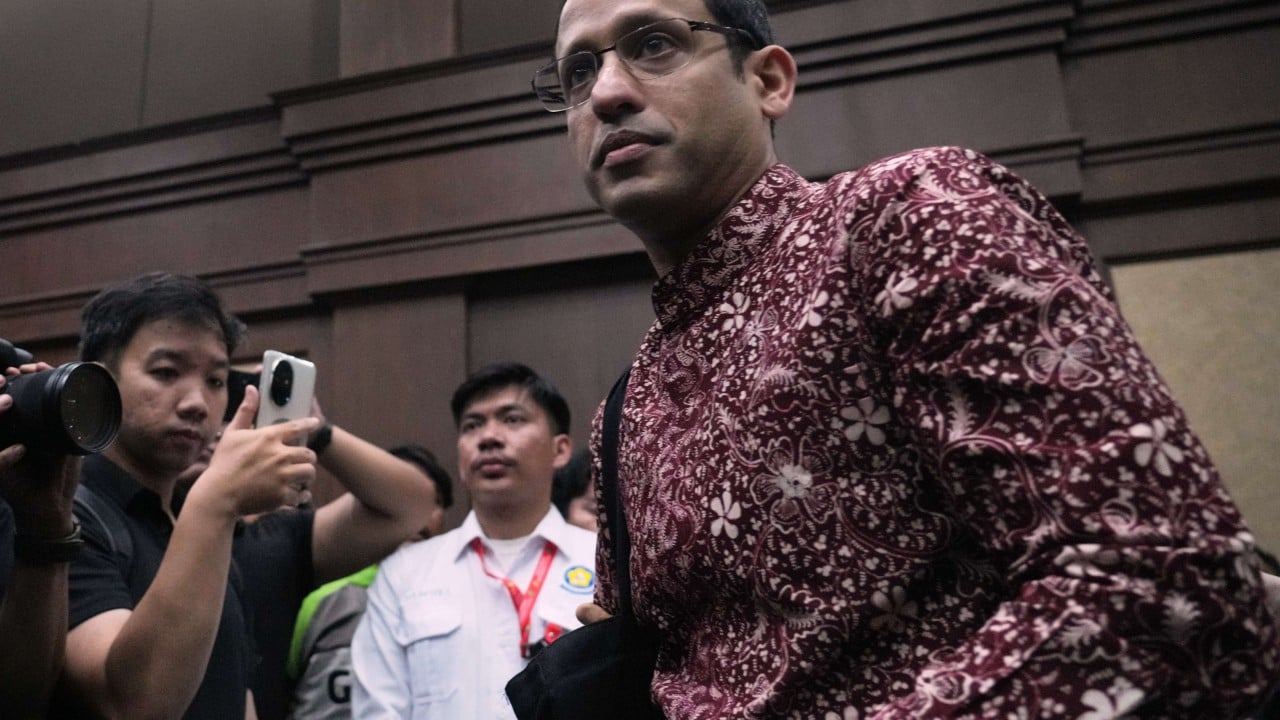
The hand-wringing among the Indonesian diaspora over the high-profile legal battles of tech elites misses the entire point of emerging market entrepreneurship.
When news broke regarding legal scrutiny and trials surrounding tech pioneers—including figures linked to the formative years of Gojek—the immediate reaction from Indonesians living in Silicon Valley, London, and Singapore was predictable alarm. The narrative curdled into a cautionary tale: If the golden children of Jakarta’s tech boom can be dragged into court, who is safe? Will this crush foreign investment? Should the diaspora stay away?
This anxiety is built on a fundamental misunderstanding of how capital, law, and politics collide in a developing economy.
The mainstream consensus views this trial as a systemic threat to innovation. That view is wrong. It assumes that the legal structures of emerging tech ecosystems should operate like a predictable Delaware court. They do not. They never have.
The trial is not a sign that the Indonesian tech ecosystem is broken. It is a sign that the ecosystem is maturing. The wild-west era of unchecked growth, regulatory blind spots, and absolute founder immunity is over. If you cannot survive that transition, you never belonged in the market to begin with.
The Myth of the Sacred Tech Founder
For a decade, Southeast Asian tech founders enjoyed a status akin to economic royalty. They were insulated by a narrative that positioned them as national champions. They were the architects of financial inclusion, the modernizers of informal labor, and the creators of digital infrastructure.
Governments gave them a long leash. Regulators looked the way when ride-hailing services operated in legal gray zones, or when fintech platforms scaled faster than compliance departments could hire staff.
I have watched venture capitalists pour hundreds of millions into companies based entirely on this perceived immunity. The calculus was simple: these founders are too big to fail, too politically connected to face scrutiny, and too vital to the national brand to be touched.
The current legal friction blows that calculus apart.
What the Diaspora Gets Wrong About Compliance
The diaspora panics because they evaluate Indonesian corporate governance through a Western lens. In established markets, regulatory enforcement is a slow, bureaucratic grind with predictable parameters. In emerging markets, governance shifts happen rapidly, often triggered by political realignments or public backlashes against wealth disparity.
When a founder faces a trial, overseas spectators treat it as an existential crisis for the nation's economy. It is not. It is a standard rebalancing.
Consider the mechanics of early-stage growth in Indonesia during the 2010s. Companies scaled by moving faster than the law could write rules. Corporate actions, asset transfers, and early equity structures were frequently assembled using legal frameworks that were ill-equipped for digital platforms. To look back at those transactions today with modern regulatory eyes is to find inevitable vulnerabilities.
The mistake is assuming these vulnerabilities are unique to one company or one founder. They are structural features of a rapidly evolving economy.
Why Foreign Capital Isn't Screaming for the Exit
The most common argument found in mainstream business commentary is that legal crackdowns scare away foreign venture capital. This is a lazy assumption propagated by commentators who do not actually deploy capital in Jakarta.
Serious institutional investors—the sovereign wealth funds, the global private equity firms, the growth-stage funds—are not naive. They do not invest in Indonesia expecting the legal predictability of Switzerland. They price in jurisdictional risk from day one.
In fact, increased regulatory scrutiny can have the opposite effect on sophisticated capital.
- Asset Protection: Institutional investors want to know that corporate laws are enforceable, even against powerful insiders.
- Level Playing Fields: When founders are held accountable, it reduces the unfair advantage of pure political patronage.
- Exit Readiness: Companies cannot list on major global exchanges if their early corporate histories cannot survive a rigorous legal audit.
If a fund pulls out of Indonesia because a tech executive faces a trial, that fund was looking for an excuse to leave anyway. The real players know that cleanup operations are a necessary prelude to institutional-grade market maturity.
The Flawed Premise of the Diaspora's Fear
If you look at the queries circulating in expat forums and professional networks, the anxiety boils down to a specific question: Is it safe for Indonesian professionals to return home and build companies?
The question itself is flawed. It frames safety as a baseline requirement for building in an emerging market.
If you prioritize absolute legal and political safety, you should stay in a mature market. Go climb the corporate ladder at an established multinational in Seattle or Zurich. You will have predictable labor laws, clear tax guidelines, and zero chance of your employer being caught in a geopolitical shifting of gears.
But you will also miss the upside.
The outsized returns generated in Indonesia over the last fifteen years were available precisely because the market was disorganized, under-regulated, and volatile. Risk and reward are mathematically linked. You cannot demand Silicon Valley levels of institutional comfort while chasing Jakarta levels of growth.
The Reality of Corporate Warfare
Let's dismantle another illusion: the idea that corporate trials in Indonesia are purely about the rule of law.
In any major emerging economy, high-stakes litigation is frequently a continuation of corporate strategy by other means. Competitors, disgruntled former partners, and political factions use the legal system as a lever to renegotiate power dynamics.
This is not unique to Indonesia. Look at the regulatory crackdowns on tech giants in China, or the complex legal battles surrounding major conglomerates in India. This is how business is conducted at the highest levels of the global south. To be shocked by it is to betray a profound naivety about how power works.
The Blueprint for Surviving the New Era
The era of the untouchable tech founder is dead. If you are an overseas Indonesian looking to return, or a foreign investor looking to deploy capital, you must adapt to this reality. The playbook that worked in 2016 will get you ruined today.
1. Kill the Cult of Personality
Stop backing companies where the investment thesis relies entirely on the founder’s political connections or celebrity status. Connections dissolve when administrations change. Celebrity status becomes a target when the public mood shifts against tech elites. Look for structural moats, defensive IP, and diversified political risk.
2. Over-Index on Retrospective Compliance
Do not just audit your current operations. Go back to the foundation. Look at the early asset transfers, the initial joint venture agreements, and the early-stage tax filings. The vulnerabilities being exposed today are not recent fabrications; they are ghosts from the bootstrap era coming back to haunt billion-dollar entities.
3. Embrace the Institutional Shift
Accept that the formalization of the economy is inevitable. The transition from an informal, relationship-driven tech ecosystem to a regulated, institutional market is painful. It involves public depositions, embarrassing headlines, and structural reorganizations.
This friction is the cost of growth. The trial of a tech pioneer is not a red light warning investors to stay away. It is a signpost indicating that the market has grown too big, too important, and too wealthy for the state to ignore. The sooner the diaspora stops panicking about the end of the old world, the sooner they can start building for the realities of the new one.