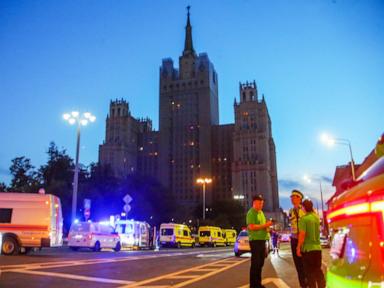
Headline chasers screamed about the body count. Three dead. Twenty-one injured. A blast tearing through concrete and shattering glass in the Russian capital. The mainstream narrative immediately defaulted to the standard script: another escalation, another mystery, another dramatic data point in an endless geopolitical soap opera.
They are looking at the smoke while the building burns from the inside out.
Focusing purely on the immediate casualty figures of urban blasts misses the mechanical reality of how modern security infrastructure actually rots. I have spent two decades analyzing urban resilience, infrastructure vulnerability, and state-level logistics failures. I have watched governments pour billions into perimeter defense while ignoring the silent, mundane decay happening in the basement plumbing of their own administrative zones. The real story of any major metropolitan explosion is never about the bang. It is about the complete institutional fragility that allowed the fuse to burn in plain sight for a decade.
The Lazy Consensus Of Sudden Catastrophe
The standard media framing treats urban explosions as singular, cinematic events. A bomb goes off, attribution is debated, villains are named, and pundits demand retaliation or defense upgrades. This is comforting because it suggests order. It implies that chaos comes from the outside, hurled by a clear enemy across a mapped border.
That perspective is dangerously lazy.
Metropolitan centers do not fail because of external theatricality. They fail because complex systems reach a tipping point of administrative neglect. When gas lines, aging Soviet-era infrastructure, unregulated industrial retrofits, and overburdened municipal oversight collide, you do not need an external saboteur to create a disaster. You just need time.
Let us look at the structural mechanics of how these incidents actually manifest. Urban centers are sprawling, highly pressurized networks of energy distribution, transport arteries, and aging conduits. When maintenance budgets are cannibalized for political theater or diverted into high-profile security optics, the foundational architecture of the city degrades. Pipes rust. Safety valves stick. Subcontractors cut corners on commercial renovations because enforcement agencies are looking elsewhere.
When a blast occurs, the knee-jerk rush to assign geopolitical motives serves a very specific purpose: it shields local authorities from accountability. If it is an act of war, nobody has to answer for why the gas compliance inspection was skipped in 2024.
Dismantling The Security Theater Fallacy
Governments love visible fortifications. Concrete barriers, biometric turnstiles, heightened patrol frequencies—these are items politicians can point to on a campaign flyer. They project strength. They look decisive.
They are also completely useless against systemic decay.
Imagine a scenario where a high-density urban district receives millions in counter-terrorism funding while its subterranean utility tunnels remain uninspected since the late 1990s. The perimeter is impenetrable, yet a corroded propane valve leaks quietly beneath a residential block for forty-eight hours until a pilot light finishes the job. The security apparatus functioned precisely as designed, and the block still blew apart.
We have confused defense with maintenance. This is a fatal error in risk management.
Insurance actuaries and structural engineers understand this disparity intimately, even if cable news producers do not. Real risk reduction is boring. It involves replacing miles of underground piping, firing corrupt municipal inspectors, enforcing brutal zoning penalties on commercial landlords who bypass safety codes, and spending money on things voters never see on Instagram.
When an explosion rattles Moscow or any other major global capital, the knee-jerk demand is almost always more control, more surveillance, and tighter restrictions on movement. This is the exact opposite of what the data demands. More surveillance does not stop a rusted pipe from rupturing. More riot police do not prevent a commercial kitchen from jury-rigging an unauthorized liquid petroleum gas cylinder.
The Economics Of Neglect
Let us talk about money, because budgets reveal the truth that press conferences conceal.
In any major centralized economy, capital flows toward prestige projects and security apparatuses. The margins for municipal upkeep shrink year over year when defense spending or mega-development consumes the tax base. When the local housing or commercial sector operates under a regime of systemic bribery and lax enforcement, safety stops being a technical standard and becomes a negotiable fee.
If you can pay a minor official a bribe to sign off on a commercial retrofitting permit without a proper ventilation audit, safety protocols are no longer rules; they are a tax on the honest, easily bypassed by anyone willing to grease the right palm. Multiply that dynamic across thousands of aging buildings in a megalopolis, and catastrophe is not a matter of if, but when.
The three deaths and twenty-one injuries reported in Moscow are tragic, but treating them as an isolated anomaly is a masterclass in self-deception. Every single time a major city experiences a structural blast attributed to vague causes, look past the political posturing. Look at the balance sheets of the local utility companies. Look at the turnover rate among certified inspectors. Look at the deferred maintenance logs.
You will find the fuse right there in the ledger.
The Uncomfortable Truth About Urban Resilience
If we actually want to prevent these incidents, we have to stop treating urban safety as a political weapon and start treating it as an engineering discipline. That requires admitting several hard truths that neither state media nor Western commentators want to touch.
First, hyper-centralized administrative systems are inherently brittle. When authority and budget allocation are concentrated at the top, local districts lose the agility and resources needed to spot micro-failures before they compound into macro-disasters. A bureaucrat sitting in a central ministry three time zones away cannot smell a gas leak in a residential basement.
Second, prioritizing optical security over structural integrity guarantees continuous catastrophic failure. You can patrol every square meter of a public plaza with armed guards, but if the building foundation sitting directly beneath the plaza is resting on compromised structural steel, your armed guards are just future rescue victims.
The real danger to a modern capital city is never the dramatic plot hatched in the shadows. It is the slow, grinding accumulation of deferred maintenance, institutional corruption, and systemic incompetence that turns everyday infrastructure into a live-fire exercise.
Stop looking for the mastermind. Start checking the pipes.