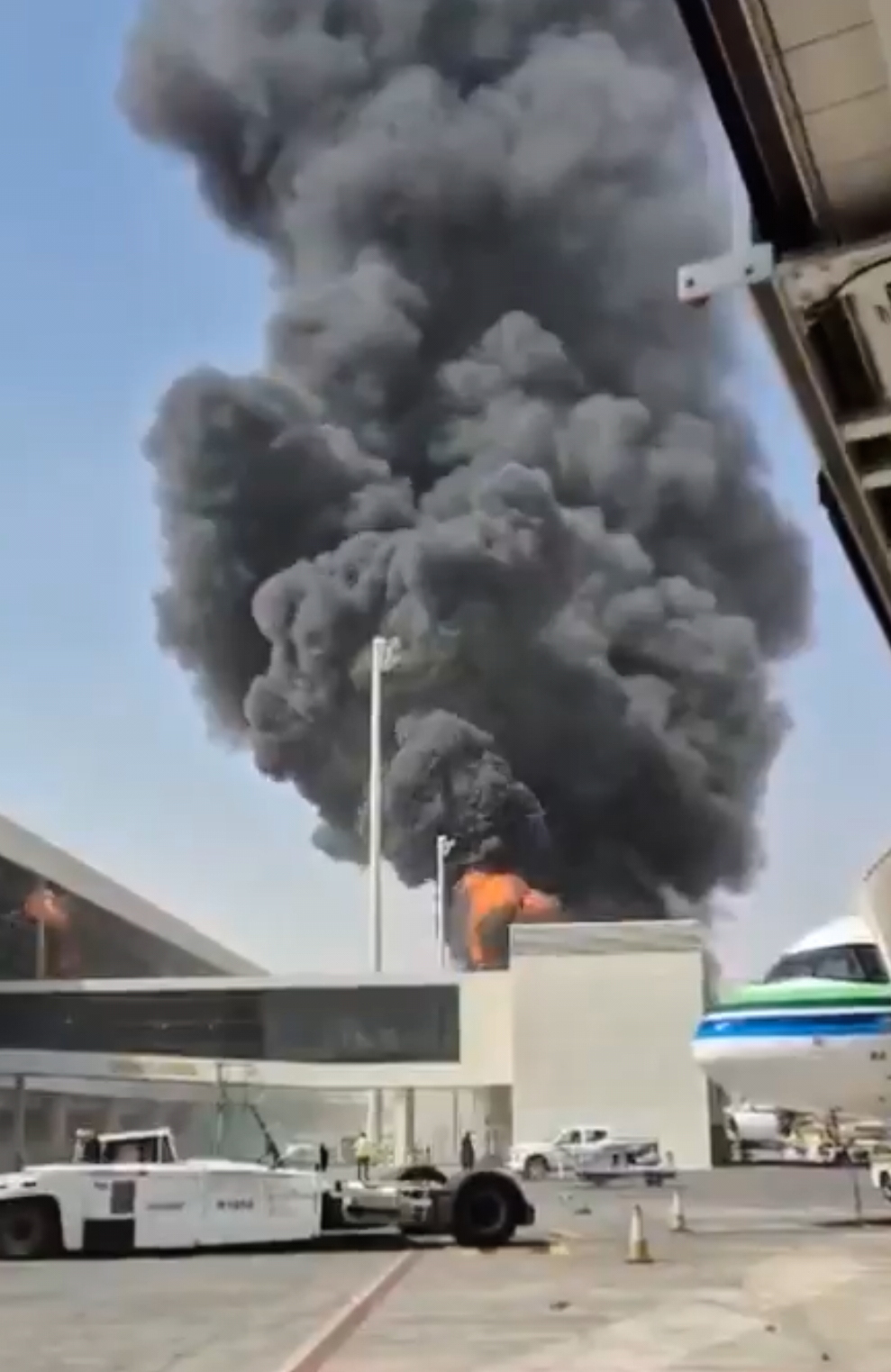
The headlines rolled across the wire with predictable, lazy horror. Twelve dead. Three hundred wounded. Riyadh airport under attack. The standard media playbook immediately kicked into gear, reducing a complex geopolitical stress test into a simple, sensationalized tragedy designed to spike clicks and paralyze aviation risk management desks from London to Singapore.
Stop reading the casualty ticker for two seconds and look at the actual mechanics of what happened.
Every time a critical Middle Eastern aviation hub takes a hit, the global punditry class treats it as an isolated catastrophe or an unprecedented black swan. It is neither. It is the predictable cost of operating high-value infrastructure in a volatile theater where asymmetric warfare meets archaic air defense doctrines. If your risk model for Gulf aviation hubs assumed zero kinetic disruption, your model was built by a fantasy writer.
I have spent the last fifteen years auditing risk mitigation protocols for international transport networks across high-threat zones. I have seen boardrooms panic, dump millions into knee-jerk security theater, and completely miss the structural vulnerabilities that actually determine whether an airport survives an attack or bleeds out over six months of administrative paralysis.
The lazy consensus in the aftermath of the Riyadh strike is that civilian airports must either militarize completely or shut down when regional tensions flare. Both options are economic suicide, and both stem from a fundamental misunderstanding of how modern critical infrastructure absorbs shock.
The Myth of Absolute Security Theater
Let us dismantle the first comforting illusion: the idea that physical hardening alone prevents disruption.
Following incidents like this, airport operators rush to buy more radar systems, deploy additional interceptor batteries, and build thicker perimeter walls. They treat security as a perimeter problem. It is not. It is a supply chain and passenger flow problem.
When a terminal takes structural damage, the twelve deaths and three hundred injuries are the immediate, visible human cost. The invisible economic and operational hemorrhage happens forty-eight hours later when ground handling crews refuse to report for shifts, insurance underwriters double premiums across the board, and international carriers suspend routes not because the runway is cratered, but because the psychological friction of operating in a contested zone breaks the algorithmic predictability that modern aviation demands.
Airlines do not care about a broken window pane. They care about crew rostering stability, insurance indemnification clauses, and slot coordination chaos. When Riyadh or any other major Gulf transit node experiences a kinetic event, the real crisis is institutional inertia.
Imagine a scenario where an airport authority treats every attack not as an emergency to be hushed up or dramatized, but as a routine stress test of its modular redundancy framework. That is not happening. Instead, authorities default to PR management and defensive posturing. They lock down information, fueling a vacuum where rumors replace data, which in turn panics foreign civil aviation authorities into issuing knee-jerk airspace closures.
Dismantling the Air Defense Fallacy
Another favorite talking point of the commentariat is that modern air defense shields should render major metropolitan airports completely impermeable.
This betrays a profound ignorance of physics and economics. Interceptor missiles cost millions of dollars per unit. Asymmetric threats—whether low-cost loitering munitions or modified commercial drones—cost a fraction of a Honda Civic. Fighting an asymmetric aerial campaign with high-end kinetic interceptors is a mathematical trap designed to bankrupt the defender through sheer attrition.
When authorities report that a strike bypassed defenses or caused casualties despite an active shield, the knee-jerk reaction is to demand more of the same expensive hardware. That is terrible engineering.
The aviation sector needs to pivot from kinetic interception to active electronic hardening and decentralized terminal architecture. If a hub concentrates all its passenger processing, baggage sorting, and administrative control into one sprawling, fragile architectural masterpiece, it is inviting catastrophe. Decentralization is messy, it complicates duty-free retail models, and it ruins architectural renderings. It also saves lives and keeps planes moving when the inevitable happens.
The Real Cost of Institutional Amnesia
The most infuriating part of the Riyadh coverage is how quickly the narrative shifts from operational reform back to business-as-usual once the initial news cycle cools down.
Airlines reinstate routes, passengers forget the terminal video footage, and airport boards go right back to prioritizing non-aeronautical revenue—luxury retail leasing and duty-free square footage—over passenger dispersal efficiency and bunker-grade logistics resilience.
This amnesia is lethal.
If you run logistics or manage corporate travel policies that rely on Gulf transit hubs, you need to throw out your legacy risk matrices. Stop looking at government travel advisories that rely on political posturing rather than kinetic reality. Start auditing your carriers on their actual diversion protocols, crew retention under threat conditions, and cargo rerouting agility.
The twelve lives lost in Riyadh cannot be undone by pious editorializing or defensive statements from aviation authorities. They demand a cold, brutal assessment of why a civilian transport hub remains vulnerable to predictable regional escalations.
The next attack is already being gamed out in a planning room somewhere. If your operational strategy relies on hoping it never happens to your hub, you are already out of business.