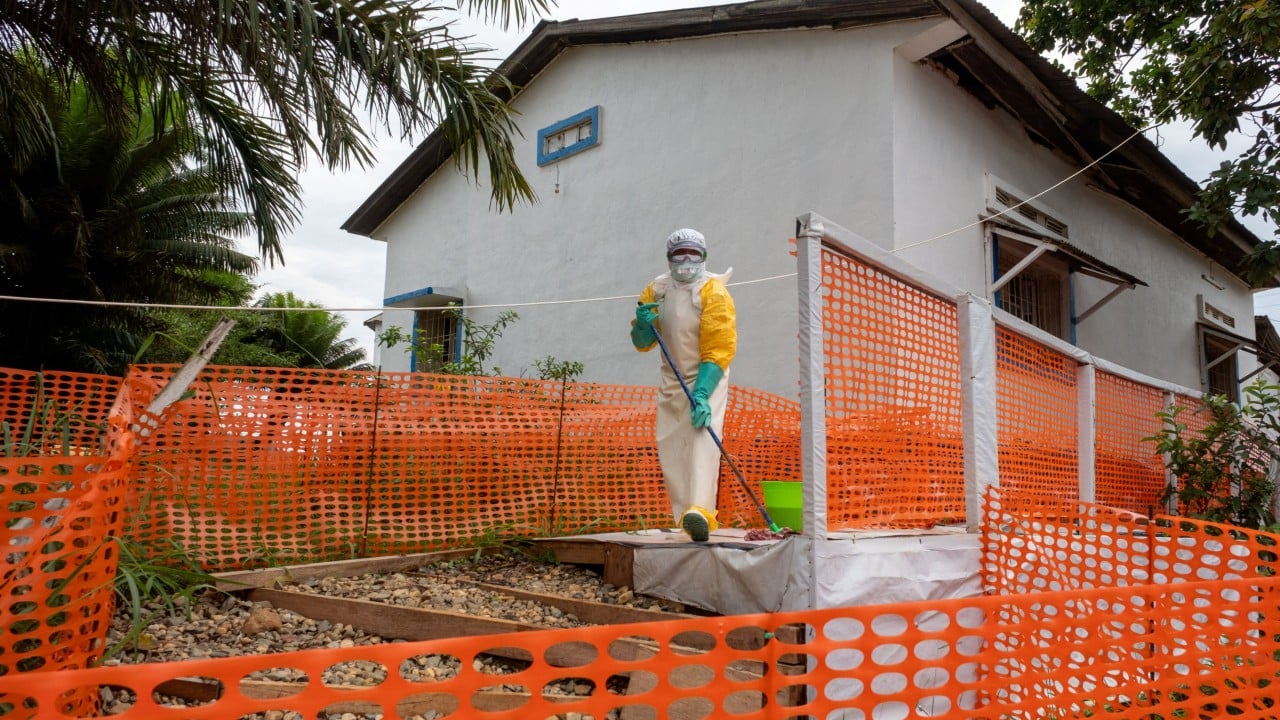
The headlines scream that Congo's latest Ebola outbreak has blown past 3,200 cases in record time, comparing it breathlessly to historic disasters. Mainstream reports love a clean narrative of exponential doom. They point to the raw tally, the absence of approved vaccines for the specific strain, and the terrifying speed of transmission. They treat every single number on the dashboard as proof of an uncontrollable biological wildfire.
It is lazy journalism built on a foundational misunderstanding of how surveillance data actually works.
I have watched international agencies chase ghost numbers across Central African conflict zones for over a decade. When a crisis flares up in eastern Congo, the panic machine whirs into motion, missing the structural mechanics entirely. The lazy consensus assumes that a skyrocketing case count equals a proportional failure of containment.
That assumption collapses under scrutiny.
The Surveillance Trap Nobody Wants to Talk About
Look closer at the data driving the panic. According to reports from the World Health Organization and field groups like Physicians for Human Rights, roughly 80 percent of new infections are detected outside known contact lists. Mainstream outlets frame this as evidence that health workers have completely lost the ability to trace the virus.
They are reading the chart upside down.
When you deploy expanded active surveillance, mobile testing laboratories, and retrospective case finding into remote provinces like Ituri, you do not just track infections—you manufacture visibility. In past outbreaks, thousands of cases went uncounted because victims died in isolated mining camps or avoided shattered health infrastructure entirely.
Today, international logisticians and local task forces are aggressively hunting down infections that previously vanished into the statistical noise. When you look for more cases, you find more cases. A surge in recorded numbers is frequently an indicator of better diagnostic penetration, not necessarily an explosion in underlying transmission velocity.
We are measuring the effectiveness of the flashlight, not the size of the monster in the dark.
The Strain Variable and the Vaccine Myth
Another pillar of the mainstream panic is the fact that this current epidemic is driven by the Bundibugyo virus strain. Commentators lament that unlike the Zaire strain from previous crises, this variant lacks a widely approved, off-the-shelf vaccine stockpile ready for immediate deployment.
This argument treats vaccines as magic silver bullets while ignoring the operational reality on the ground.
Imagine a scenario where we magically air-dropped one million doses of experimental vaccines into eastern Congo tomorrow. Would it stop the outbreak? History says no. Vaccines require cold chains, community trust, security escorts, and precise administration windows. When health facilities are routinely vandalized by armed groups or local populations desperate over systemic neglect, supply delivery is a secondary bottleneck.
The primary bottleneck is structural distrust and institutional failure. Doctors and nurses in regional hubs have staged strikes over unpaid wages. Treatment centers have been torched not because villagers hate medicine, but because decades of state abandonment have left them completely defenseless against multiple overlapping hardships.
Blaming the absence of a specific vaccine strain lets political and administrative systems off the hook for failing to build resilient local healthcare economies.
Dismantling the People Also Ask Fallacy
If you look at search trends around this outbreak, certain questions pop up repeatedly. Let us address them with brutal honesty.
- Is this the worst Ebola outbreak in history? No. That grim title belongs to the 2014-2016 West African epidemic, which claimed over 11,000 lives across multiple nations. Comparing a localized eastern Congolese crisis driven by a different viral clade to a cross-border international catastrophe is apples-to-oranges fearmongering.
- Why are cases spreading so fast in Ituri? Because Ituri is an epicenter of artisanal mining, high population mobility, and intense regional conflict. People do not move around for fun; they move to survive. When security breaks down, containment protocols shatter with it.
Fixing these outbreaks requires shifting away from panic-driven emergency responses that pack up and leave the moment the curve flattens.
What Actually Moves the Needle
If you want to stop chasing your tail in public health crises, you have to abandon the charity mindset and build permanent infrastructure.
Stop treating local health workers as expendable foot soldiers. Pay their salaries on time, every time, before an outbreak starts. Integrate traditional community leaders into surveillance teams from day one so that disease tracking is a collaborative defense rather than an external imposition.
When you rely on armed escorts and panic-driven international intervention, you alienate the very populations you need to protect.
The numbers will keep climbing as long as the reporting systems get better at capturing them. Stop staring at the scoreboard and start fixing the stadium.