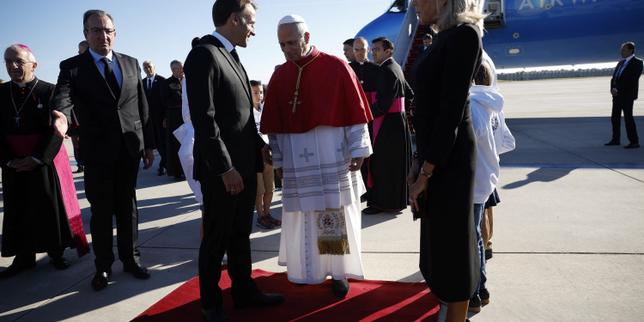
Every major media outlet ran the same gallery this week. You saw the headlines celebrating the visual spectacle of Pope Leo XIV touching down in Paris, treating a state-religious choreography as if it were a spontaneous spiritual awakening. The French press framed the visit through soft-focus lenses, highlighting grand cathedrals, reverent crowds, and the poetic imagery of a pontiff navigating the boulevards of the capital. It is an aesthetic triumph for institutional PR, and an absolute disaster for anyone trying to understand the actual mechanics of modern power.
We need to stop evaluating high-level state visits through the emotional candy of photo galleries. When you strip away the telephoto shots of incense and stone, you find a calculated exercise in narrative management. The lazy consensus tells us these moments represent genuine cultural convergence or a pastoral reawakening of a secular nation. That view is lazy, naive, and fundamentally detached from how influence operates in twenty-first-century Europe.
The Aesthetic Trap of the Royal Red Carpet
Look closely at the composition of the imagery flooding your feeds. Every frame is deliberately engineered to evoke permanence in a system defined by transience. You get the contrast of ancient Gothic architecture against modern security details, the muted tones of clerical vestments, the curated expressions of awe. Photography in this context does not record reality; it manufactures an alternate timeline where institutional relevance is never in doubt.
I have spent years watching political communications teams map out these itineraries. Every stop is negotiated down to the millimeter to maximize symbolic yield while minimizing friction with local realities. When the media reduces a complex geopolitical and cultural visit to a cute visual recap, they act as an unpaid extension of the Vatican press office.
Paris remains one of the most fiercely secular urban centers on the planet. Walk ten minutes away from the cordoned-off barricades where tourists and believers are corralled for the cameras, and you find a population entirely indifferent to ecclesiastical choreography. Yet the photo spreads pretend the entire city held its breath. This is not journalism. It is mood board curation.
Why Visual Consumption Replaces Critical Thought
The human brain is wired to process images sixty thousand times faster than text. State apparatuses figured this out centuries before Instagram algorithms existed. By feeding the public an endless stream of polished, high-definition moments, media organizations short-circuit analytical inquiry. You see a striking picture of a pontiff greeting dignitaries or blessing a crowd, and your emotional centers light up before your skepticism has time to boot up.
This is the core error in how we consume modern news events. We mistake aesthetic pleasure for historical significance.
Consider what actually happened beneath the surface of the Paris itinerary. Diplomatic channels were greased, specific policy concessions regarding European humanitarian frameworks were subtly lobbied, and local municipal resources were drained to provide a pristine backdrop for a global broadcast. None of that fits into a nice photo carousel. None of that generates viral engagement on social feeds.
When a publication packages a papal visit primarily as a visual experience, they are performing a sleight of hand. They invite you to look at the shiny object in the foreground so you ignore the structural negotiations happening in the dark rooms just off-camera.
Dismantling the Myth of Spontaneous Devotion
Another persistent falsehood pushed by the standard coverage is the narrative of an organic, groundswell reception. The talking heads love to talk about how the streets were packed with passionate followers, as if people randomly wandered out of cafes and happened upon a papal motorcade.
Logistics do not work that way. Crowd sizes for high-security state visits are engineered operations. Accreditation processes, transit shutdowns, barricade placements, and organized parish transport networks dictate every single body standing behind the metal gates. When you see a tightly packed square in Paris cheering for a visiting dignitary, you are looking at a masterclass in mobilization, not a thermometer of public sentiment.
To accept these photo-driven narratives at face value is to misunderstand the baseline condition of modern religion in Western Europe. Church attendance numbers across France tell a story of steady, long-term contraction. A twenty-four-hour media blitz centered around a charismatic leader does not reverse demographic and cultural trends spanning decades. It merely provides a temporary sugar high for institutions desperate for cultural relevance.
The Real Cost of Performing Sanctity
Let us talk about the resources required to mount these spectacles. Urban paralysis, millions spent on specialized security details, the diversion of public administrative bandwidth—all justified by the promise of a few iconic front-page images. If a secular corporation shut down half of Paris for a marketing stunt, the outcry would be immediate and merciless. Yet wrap the exact same disruption in religious iconography, and critics are cowed into silence by the fear of appearing culturally insensitive.
This double standard protects inefficient communication strategies. It allows ancient hierarchies to bypass the rigorous scrutiny applied to every other public institution. If you question the utility of turning a major European metropolis into a movie set for a day, you are accused of lacking soul. That is not an argument; it is emotional blackmail.
How to Read the Coverage Without Getting Conned
Next time you see a sweeping digital gallery chronicling a high-profile visit of this scale, run a simple mental diagnostic. Ask yourself three questions.
First, what structural reality is this specific image trying to obscure? If the frame is tight, what is happening just outside the boundaries of the lens?
Second, who benefits financially and politically from the distribution of this aesthetic? Follow the attention economy. The media outlet gets clicks, the state gets an illusion of unity, and the institution gets free branding worth millions.
Third, what would this event look like if we stripped away the dramatic lighting, the historical backdrops, and the reverent voiceovers? Strip the pageantry down to its raw components—a foreign head of state meeting local officials under heavy guard—and evaluate whether it warrants the oxygen it consumes.
Stop letting cinematographers do your thinking for you. The real story is never in the pristine frame presented to the masses. It is always found in the margins, the compromises, and the quiet spaces where the cameras are not allowed to point.