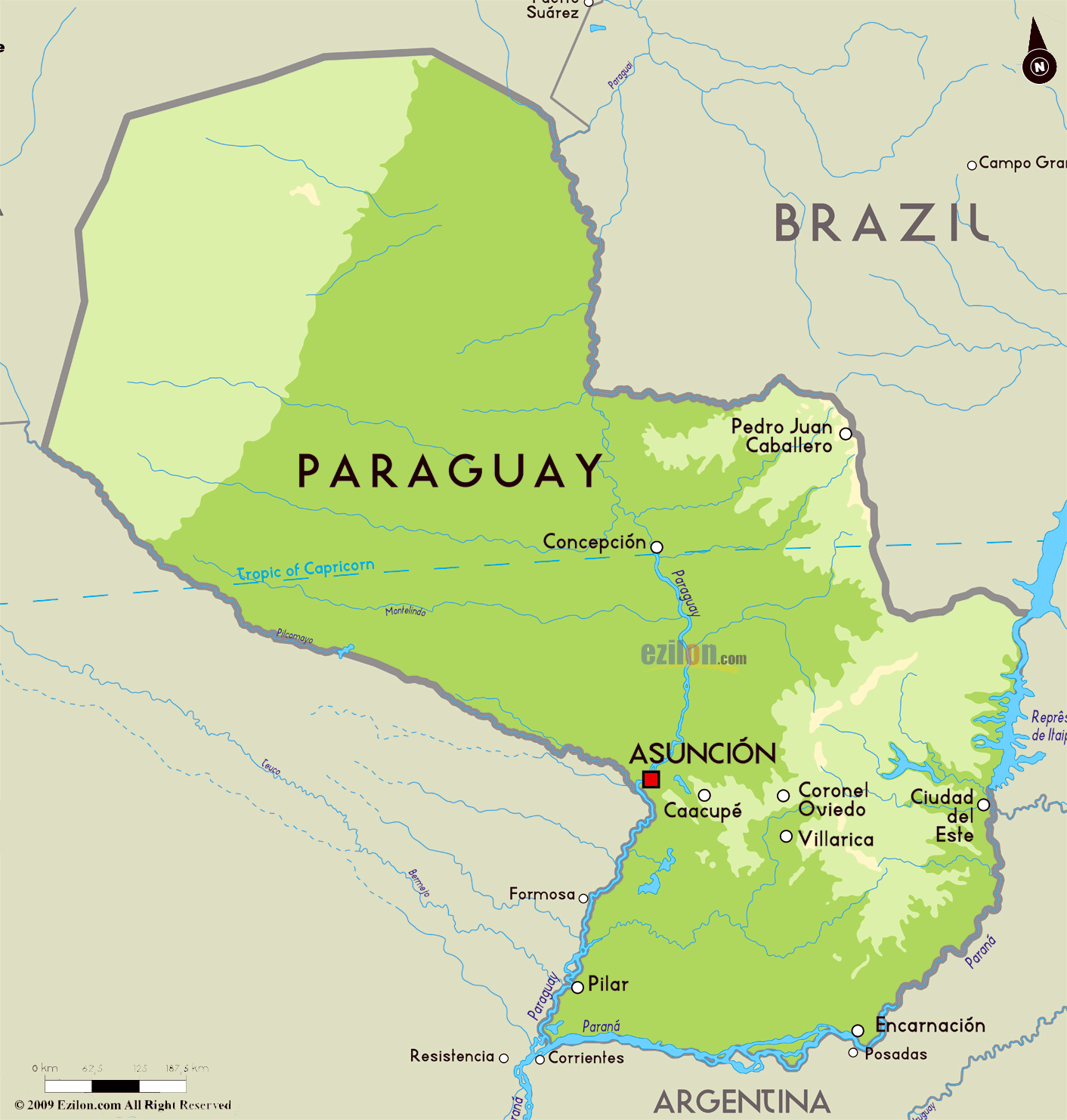
Money talks in Asunción, and when it whispers through an offshore-linked fintech giant, presidents fall.
Santiago Peña entered Paraguay's Palacio de los López in August 2023 wearing the polished armor of a Chicago-trained economist and former International Monetary Fund (IMF) official. Wall Street loved him. Foreign investors trusted his spreadsheets. Yet by late 2026, the technocrat who promised fiscal discipline and institutional modernization watched his presidency unravel over a single, sprawling conflict of interest involving Ueno Bank—a digital lender that transformed from a modest finance company into a state-backed colossus almost overnight.
If you've followed Latin American politics over the past decade, you know corruption scandals rarely look like briefcases stuffed with cash anymore. Today, they look like equity stakes, public pension deposits, and billion-dollar state contracts routed through shiny mobile apps. That's exactly what happened in Paraguay, and the collapse of Peña's administration offers a sobering case study in how modern financial capture destroys democratic legitimacy.
What Actually Happened With Ueno Bank
To understand why Paraguayans took to the streets and why opposition lawmakers finally mustered the votes to force Peña's exit, you have to look at the timeline of Ueno Bank's meteoric rise.
Before Peña took office, Ueno was a relatively small player in Paraguay's banking sector, owned by Grupo Vázquez. Peña himself wasn't a distant observer of the conglomerate. According to his own sworn financial declarations upon taking office in 2023, he held significant financial ties and past board-level relationships within the business ecosystem connected to the group—including investments in ueno Holding Saeca and Credicentro, entities tightly woven into Grupo Vázquez's corporate web.
Critics immediately flagged the overlap. Peña brushed it off, insisting he had placed his assets into blind trusts or divested active management roles before swearing the presidential oath.
Then came the state money.
Within months of Peña's inauguration, public institutions began pouring staggering sums of taxpayer and worker funds into Ueno Bank. The most explosive flashpoint involved the Instituto de Previsión Social (IPS), Paraguay's state-run social security and healthcare agency. Despite IPS suffering from chronic medicine shortages, crumbling hospital infrastructure, and furious protests from retirees, its board—appointed by Peña—approved shifting hundreds of millions of dollars in pension reserves into Ueno Bank certificates of deposit and financial instruments.
It didn't stop at IPS. State-owned utility ANDE, the public development bank AFD, and multiple government ministries migrated payroll accounts, payment processing, and liquidity reserves to Ueno. Almost overnight, a digital upstart became one of Paraguay's largest financial institutions by asset volume, acquiring Visión Banco in a landmark merger that cemented its dominance over retail banking.
Paraguayan investigative outlets, led by ABC Color and Última Hora, began connecting the dots between Peña's personal investment portfolio, his political mentor Horacio Cartes, and Ueno's sudden monopoly on state liquidity. When leaked financial disclosures revealed that Peña's financial returns and indirect equity valuations had surged alongside Ueno's state-fueled expansion, the technocratic facade cracked beyond repair.
Why an Economist President Couldn't Outsmart Basic Optics
You'd think a former central bank board member and IMF economist would understand systemic risk and fiduciary governance better than anyone. Honestly, that's what made the whole affair so infuriating to Paraguayan voters.
Peña campaigned on turning Paraguay into the "Singapore of South America." He flew across the globe touting the country's investment-grade credit rating—awarded by Moody's in 2024—and promising foreign capital that Paraguay had moved past its reputation for cronyism.
Yet at home, his administration operated on a glaring contradiction. You can't preach free-market transparency to investors in New York while steering captive state pension funds into a bank tied to your own pre-presidential investment portfolio.
Here is why the Ueno Bank scandal proved uniquely lethal compared to older political controversies in Asunción:
- It hit working-class pockets directly. When IPS funnels pension reserves into a politically connected bank while insured workers can't get basic insulin or surgery appointments at IPS clinics, the outrage isn't abstract. People feel robbed in real time.
- The numbers were impossible to hide. Banking sector data published by the Banco Central del Paraguay (BCP) is public. Independent economists and journalists could track Ueno's deposit growth quarter by quarter, watching state institutional deposits spike right after Peña's appointees took over regulatory and pension boards.
- It alienated Paraguay's traditional business elite. Established banks and conglomerates that didn't enjoy Ueno's preferential access to state contracts quietly backed opposition investigations, realizing the playing field had been tilted permanently against them.
The Cartes Shadow Over the Palace
You can't analyze Santiago Peña's downfall without talking about Horacio Cartes, the billionaire tobacco magnate, former president, and head of the ruling Colorado Party.
Peña was widely viewed from day one as Cartes's handpicked political heir. Even after the United States Treasury Department sanctioned Cartes in 2023 for alleged "significant corruption" and ties to transnational criminal networks—effectively cutting Cartes's conglomerate, Grupo Cartes, off from the U.S. financial system—Cartes remained the undisputed power broker behind the Colorado Party machine.
When U.S. sanctions forced Grupo Cartes to restructure and offload assets to survive, critics noticed a striking pattern. Several former Cartes-linked executives, business partners, and corporate structures intersected with the rapid expansion of Grupo Vázquez and Ueno Bank's ecosystem. Opposition lawmakers accused Peña's government of using Ueno as a financial lifeboat and domestic liquidity hub for allied economic elites squeezed by international banking restrictions.
Whether every single transaction crossed the line into criminal illegality or sat in the gray zone of legalized cronyism mattered less than the political reality. Peña looked less like an independent head of state and more like a chief financial officer managing liquidity for a tight-knit political cartel.
How the Constitutional Crisis Unfolded
For over a year, Peña survived on raw congressional math. The Colorado Party held majorities in both chambers of Congress, blocking impeachment inquiries and shielding cabinet ministers from censure.
That firewall collapsed when three pressures converged simultaneously:
- Public Asset Declarations vs. Reality. Paraguay's Comptroller General (Contraloría General de la República) faced mounting legal pressure from civil society groups like Semillas para la Democracia to audit Peña's 2023 and updated asset declarations. Discrepancies over undisclosed dividend flows and valuation spikes in companies linked to Ueno's holding structure handed prosecutors concrete grounds to open preliminary enrichment inquiries.
- Street Mobilizations and General Strikes. Labor unions, IPS pensioners, and university students coordinated sustained blockades in Asunción and Ciudad del Este. Unlike isolated partisan rallies, these protests united public-sector workers furious over pension mismanagement with middle-class taxpayers tired of footing the bill.
- Fractures Inside the Colorado Party. Paraguay's ruling party has survived for decades because its factions know when to cut loose a damaged leader to save the party brand. As regional governors and Colorado senators stared down disastrous polling ahead of municipal and national cycles, key factions broke ranks, signaling they wouldn't burn their own political capital to rescue Peña from a formal trial (juicio político).
Once internal Colorado support evaporated, Peña's options narrowed to two: face a humiliating congressional removal trial that would air every bank transfer on live television, or step aside before the gavel fell.
What Paraguay's Crisis Teaches Investors and Watchdogs
If you're watching emerging markets in Latin America—or analyzing governance risks in frontier economies—Paraguay's Ueno Bank implosion carries sharp lessons that go way beyond Asunción.
First, credit ratings don't immunize a country against governance collapse. Paraguay's macroeconomic numbers looked great on paper—low debt-to-GDP ratios, cheap hydroelectric power, steady agricultural exports. Analysts who ignored institutional concentration and state-capture warnings got blindsided when political risk wiped out policy continuity overnight.
Second, fintech isn't automatically reformist. Politicians love wrapping state-backed monopolies in the language of financial inclusion and digital innovation. Ueno marketed itself brilliantly, rolling out sleek apps and bringing unbanked Paraguayans into the formal system. None of that excuses using captive public pension funds to subsidize a politically connected lender's balance sheet.
Third, transparency laws only work when independent journalists and civil society weaponize them. Peña's downfall didn't start with a foreign intelligence leak. It started because Paraguayan reporters cross-referenced public Central Bank balance sheets against mandatory presidential asset filings and refused to let the story die when advertisers pulled back.
How to Track Institutional Capture in Emerging Markets
If you're researching Latin American political risk, advising on regional investments, or following Paraguay's transition after Peña, don't rely on official press releases or glossy investor decks. Watch the actual plumbing of state money instead:
- Audit state pension and sovereign fund allocations. Check quarterly disclosures from public agencies like Paraguay's IPS or Banco Central del Paraguay to see whether public deposits are concentrated in a single private lender rather than diversified across institutions.
- Cross-reference executive asset declarations against state procurement. Whenever a high-ranking official claims to use a "blind trust," verify whether state contracts or regulatory approvals disproportionately benefit entities listed in their pre-office filings.
- Follow local investigative journalism over international wire summaries. Outlets like ABC Color, Última Hora, and regional investigative networks routinely publish primary financial documents months before international ratings agencies adjust their risk outlooks.
- Watch ruling-party faction splits, not opposition speeches. In dominant-party systems like Paraguay's Colorado Party, a president's real survival clock starts ticking only when internal party barons calculate that defending the executive costs more than replacing him.
Santiago Peña promised to bring Wall Street rigor to Asunción. In the end, he proved an older truth about power: you can't run a country's treasury like a private investment fund and expect voters not to notice who's collecting the dividends.