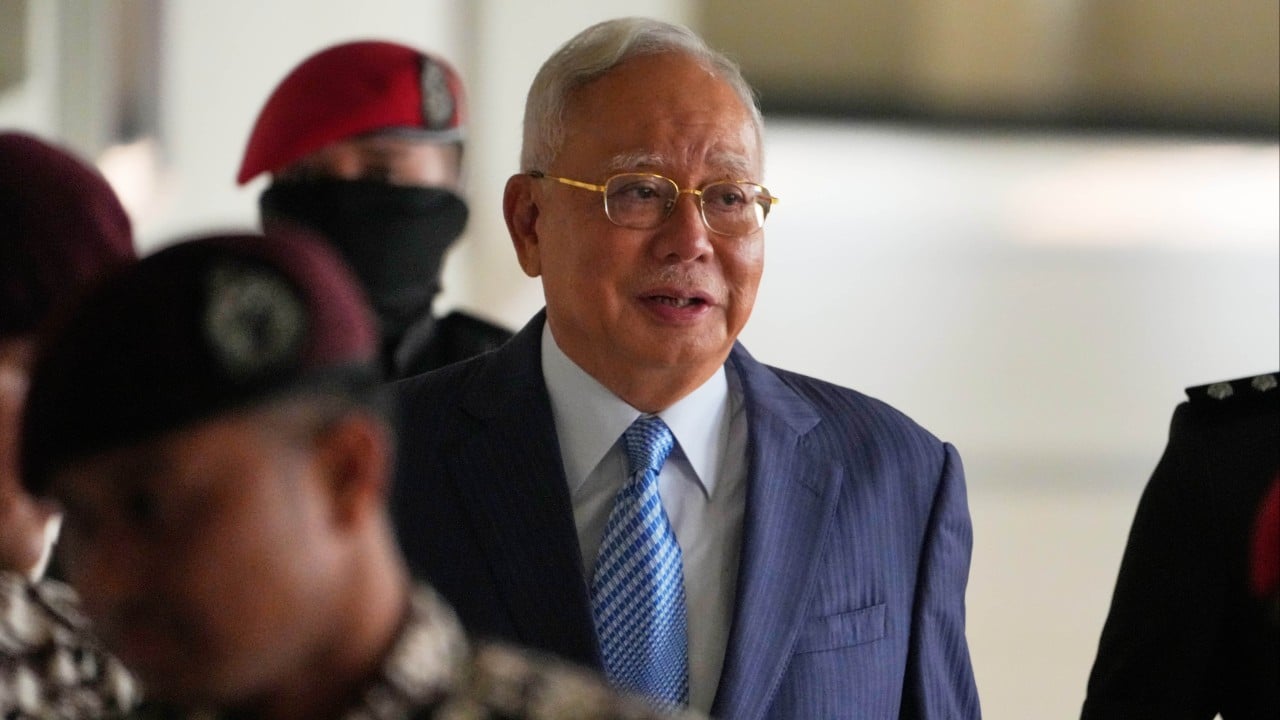
Money talks in Malaysian politics. Especially when it's RM50 million—roughly US$12.3 million—handed over to clear a massive legal hurdle for a former prime minister sitting in Kajang Prison.
If you've been following the saga around Najib Razak, you know this isn't just another routine court filing or a quiet administrative payment. When the United Malays National Organisation (UMNO) stepped up to settle the RM50 million fine tied to Najib's SRC International conviction, the political ground in Kuala Lumpur shifted immediately. Why? Because paying that fine removes one of the biggest roadblocks standing between Najib and the royal addendum that could send him home to serve the rest of his sentence under house arrest.
Let's cut through the political spin and look at what actually just happened, what the law says, and why Prime Minister Anwar Ibrahim's unity government is walking on a razor's edge right now.
Why the RM50 Million Fine Matters So Much
To understand why UMNO's payout is such a big deal, you have to look back at how Najib's sentence was modified in the first place.
In August 2022, the Federal Court upheld Najib's conviction for criminal breach of trust, abuse of power, and money laundering involving RM42 million from SRC International, a former unit of the state fund 1MDB. He was sentenced to 12 years in prison and fined RM210 million. Under Malaysian law, failing to pay that fine meant an extra five years tacked onto his prison stay.
Then came February 2024. The Federal Territories Pardons Board, chaired by the outgoing King, Al-Sultan Abdullah Ri'ayatuddin Al-Mustafa Billah Shah, made a decision that stunned observers across Southeast Asia. They halved Najib's prison sentence from 12 years to six, moving his expected release date up to August 2028. At the same time, they slashed his fine from RM210 million down to RM50 million.
Here's the catch that most casual readers missed at the time. A reduced sentence doesn't automatically trigger house arrest, and an unpaid fine leaves a massive legal liability hanging over a prisoner's head. If Najib didn't pay that RM50 million, he faced an additional year behind bars under the revised terms. Worse yet, from a procedural standpoint, trying to enforce a royal house arrest order while a multi-million-ringgit court-ordered fine remains unpaid creates an immediate legal contradiction.
By clearing the RM50 million balance, UMNO wiped that slate clean. No extra prison time for default. No outstanding financial penalty from the SRC case.
How UMNO Footed the US$12.3 Million Bill
You don't just find RM50 million in the couch cushions of Putra World Trade Centre. UMNO has been battling frozen bank accounts and severe financial strain ever since its historic 2018 election defeat, when authorities launched massive civil forfeiture suits linked to 1MDB funds.
So how did they pull this off? According to statements from senior party figures and legal observers tracking the settlement, the money didn't come from a single public budget line. Instead, UMNO mobilized internal party funds, donations from loyalists, and contributions from sympathetic business figures who still view Najib as the party's most potent electoral asset.
Honestly, the speed and coordination behind the payment tell you everything you need to know about UMNO's current priorities. Party president Ahmad Zahid Hamidi has staked his political survival on keeping UMNO's grassroots loyal while maintaining an uneasy alliance with Anwar Ibrahim's Pakatan Harapan coalition. For months, UMNO division chiefs have complained that they're losing Malay-Muslim voters to the opposition Perikatan Nasional coalition because the party hasn't done enough to free "Bossku"—Najib's popular nickname among his base.
Paying the RM50 million fine isn't charity. It's a calculated political investment. Zahid needs Najib out of Kajang Prison—even if it's only to his private residence in Kuala Lumpur—to prove to UMNO's three million members that the party still protects its own.
The Royal Addendum at the Center of the Storm
If the fine is paid, why isn't Najib already sitting in his living room? That brings us to the most contentious piece of constitutional drama Malaysia has seen in years—the supplementary royal order, commonly called the "titah adendum."
Shortly after the Pardons Board announced its February 2024 decision, rumors began circulating in Kuala Lumpur that the former King had issued an additional decree alongside the main pardon order. This supplementary document allegedly directed that Najib be allowed to serve the remainder of his six-year sentence under house arrest rather than in Kajang Prison.
For months, government ministers danced around the question. Some claimed they hadn't seen the document. Others argued that any order not formally deliberated within the Pardons Board meeting lacked constitutional standing.
Everything changed when Najib's legal team, led by veteran lawyer Muhammad Shafee Abdullah, filed a judicial review application to compel the government to confirm the existence of the addendum and execute it. Things got even more dramatic when Ahmad Zahid Hamidi—the sitting Deputy Prime Minister—filed a supporting affidavit stating that he had personally seen a copy of the royal addendum on the phone of Investment, Trade and Industry Minister Tengku Zafrul Aziz.
Think about how wild that is. The Deputy Prime Minister went on the legal record backing a prisoner's lawsuit against the very government he helps lead.
What Malaysian Law Actually Says About House Arrest
Here's a detail that gets buried under all the political noise. Malaysia doesn't actually have a specific, standalone House Arrest Act on the books right now.
Under the Prisons Act 1995, the Home Minister has broad discretionary powers to declare any place—including a private residence—as a place of detention, or to release a prisoner on license under strict conditions. In practice, though, Malaysia has rarely used home detention for high-profile white-collar convicts.
That's why the legal battle over the royal addendum is so fierce. The Federal Court and the Court of Appeal have had to wrestle with two massive questions:
- Does a King's supplementary order hold executive force if it wasn't explicitly read out during the formal Pardons Board sitting? Under Article 42 of the Federal Constitution, the King exercises the power of pardon on the advice of the Pardons Board. Constitutional scholars are deeply divided on whether a subsequent or separate addendum carries the same binding weight.
- Can the courts compel the government to enforce a royal prerogative? Traditionally, Malaysian courts have treated the royal prerogative of mercy as non-justiciable, meaning judges won't second-guess the King's decision. Here, Najib's lawyers aren't asking the court to overturn a royal decision—they're asking the court to force the executive branch to obey one.
With the RM50 million fine now settled, Najib's legal team has eliminated one of the easiest procedural excuses the Attorney General's Chambers could use to delay enforcement. If the courts validate the addendum, there is no financial barrier left to hold him inside Kajang Prison.
What Most People Get Wrong About Najib's Legal Reality
A lot of international coverage treats house arrest as a complete get-out-of-jail-free card. That's not quite right, and believing it will make you misread what happens next in Malaysian politics.
First, house arrest is still a custodial sentence. Under standard home detention protocols, Najib wouldn't be holding massive political rallies in Pekan or campaigning across the country for the next general election. His movements would be restricted to his residence, his visitors would be logged and approved by prison authorities, and any political communication would be heavily scrutinized. Even so, holding court from a luxury mansion in Bukit Tunku gives him infinitely more influence than sitting in a prison cell with restricted visitation hours.
Second—and this is the part people constantly forget—the SRC International case isn't Najib's only legal nightmare.
Even if he walks out of Kajang Prison tomorrow into house arrest, he still faces the massive 1MDB-Tanore trial. In that case, Najib is charged with four counts of abuse of power and 21 counts of money laundering involving roughly RM2.28 billion (more than US$500 million) of 1MDB funds. In late 2024, the Kuala Lumpur High Court ruled that prosecutors had established a prima facie case against him on all 25 charges, ordering him to enter his defense.
If he's convicted in the 1MDB-Tanore trial, any house arrest arrangement from the SRC case gets thrown into complete chaos. A new prison sentence wouldn't automatically be covered by the February 2024 royal addendum. He'd be right back at square one, facing potentially decades behind bars unless another pardon is granted down the line.
The Tightrope Anwar Ibrahim Is Walking
Nobody in Malaysia feels the heat from this RM50 million payout more than Prime Minister Anwar Ibrahim.
Anwar spent decades building his brand as a fierce anti-corruption reformer. His coalition, Pakatan Harapan, won urban and non-Malay voters in 2022 largely on the promise of cleaning up institutional rot and holding 1MDB kleptocrats accountable. Yet Anwar only became Prime Minister because UMNO agreed to form a unity government with him after the election produced a hung parliament.
This puts Anwar in an impossible bind:
- If Najib gets house arrest, Anwar's core reformist base will feel betrayed. Civil society groups like Bersih have already warned that letting Najib serve his sentence at home makes a mockery of the rule of law and signals that wealthy, connected politicians play by different rules than ordinary Malaysians.
- If Anwar's government blocks house arrest, UMNO's grassroots could revolt and force Zahid Hamidi to pull the party out of the ruling coalition. Without UMNO's 26 seats in Parliament, Anwar's government collapses overnight.
Notice how Anwar has handled this so far. He has repeatedly insisted that his administration will not interfere with the judiciary and that any decision regarding the royal addendum must follow proper legal channels and respect the institution of the monarchy. By letting the courts decide the validity of the addendum while UMNO quietly pays off the RM50 million fine, Anwar is trying to survive the political blast radius without putting his own fingerprints on the outcome.
Why Investors and Regional Observers Are Watching Closely
You might wonder why a domestic fine payment in Kuala Lumpur matters outside Malaysia. For foreign investors and regional economists, this episode is a real-time stress test of Malaysia's institutional credibility.
Over the past two years, Malaysia has worked hard to pitch itself as a stable, rule-of-law destination for global capital—landing major data center and semiconductor investments from companies like Google, Microsoft, and Nvidia. Governance metrics matter when sovereign wealth funds and multinational boards decide where to park billions of dollars for the next decade.
Transparency International's Corruption Perceptions Index has long tracked Malaysia's progress following the 1MDB scandal. When a convicted former leader sees his 12-year sentence cut in half, his fine slashed by more than 75 percent, his political party pay off the remaining US$12.3 million, and his legal team push aggressively for house arrest, rating agencies and institutional investors take notice. They aren't necessarily pulling their money out tomorrow, because Malaysia's economic fundamentals remain solid. Still, it reinforces a lingering skepticism about whether elite accountability in Southeast Asia ever truly sticks.
How to Track What Happens Next
If you want to know whether Najib Razak actually makes it home—or if his legal team hits another wall—don't get distracted by daily press conferences from mid-level politicians. Watch these specific indicators instead:
- The Kuala Lumpur High Court and Court of Appeal rulings on the judicial review: Pay close attention to whether judges rule on the substantive constitutional validity of the royal addendum itself, rather than dismissing the case on technicalities. A ruling validating the addendum forces the Prisons Department to act immediately.
- The Home Ministry's gazette notices: Under the Prisons Act 1995, designating a private home as a place of detention requires specific administrative execution by Home Minister Saifuddin Nasution Ismail. Watch for any official directives coming out of Putrajaya regarding detention conditions.
- Defense testimony in the 1MDB-Tanore trial: Track the pace of Najib's defense witnesses in the main 1MDB trial. Delays in that courtroom buy him more time under any potential house arrest arrangement, whereas a swift verdict could trigger a brand-new custodial sentence that overrides everything else.
- UMNO General Assembly rhetoric: Watch how UMNO division leaders react once the fine payment settles into public consciousness. If Zahid Hamidi faces renewed pressure despite clearing the RM50 million hurdle, expect even louder demands for a full royal pardon rather than mere home detention.
UMNO has played its biggest financial card by wiping out the US$12.3 million debt. Now the ball sits squarely in the hands of Malaysia's judges—and whatever they decide will define the survival of Anwar Ibrahim's coalition for the rest of its term.