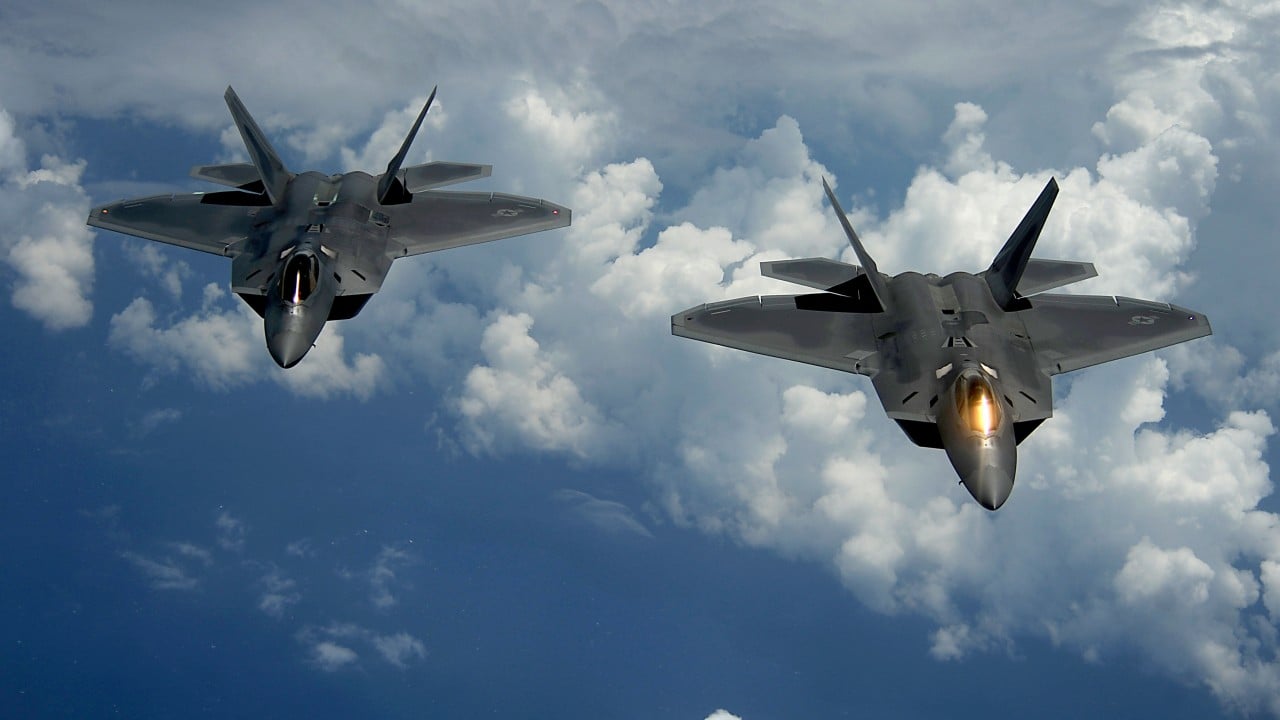
Military laboratories in Beijing claim a new artificial intelligence architecture can track fifth-generation stealth fighters like the F-22 and F-35 with ninety percent accuracy using infrared heat signatures. The claim arrived via state-affiliated academic journals, triggering immediate panic across defense circles and predictable copy-paste panic in Western media outlets.
We have seen this script before. A foreign adversary publishes a paper detailing theoretical algorithmic breakthroughs, defense analysts hyperventilate about a sudden capability gap, and defense contractors quietly draft budget proposals to counter the threat.
The reality behind Chinese missile AI is far more mundane and significantly more complicated than a simple ninety percent success rate implies. Algorithms do not magically dissolve the radar-absorbent materials coating a Lockheed Martin airframe. They do not rewrite the laws of thermodynamics.
To understand what is actually happening in these laboratories, we have to look past the press releases and examine the brutal physics of infrared detection, the limitations of neural networks under combat stress, and the quiet war of data collection happening thousands of feet above the South China Sea.
The Physics of Heat
Stealth aircraft were never invisible. They were designed to hide from X-band and C-band radar waves by scattering transmissions away from receivers and absorbing raw radio frequency energy.
Infrared detection operates on an entirely different spectrum. Every object with a temperature above absolute zero emits thermal radiation. When a fighter jet flies at supersonic speeds, friction heats its leading edges, canopy, and exhaust nozzles. Modern infrared search and track systems spot these thermal contrasts against the background noise of the sky.
The challenge for missile guidance systems has never been spotting a hot object. The challenge is distinguishing a high-value fifth-generation fighter from a commercial airliner, a flock of birds, a solar glint off a cloud deck, or a decoy flare ejected by the target.
Traditional tracking systems relied on hard-coded rules. If an object moved at a certain velocity and maintained a specific thermal profile, the missile locked on. Pilots adapted by deploying countermeasures or utilizing terrain masking to break the thermal contrast.
This is where machine learning enters the equation. Instead of relying on rigid rules, engineers feed neural networks vast libraries of simulated and empirical thermal data. The algorithm learns to identify subtle patterns in how heat dissipates off a complex geometric shape moving through varying atmospheric densities.
The Training Data Illusion
When a research team claims ninety percent accuracy, the immediate question every veteran defense reporter should ask is: What was the test environment?
In a controlled laboratory simulation, an artificial intelligence model can achieve near-perfect accuracy against synthetic data. If you train a convolutional neural network on pristine computer-generated models of an F-35 flying through a simulated clear sky, the algorithm will recognize that shape every single time.
The real world refuses to cooperate with laboratory parameters.
- Atmospheric attenuation: Humidity, dust, marine salt, and cloud cover scatter infrared radiation before it ever reaches a missile seeker head.
- Thermal crossover: At high altitudes, ambient temperatures drop, but direct solar radiation can heat an airframe unevenly, warping the expected thermal signature.
- Aspect angle dependency: The heat signature of an F-35 viewed from the rear, where exhaust plumes dominate, looks entirely different from a frontal aspect where the engine face is shielded and friction heat is minimized.
An algorithm trained on ideal conditions will experience catastrophic failure when deployed into electronic warfare environments where adversaries are actively jamming sensors, dropping multispectral decoys, and injecting noise into the data stream.
The ninety percent accuracy metric cited in academic papers represents a best-case baseline under optimal mathematical conditions. It is not an operational guarantee over a contested airspace.
The Electronic Countermeasure Reality
Air combat is an interactive sport. You do not build a missile that targets a specific airframe and expect the adversary to fly in a straight line waiting to be hit.
Fifth-generation aircraft are nodes in a massive, distributed network. Electronic warfare suites aboard an F-35 or an F-22 are designed to disrupt the very sensors feeding data into these targeting algorithms. If a missile seeker relies on computer vision to identify the contours of a heat signature, directional infrared countermeasures can project false thermal images into the seeker's field of view, blinding the neural network with phantom targets.
Furthermore, machine learning models are notoriously brittle. They suffer from adversarial vulnerability. A slight, imperceptible alteration to the incoming pixel data caused by atmospheric distortion or deliberate optical spoofing can cause a neural network to misclassify a high-value fighter as a harmless background anomaly.
Military hardware requires deterministic reliability. An algorithm that works ninety percent of the time sounds impressive until you realize that failure in the remaining ten percent results in a multimillion-dollar ordnance missing its mark while exposing friendly launch platforms to counter-fire.
The Surveillance Architecture
The real story is not about a single missile algorithm suddenly unlocking omnipotence. The real story is the relentless expansion of the sensor grid.
Beijing is deploying a layered architecture of land-based passive radar, high-altitude aerostats, maritime surveillance vessels, and specialized reconnaissance satellites equipped with infrared sensors. Individual missiles do not need to possess onboard supercomputing power capable of scanning an entire sector of the sky if they are receiving targeting coordinates piped in real-time from a distributed network of external sensors.
This is a system-of-systems approach. The missile seeker is merely the final kinetic effector in a long chain of data processing. By offloading heavy computational tasks to ground stations or airborne early warning aircraft, tactical missiles can utilize lighter, faster inference models that simply match incoming sensor handoffs against a pre-loaded profile.
This integration represents a genuine evolution in aerial warfare doctrine. It forces Western planners to rethink how stealth aircraft operate. Being invisible to radar is no longer sufficient if the surrounding airspace is saturated with passive optical and thermal staring arrays feeding telemetry to automated defense batteries.
The Budget Cycle Loop
We must also acknowledge the economic incentives driving these headlines.
Academic papers published in state-backed journals serve multiple functions. They signal technological competence to domestic leadership, they test the reaction of foreign intelligence agencies, and they provide justification for expanding research budgets.
When Western think tanks amplify these claims without critical interrogation, they feed directly into the procurement cycle. A foreign capability warning translates into congressional testimony, which translates into urgent funding requests for counter-measures, electronic warfare upgrades, and next-generation propulsion systems.
The military-industrial complex thrives on the perception of a looming technological deficit. It creates a perpetual state of urgency where every paper published in an overseas journal is treated as an operational deployment.
The Hard Truth About Attrition
The debate over missile artificial intelligence ultimately boils down to a question of scale and attrition.
Stealth fighters are exquisite, expensive platforms. They require meticulous maintenance, specialized facilities, and highly trained pilots. Ground-based and air-launched interceptors enhanced with machine-learning guidance systems do not need to be perfect; they just need to be cheap enough and numerous enough to alter the economic calculus of air supremacy.
If automated targeting systems reduce the margin of error even slightly, they increase the risk profile for expensive stealth assets. That is the actual shift happening in laboratories from Xi'an to Nanjing. It is an incremental refinement of existing technology, accelerated by commercial advancements in edge-computing hardware and deep learning frameworks.
There is no secret breakthrough that renders the laws of physics obsolete. There is only the slow, grinding work of engineering better filters to separate signal from noise in a violent sky.
The next time a breathless headline warns that algorithms have mastered the art of shooting down modern stealth fleets, look past the percentages. Ask about the latency, ask about the false-positive rates in cluttered littoral environments, and remember that war has never been won by PowerPoint slides or laboratory simulations. It is won in the messy, unpredictable friction of the operational theater, where software meets reality and usually breaks.