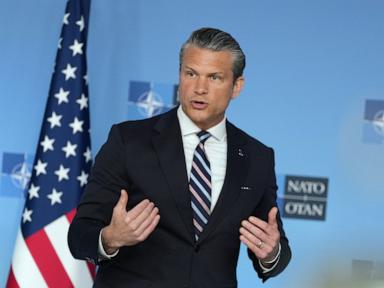
The Pentagon chief just announced a sweeping review of US forces in Europe after issuing a blistering critique of NATO allies who consistently fail to meet their defense spending commitments. While public friction between Washington and Brussels is nothing new, this sudden directive to reassess American military positioning signals a fundamental shift in the transatlantic alliance. The United States is no longer willing to underwrite European security while domestic budgets across the continent prioritize social spending over baseline defense capabilities. This review is a calculated political and military warning.
Beneath the bureaucratic language of global posture reviews lies a harsh reality that defense planners have whispered about for years. The current distribution of American troops, logistics hubs, and air assets across Europe is a legacy of twentieth-century geography, not modern strategic necessity. By tying a comprehensive force review to a public tongue-lashing over defense budgets, the Department of Defense is telegraphing that American military presence is a leverage point, not an unconditional guarantee. Meanwhile, you can explore other events here: Germany and the Brutal Reality of Its Missing Army.
The Friction Over Free Riding
For decades, American administrations have complained about European defense spending. The agreed-upon NATO benchmark requires each member state to allocate at least two percent of its gross domestic product to defense. Most fall short. The Pentagon chief’s public frustration stems from the fact that despite major regional security shocks, several of Europe’s largest economies still treat that target as an optional suggestion rather than a hard baseline.
This persistent shortfall creates an asymmetric burden. Washington funds the strategic enablers that keep NATO viable. These are not just soldiers on the ground. They are the invisible sinews of modern warfare. To explore the bigger picture, check out the recent article by Al Jazeera.
- Satellite reconnaissance and intelligence gathering
- Strategic airlift and aerial refueling fleets
- Advanced missile defense systems
- High-end cyber defense infrastructure
Without these American assets, European militaries lack the capacity to sustain high-intensity operations beyond their immediate borders. The Pentagon’s frustration is not merely about the raw dollar amounts. It is about the specific operational dependencies that European inaction forces the United States to maintain.
What a Force Review Actually Means
When the Pentagon launches a review of US forces in Europe, it does not mean troop ships will begin loading up for home next week. Military infrastructure is sticky. It takes years to build airbases, position ammunition stockpiles, and establish command structures. Instead, this review changes the calculus of presence and permanence.
Consider how American forces are deployed. A significant portion of the roughly 100,000 US troops in Europe are stationed in legacy bases in western Europe, far from the actual flashpoints of potential conflict. The review will likely look at shifting from permanent, family-accompanied assignments in stable Western European nations to rotational deployments in Eastern Europe.
Rotational deployments are cheaper for the Pentagon in the long run and place troops exactly where they are tactically needed. They also send a chilling message to host nations that rely on the economic windfall of large, permanent American bases. If a nation refuses to fund its own military, Washington can simply move its personnel to a neighboring country that takes the threat environment seriously.
The Logistics Illusion
Western Europe’s defense strategy has long relied on a dangerous assumption. The assumption is that in a crisis, the sheer economic might of the European Union can easily convert into military power. History suggests otherwise. Industrial capacity takes months, sometimes years, to pivot toward wartime production.
European defense industries are highly fragmented. Instead of building unified, cross-continental equipment programs, individual nations protect domestic defense contractors. This results in a dizzying array of non-interoperable weapon systems. The continent operates multiple distinct types of main battle tanks, fighter jets, and naval frigates. The United States, by contrast, standardizes its logistics tail across its entire force.
This fragmentation means that even when European nations do spend money, they spend it inefficiently. They duplicate administrative overhead while failing to build the deep munitions stockpiles required for prolonged conventional operations. The Pentagon chief knows that if conflict erupts, American stockpiles will be drained to save allies who failed to buy their own ammunition.
The Indo-Pacific Pull
The unstated driver behind this European force review is an entirely different part of the map. Washington is consumed by the strategic challenge in the Indo-Pacific. Every long-range bomber, every air defense battery, and every logistical specialist tied down in Europe is an asset that cannot be deployed to counter rising tensions in Asia.
The Pentagon faces a zero-sum game regarding high-demand, low-density assets. These include specialized assets like Patriot missile batteries, electronic warfare aircraft, and naval destroyers.
High-Demand US Assets Under Strategic Strain
├── Patriot Missile Batteries (Split between Europe, Middle East, and Asia)
├── Airborne Early Warning and Control (AWACS) Fleets
├── Fleet Oilers and Underway Replenishment Ships
└── Cyber Command Rapid Reaction Teams
Europe can no longer ignore the reality that America’s primary strategic focus has shifted. The United States cannot remain the primary security provider for two distinct, continent-sized theaters simultaneously without experiencing severe operational degradation. The review is an explicit attempt to force Europe into becoming self-sufficient enough to allow the US to reallocate resources eastward.
Political Shell Games in Brussels
The response from European capitals to American pressure is predictable. There will be promises of future spending increases, usually backloaded to take effect long after the current political leaders leave office. Bureaucrats will point to newly created defense funds and joint procurement committees.
These are often accounting tricks. Nations routinely reclassify internal security budgets, pensions, and border guard costs as defense spending to artificially inflate their numbers before NATO summits. The Pentagon’s analytical teams see through these maneuvers. They track real capability, not creative bookkeeping.
They look at readiness rates. They check how many fighter jets can actually fly on any given day. They measure how many battalions are fully equipped and ready to move within forty-eight hours. By those metrics, Europe’s actual combat readiness remains dangerously low, irrespective of what the official spending charts claim.
The Cost of the Security Umbrella
The American taxpayer has funded the defense of Western Europe for over three-quarters of a century. This arrangement made sense during the Cold War when European economies were devastated and the threat was immediate and massive. Today, the European Union possesses a combined economy that rivals or exceeds that of the United States.
The argument that Europe cannot afford to defend itself is economically absurd. It is a matter of political will, not financial capacity. Choosing to fund generous social safety nets while underfunding the military is a legitimate sovereign choice, but it becomes problematic when it relies on American troops to assume the physical risk of that defense.
The Pentagon chief’s public lashing is an admission that polite diplomacy has failed to change this dynamic. By putting US force structure on the table, the defense department is signaling that the status quo is fundamentally unsustainable.
Realignment of Strategic Realities
This review will likely result in a leaner, more agile American footprint in Europe. Expect to see a reduction in heavy, permanent administrative headquarters and an increase in lean, forward-deployed logistics nodes. The US will likely tell its allies that while the nuclear umbrella and strategic intelligence will remain, the ground-holding forces must be European.
If European capitals do not respond by rapidly expanding their conventional forces, they risk creating a dangerous security vacuum. The time for soft diplomatic assurances has passed. The Pentagon has started counting its assets, and the numbers show that Europe must finally start paying its own way.