You can always tell when a political campaign gets desperate because the ghost of Brexit starts wandering through the room.
Right now, Iceland is gearing up for a high-stakes national referendum on August 29, 2026. The question on the ballot looks simple enough on paper. Voters aren't deciding whether to join the European Union tomorrow. They're simply voting on whether the government should pull up a chair and resume the long-stalled EU accession talks that were frozen back in 2013. For an alternative perspective, read: this related article.
But things are getting ugly. Fast.
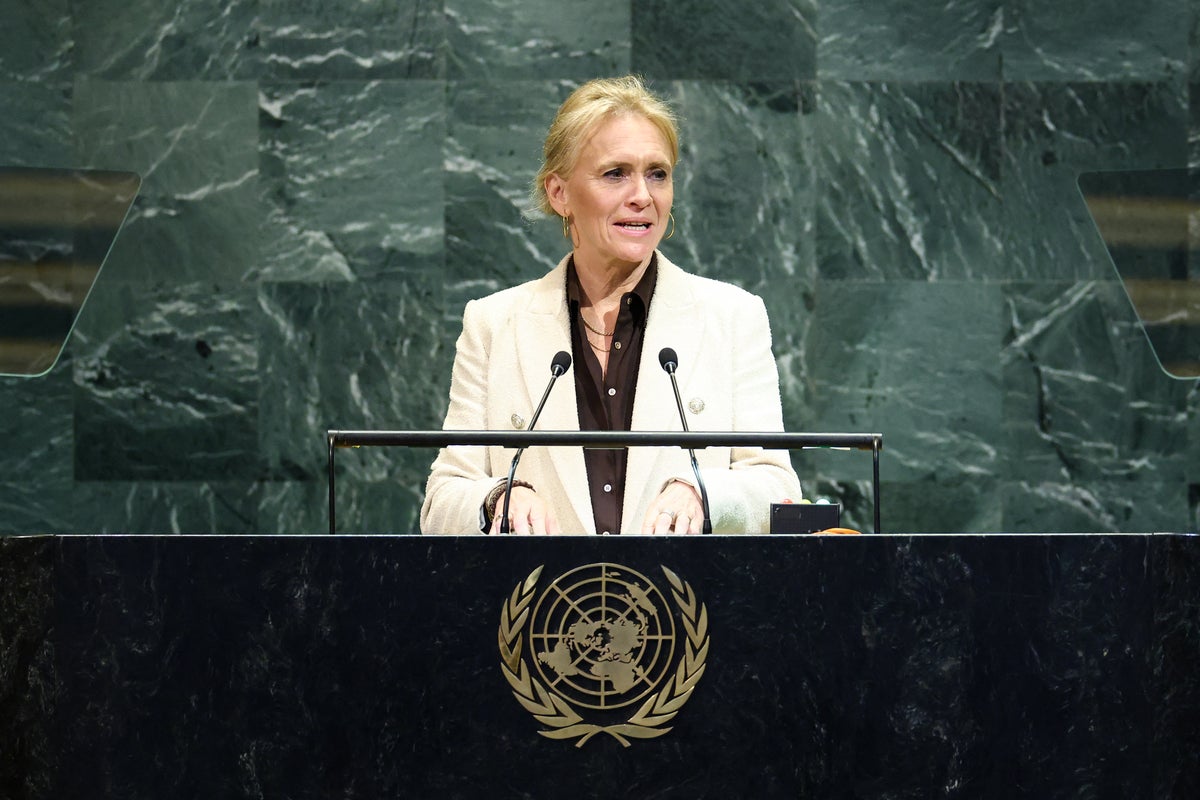
Iceland's Foreign Minister, Þorgerður Katrín Gunnarsdóttir, just dropped a massive warning flare. She openly accused her political rivals of pulling tactics straight from the playbook of Nigel Farage and the UK Reform Party. We are talking about classic, textbook fearmongering, weaponized numbers, and a sudden flood of sketchy online narratives designed to panic the public. Gunnarsdóttir isn't holding back. She frankly fears her country is stumbling headfirst into its very own "Brexit moment." Similar analysis regarding this has been shared by The New York Times.
The Ghost of Nigel Farage in the North Atlantic
When you look at how the anti-EU camp is mobilizing in Reykjavik, the parallels to the UK 2016 Leave campaign are striking. Gunnarsdóttir pointed directly at how opponents are using inflated, highly disputed financial figures to scare voters about what Brussels will cost the average citizen. It is the exact same strategy that put a fictional number on the side of a red bus in London a decade ago.
The strategy relies on a simple formula. Take a complex economic relationship, strip out all the nuance, and inject a heavy dose of sovereign panic.
But it's not just local politicians letting off steam. The modern playbook has evolved. It relies on a toxic mix of old-school populist rhetoric and advanced digital distortion. Gunnarsdóttir and Prime Minister Kristrún Frostadóttir have both explicitly warned that this vote is a prime target for foreign interference. Russia, in particular, has a vested interest in keeping European alliances fractured. When a tiny, strategic island nation in the North Atlantic considers tightening its bonds with Europe, Moscow notices.
The reality of campaigning has fundamentally shifted. Voters aren't just reading newspaper editorials anymore. They are looking for fast answers, and that's where the real danger creeps in.
How AI is Supercharging the Deception
This isn't 2016 anymore. The tools for muddying the waters have become incredibly sophisticated, cheap, and automated.
The President of Iceland, Halla Tómasdóttir, recently issued a blunt warning about how synthetic content and automated text tools are skewing the public debate. Academic researchers on the ground are already seeing this play out in real-time. Take the work of Stefán Einarsson, a prominent local researcher tracking digital media. His findings are genuinely alarming for anyone who cares about a clean democratic process.
Einarsson discovered that when everyday Icelandic voters use conversational AI search models to understand the referendum, the systems frequently spit out answers built on deeply unreliable, unverified sources.
- The Trust Trap: People tend to trust a cleanly formatted summary paragraph more than a messy search page. They assume the technology fact-checks itself. It doesn't.
- Language Vulnerability: Because Icelandic is a low-resource language globally, localized models are easily fed garbage data.
- Mass Production: Opposing groups don't need a massive team of copywriters anymore. They can generate thousands of tailored, highly convincing arguments against EU integration at the click of a button.
People take these machine-generated summaries as absolute gospel without ever checking the underlying sources. It makes the organic spread of bad information look like child's play.
The Greenland Shock and the New Cold War
To truly understand why Iceland fast-tracked this referendum for August 2026, you have to look beyond standard trade numbers. You have to look at the massive geopolitical tectonic shifts happening right in Iceland's backyard.
Basically, the international order that kept Iceland safe and prosperous for the last few decades is under massive strain. The world changed decisively over the last year, and a lot of it comes down to a bizarre, tense international spat involving the United States and Greenland.
When Washington renewed its aggressive, highly disruptive rhetoric about forcibly acquiring or dominating Greenland earlier this year, it sent absolute shockwaves through the Nordic region. For Iceland, watching a massive superpower treat its closest neighbor and long-time ally like a piece of real estate was a massive wake-up call. Old alliances are feeling incredibly shaky. Trade is actively being used as a political weapon by giant economies.
Iceland has zero standing army. It relies entirely on NATO and a historic bilateral defense agreement with the US. But when the geopolitical weather turns stormy, relying on a single volatile superpower across the ocean feels a lot less secure than it used to. Broadening alliances by stepping toward the EU isn't about snubbing Washington. It's about basic survival. It's about finding safety in numbers within a unified European framework.
The Intractable Battle of Fish and Sovereignty
Even without foreign bots and populist scare tactics, this was always going to be an uphill battle. The division inside Icelandic society is completely real, and the polling shows a nation split down the middle. A Gallup poll from March 2026 put the "yes" camp at 52% and the "no" camp at 48% regarding restarting talks. But when you ask voters if they actually want to join the EU permanently, those numbers flip, with a clear plurality showing deep hesitation.
Why the massive hesitation? It boils down to two massive red lines: fisheries and agriculture.
Icelandic EU Referendum Split (Gallup 2026)
--------------------------------------------------
Favor resuming talks:          52%
Oppose resuming talks:         48%
--------------------------------------------------
*Margin of error keeps this a dead heat.
For decades, Iceland explicitly avoided Brussels because it refused to hand over control of its rich North Atlantic fishing grounds. Fishing isn't just an economic sector there; it's the core of their national identity. The anti-EU campaign, heavily backed by the conservative Independence Party, argues that joining the bloc means surrender. They claim the EU's Common Fisheries Policy would force Iceland to share its pristine waters with foreign commercial fleets, destroying a meticulously managed, sustainable local industry.
The pro-referendum coalition is trying to counter this by framing the upcoming vote as a totally fresh start. They argue that Iceland can negotiate unique, ironclad Arctic exemptions for both its farmers and its fishermen, similar to special provisions carved out for other northern territories.
What You Should Actually Do Next
If you want to understand where this is heading without getting sucked into the online spin cycle, stop looking at the loud political rallies. Focus on the structural mechanics of the debate instead.
First, look at the actual text of the ballot when it drops. Remember that a "yes" vote on August 29 doesn't seal the deal. It merely reopens a diplomatic door that was slammed shut over a decade ago. Any final deal would still face a second, definitive national vote down the line.
Second, diversify your info diet. If you are researching the economic impacts of the EEA vs full EU membership, don't rely on quick social media explainers or a single query to a virtual assistant. Check the direct publications from independent domestic bodies like the University of Iceland's Institute of International Affairs.
The populist playbook thrives on making you emotional, anxious, and hasty. The best defense is realizing that the loudest voices in your feed usually have the least to say about the actual policy.


