Walk down the banks of the Tigris River in Baghdad's Karrada district, and you'll stumble into a literary ghost story that most tourists completely miss. People associate Agatha Christie with Devonshire tea rooms, foggy English country estates, and the rattling luxury of the Orient Express. They rarely picture the Queen of Crime sweating through Iraqi summers in a brick house overlooking the Tigris. Yet, she did. And trying to track down Agatha Christie's old home in Baghdad today presents a mystery worthy of Hercule Poirot himself.
Here's the immediate answer if you're trying to find it. The house still stands in the Karrada neighborhood, specifically near the Abu Nuwas promenade, though it isn't a polished museum with a gift shop and velvet ropes. For decades, local historians, British diplomats, and obsessed readers have debated which exact structure served as her primary residence during the 1930s. Because Iraq went through decades of war, rapid urban redevelopment, and shifting property records, pinpointing the precise threshold she crossed requires sifting through conflicting local accounts and architectural clues.
Why Agatha Christie Lived in Baghdad in the First Place
Christie didn't move to Iraq on a whim. She went there for love and dirt.
In 1928, following a painful divorce from her first husband, Archibald Christie, she canceled a planned trip to the West Indies at the last minute. A casual conversation at a London dinner party convinced her to board the Orient Express to Baghdad instead. From there, she traveled south to Ur, the ancient Sumerian city where renowned British archaeologist Leonard Woolley and his wife Katharine were leading major excavations.
Two years later, she returned to the dig site. That's where she met Max Mallowan, Woolley's young assistant who was fourteen years her junior. They married in September 1930.
For the next decade, Christie split her life between England and the Middle East. While Mallowan directed excavations at sites like Nineveh, Arpachiyah, and Nimrud, Christie worked right beside him. She wasn't just lounging in a tent sipping gin and tonics. She cleaned fragile ivory carvings using her own face cream, photographed artifacts, cataloged pottery shards, and managed camp logistics. Between dig seasons, Baghdad served as their urban base.
The Karrada House Mystery Explained
If you ask ten Baghdad architectural historians where Agatha Christie lived, you'll likely get two or three slightly different answers. That's the core of the Baghdad house mystery.
During the 1930s, British archaeologists and expatriates gravitated toward Karrada, a leafy peninsula formed by a sharp bend in the Tigris River. Back then, it was a quiet suburb filled with citrus orchards and traditional Iraqi courtyard houses built from distinctive yellow-ochre brick. Today, Karrada is a bustling, densely packed commercial and residential hub.
The most widely accepted candidate for Christie's Baghdad home sits near Abu Nuwas Street, the famous riverside avenue named after the classical Abbasid poet. Over the years, the building fell into severe disrepair. Roofs sagged. Brick walls crumbled under the relentless Iraqi sun. Because the Iraqi government never officially expropriated the property to turn it into a heritage site, private ownership changed hands multiple times.
Why hasn't it been definitively plaque-mounted and preserved? Simple. Survival took priority over literary tourism. Between the 1980s Iran-Iraq War, the 1991 Gulf War, the 2003 invasion, and the sectarian violence that followed, Baghdad's municipal authorities had far more urgent crises than verifying municipal deeds from the British Mandate era. Property registries were damaged or lost. Neighbors moved away. By the time foreign journalists and literary pilgrims started looking for the house again in the 2010s and 2020s, the physical neighborhood had transformed around it.
The Architecture She Knew
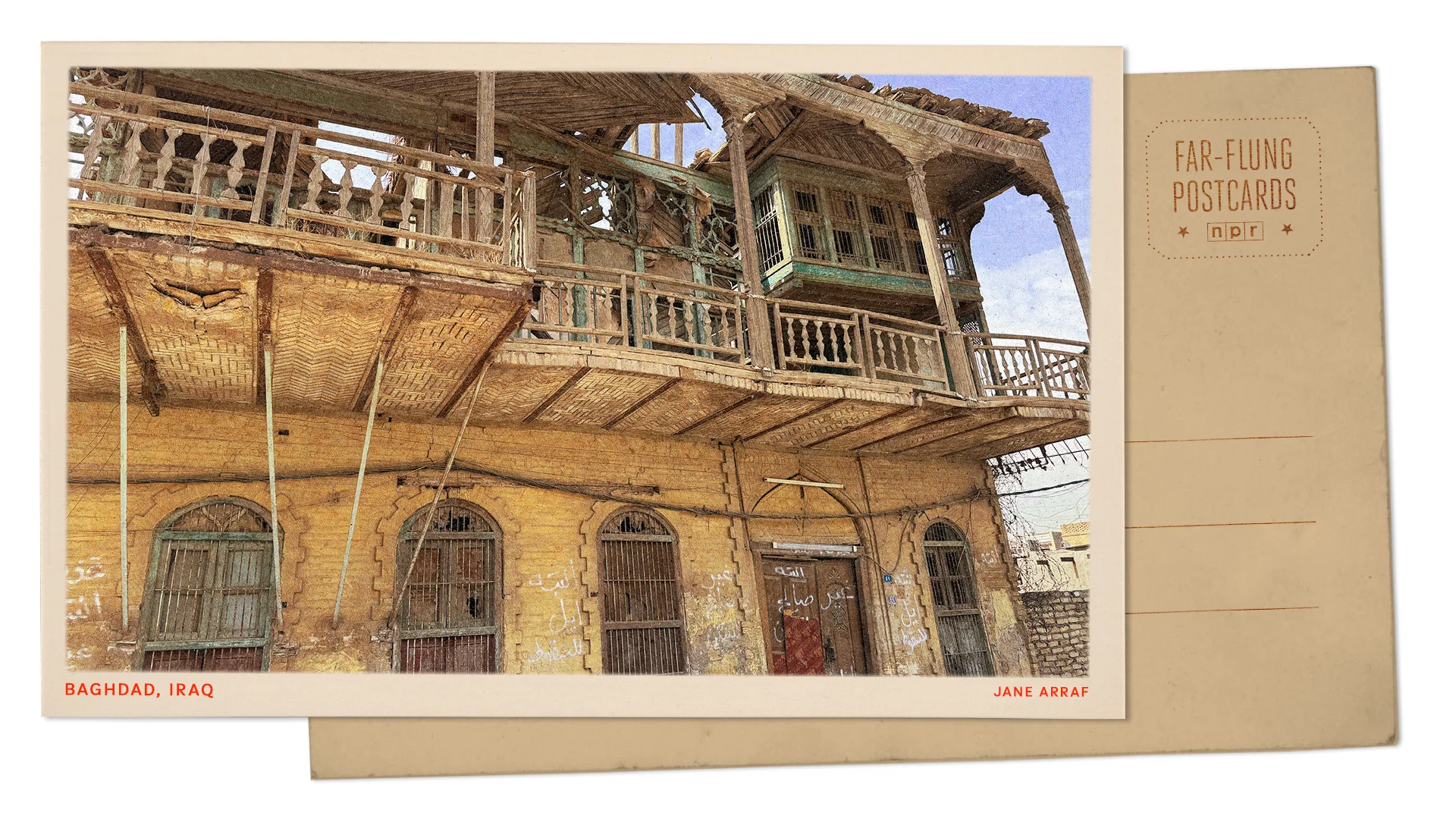
Even when standing in front of the weathered Karrada properties, you have to use your imagination. Traditional Baghdadi homes from that period featured shanasheel—intricate, overhanging wooden latticework balconies designed to catch river breezes while shielding residents from the street's glare.
Christie loved these spaces. In her memoirs, she frequently wrote about the sensory overload of Iraq. She noted the smell of woodsmoke, the call to prayer echoing across the water, and the blinding afternoon heat that forced everyone indoors behind heavy shutters. If you walk past the surviving heritage homes in Karrada today, those crumbling wooden balconies are the clearest visual link to her era.
How Iraq Shaped Her Most Famous Books
You can't separate Agatha Christie's time in Baghdad from her bibliography. Iraq didn't just provide exotic backdrops; it gave her the psychological isolation she needed to trap her characters.
Take Murder in Mesopotamia, published in 1936. The novel is set directly on an Iraqi archaeological dig, and the murder victim, Louise Leidner, was famously modeled after Katharine Woolley, the brilliant yet notoriously difficult wife of Leonard Woolley. Christie knew the exact layout of those expedition houses because she lived in them. She understood how claustrophobic a small group of Westerners could become when cut off from the outside world by miles of desert.
Then there's They Came to Baghdad (1951), a Cold War espionage thriller rather than a traditional Poirot whodunit. Christie set the action right in the heart of the city. She wrote about the Maude Bridge, the Tigris riverbanks, and the dusty streets she walked daily. Reading it today feels like looking at a time capsule of mid-century Baghdad before high-rises and concrete blast walls altered the skyline.
Even Murder on the Orient Express owes its existence to her Iraqi life. She wrote much of the novel in Room 411 of the Pera Palace Hotel in Istanbul, a regular stopover on her journey between London and Baghdad. In fact, the train itself was her literal commute.
What She Actually Wrote About Baghdad
In 1946, Christie published Come, Tell Me How You Live, a lighthearted, deeply affectionate memoir about her archaeological expeditions with Max Mallowan in Iraq and Syria. Unlike her murder mysteries, there are no corpses here. Just sandstorms, stubborn trucks, eccentric local workmen, and the sheer joy of uncovering ancient history.
She wrote honestly about the absurdities of expatriate life in Baghdad. She mocked the rigid social expectations of the British colonial set while expressing genuine warmth for the Iraqi people she worked alongside. If you want to understand what her daily life in the Karrada house actually felt like, skip the biographies and read that book. It captures her voice without any filter.
Visiting Agatha Christie's Baghdad Today
Can you actually go there? Yes, though you need realistic expectations.
Iraq has opened up considerably to international travelers over the last few years, with visa-on-arrival options expanding for many Western nationalities. Baghdad is noticeably calmer than it was a decade ago, and Abu Nuwas Street once again comes alive at night with families eating masgouf—the city's signature grilled river carp—along the Tigris.
However, if you show up in Karrada expecting an "Agatha Christie Experience," you're going to be disappointed. There are no guided tours. There's no museum curator waiting to hand you an audio guide.
If you want to trace her footsteps in Baghdad effectively, focus on three specific locations rather than hunting down a single locked door:
- Abu Nuwas Street in Karrada: Walk the riverside promenade late in the afternoon when the heat breaks. Look across the water toward the Karkh side of the city. The river bends here in the exact same curve Christie watched while plotting her novels.
- The Iraq Museum: Located in the Al-Salihiyah neighborhood, this is where the actual artifacts Christie and Mallowan excavated ended up. You can stand inches away from the intricate Nimrud ivories that Christie personally cleaned with her own face cream nearly a century ago. The museum suffered devastating looting in 2003, though thousands of pieces have since been recovered and restored.
- The Al-Mutanabbi Street Book Market: Historic Baghdad's literary heart. While the street dates back to the Abbasid era, its bookstalls still stock Arabic translations of Christie's novels alongside vintage English paperbacks. Iraqi readers have loved her work for generations, largely because she treated their country as a living, breathing place rather than a one-dimensional backdrop.
Why Baghdad Still Matters to Christie Fans
Most literary tourism is sanitized. You buy a timed-entry ticket, walk through a recreated parlor, snap a photo of a replica typewriter, and exit through a cafe selling overpriced scones.
Baghdad refuses to offer that kind of neat closure. The mystery surrounding Agatha Christie's old house in Karrada—whether a specific crumbling brick wall was hers or her neighbor's, and whether it will survive another decade of real estate development—mirrors the exact kind of puzzle she spent her career constructing.
Iraqi heritage activists and local architects have repeatedly called for the Karrada riverfront houses to be formally protected and restored. Progress moves slowly. Funding is scarce, and commercial developers eye the prime riverfront land constantly.
If you're planning a literary pilgrimage or researching Christie's Middle Eastern years, start by picking up a copy of Come, Tell Me How You Live and They Came to Baghdad to map her physical movements across the city. If you do make the trip to Baghdad, hire a local architectural guide in Karrada rather than relying on outdated blog coordinates, and make the Iraq Museum your first stop to see the tangible artifacts she actually held in her hands.