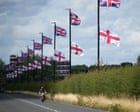
You can't just zip-tie a flag to a streetlight in Birmingham anymore. The High Court just made sure of that, granting Birmingham City Council an interim injunction that makes attaching Union Jacks—or any unauthorized items—to street furniture a serious legal risk.
People are furious. Social media erupted within minutes of the ruling, with critics calling it an attack on British patriotism and local identity. Yet almost nobody actually read the court filings or looked at the real-world infrastructure mechanics behind the decision. When you strip away the culture-war noise, this isn't really a story about hating the flag. It's a story about structural engineering, public liability law, and what happens when grassroots political campaigns collide with aging municipal hardware.
Why Birmingham City Council Went to the High Court
Let's get the legal reality straight first. Local councils don't wake up one morning and decide to burn thousands of pounds on High Court injunctions just to ruin someone's afternoon. They go to court when routine enforcement fails.
For months prior to this ruling, council contractors were taking down unauthorized flags attached to lamp-posts and highway columns across several Birmingham neighborhoods. Almost immediately, new ones went right back up. Workers faced verbal abuse, intimidation, and physical obstruction while trying to do basic maintenance on the city's lighting network.
Standard highways legislation gives councils the authority to remove obstructions under the Highways Act 1980. That's fine when you're dealing with an isolated fly-poster or a stray banner. It falls apart completely when coordinated groups repeatedly re-attach items across dozens of streets, creating a game of cat-and-mouse that drains public funds and puts highways workers in harm's way.
An interim injunction changes the legal math entirely. Instead of simply taking a flag down and issuing a minor fine, breaching an injunction puts individuals in contempt of court. That carries the threat of heavy fines, asset seizure, or even prison time. It's a blunt instrument, sure, but from a municipal legal standpoint, it's the only tool left when standard deterrence stops working.
The Engineering Problem Nobody Wants to Talk About
Here's where most armchair commentators miss the point. A streetlight isn't a flagpole.
I've spent years analyzing local authority infrastructure and public realm disputes, and the gap between how people think street furniture works and how it's actually engineered is massive. Standard lighting columns are calculated to withstand very specific wind-load tolerances based on their height, wall thickness, and the surface area of the lantern at the top.
When someone straps a large fabric flag halfway up a steel or aluminum column, they change the aerodynamics of that structure overnight. A wet Union Jack whipping in a 45-mph autumn gust acts like a sail. It creates cyclical torsional stress—twisting and vibrating the metal in ways the foundation bolts were never designed to absorb.
If a council allows unauthorized attachments to remain on its columns, it assumes legal liability the moment something goes wrong. Imagine a corroded column snapping in high winds and landing on a passing car or a pedestrian. The first question an insurance investigator asks isn't about free speech or national pride. They ask whether the highway authority knew about the unauthorized wind load and failed to act.
Councils that actually want flags flown along major routes spend serious money on structural stress-testing, bespoke brackets, and scheduled inspection regimes. Even then, many older columns fail the load test and have to be skipped. You can't replicate that safety margin with heavy-duty cable ties bought from a hardware store.
How the Interim Ban Actually Works
Because this is an interim injunction, it isn't the final word on the matter. In English civil law, interim relief is granted to hold the status quo while the court prepares for a full hearing where all arguments get aired properly.
The order covers specific conduct across Birmingham's public highway network. Under its terms, individuals are prohibited from:
- Attaching flags, banners, posters, or similar items to lamp-posts, traffic signal poles, road signs, or pedestrian guardrails without explicit written permission from the council.
- Climbing lighting columns or using ladders and cherry-pickers on the public highway to install unauthorized displays.
- Obstructing, threatening, or interfering with council employees or contractors who are removing unauthorized attachments.
Notice what isn't banned. You can still fly a Union Jack from a proper flagpole in your own front garden. You can hang one in your bedroom window, drape it over your balcony, or carry it down the street during a lawful public event. The court order stops strictly at the edge of public highway infrastructure.
That distinction matters enormously, even if it gets lost in angry headlines. Property rights and highway safety law draw a hard line between private land and public assets maintained at taxpayers' expense.
The Free Speech Argument vs. Public Property Law
Whenever a council restricts flags or banners, the conversation instantly pivots to Article 10 of the European Convention on Human Rights—the right to freedom of expression. Critics argue that banning flags on lamp-posts silences legitimate political expression and national pride, especially when people feel ignored by local government.
Courts take Article 10 seriously, but they also recognize that freedom of expression doesn't give anyone an automatic right to use public infrastructure as a personal billboard. If Birmingham City Council allowed one group to keep Union Jacks on streetlamps indefinitely, it would struggle legally to stop another group from covering the exact same poles in partisan campaign slogans, commercial adverts, or rival banners the following week.
Public authorities are bound by strict rules on neutrality and consistent enforcement. Once you open lamp-posts up to informal public curation, you lose control over the visual environment and road safety very quickly. Drivers already deal with enough visual clutter around busy junctions; adding flapping fabric near traffic signals and speed cameras creates genuine distraction hazards.
What Happens When Councils Don't Enforce the Rules
You only have to look at other UK towns and cities over the past decade to see what happens when local authorities look the other way on street furniture attachments.
First, the zip-ties stay up long after the fabric shreds. Within three months of exposure to British rain and road grit, cheap polyester flags turn into tattered rags wrapped around lantern heads or hanging low over cycle lanes. Nobody who put them up ever comes back with a ladder to take the ruined remains down.
Second, maintenance schedules grind to a halt. When streetlighting engineers need to replace an LED lantern or inspect wiring inside a base column, they can't safely work around tangled ropes, metal brackets, and frayed fabric tied across access hatches. Every delayed repair costs the council extra call-out fees—money that comes straight out of the same stretched budget paying for pothole repairs and bin collections.
Birmingham City Council's financial troubles are well documented. Having issued Section 114 notices in recent years and faced massive budget restructuring, the authority has virtually zero spare cash to spend on repeated emergency clean-up crews or damaged lighting columns. From their perspective, spending money on a preventative injunction is cheaper than paying contractors to clear the same streets every fortnight.
Practical Realities for Residents and Campaigners
If you live in Birmingham—or anywhere else in the UK watching this legal precedent closely—it helps to understand where the real boundaries sit so you don't accidentally walk into a contempt-of-court trap.
- Keep displays strictly on private property. A freestanding flagpole in a front garden (within standard permitted development height limits, usually up to 4.6 meters) or a wall-mounted bracket on your own house avoids highway law altogether.
- Check local planning rules before installing permanent poles. While flying the Union Flag doesn't normally require advertisement consent under UK planning regulations, the physical structure holding it still needs to meet basic safety and height rules.
- Use the formal event permit process for community celebrations. If a neighborhood wants street decorations for a royal milestone, national holiday, or major sporting tournament, councils have established application routes that verify bracket safety and public liability insurance ahead of time.
- Never confront highways crews. Under an injunction, interfering with contractors carries far stiffer penalties than putting a flag up in the first place.
Why Other Councils Are Watching Birmingham Closely
Birmingham won't be the last authority to test this approach. Local councils across England—from Yorkshire to the Midlands and the South East—have dealt with identical waves of unauthorized flag installations tied to local political campaigns and community protests.
Most councils hesitate to seek High Court injunctions because the upfront legal costs are steep and the political backlash is guaranteed. Nobody wants to be the council leader splashed across national front pages as the person who "banned the British flag."
Now that Birmingham has secured an interim order, legal teams in other town halls have a clear template showing that judges accept the safety, maintenance, and public-order arguments behind the ban. Expect other cash-strapped councils to cite this exact ruling if similar standoffs escalate on their own road networks.
The real lesson here isn't complicated. When political expression relies on hijacking public safety infrastructure, courts will side with structural safety and public liability every single time. If you want to fly the flag in Birmingham, put it on your own property where the council can't touch it—and leave the streetlights alone.