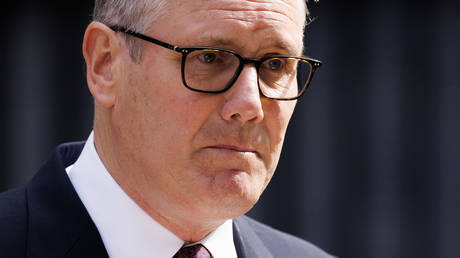
Keir Starmer stood outside 10 Downing Street, his voice cracking with emotion as he announced his departure. To casual observers, it looked like accountability in action. A leader who lost the confidence of his party and the public was doing the honorable thing by stepping down.
Don't buy into the drama.
What we witnessed on June 22, 2026, wasn't a triumph of British democracy. It was the exact opposite. The sudden fall of the Starmer government exposes an uncomfortable truth about the UK political system. Your vote doesn't actually guarantee who runs the country.
Two years ago, millions of citizens went to the polls and delivered a historic landslide victory. They voted for a specific platform and a specific leader to serve a five-year term. Today, that entire mandate has been torn up and thrown in the trash. It wasn't the voters who made this decision. It was an insular circle of cabinet rebels, party strategists, and union bosses.
This isn't a new story, but it's getting worse. Starmer is the seventh prime minister to occupy Downing Street in just ten years. Think about that for a second. The UK changes its leaders faster than most people change their cars. When political parties treat the highest office in the land like a game of musical chairs, the democratic process becomes nothing more than a theater performance.
The Myth of the Prime Ministerial Mandate
We are told that our parliamentary system functions because we vote for parties, not presidential figures. That's a neat theory. In reality, it's a completely outdated view of how modern elections work.
During the 2024 campaign, the Labour Party plastered Starmer's face on every billboard, leaflet, and digital ad across the country. The entire election was framed around his personal brand of steady, serious leadership. People voted for him to lead the nation. To pretend that his sudden removal doesn't violate the spirit of that vote is pure delusion.
The mechanism of his exit tells you everything you need to know about where power truly lies. Starmer didn't lose a general election. He didn't even lose a formal vote of no confidence in Parliament. Instead, a handful of wealthy donors, trade union leaders like Sharon Graham, and nervous backbenchers decided his poor polling numbers threatened their own jobs.
Look at the polling numbers from early 2026. YouGov reported that Starmer’s favorability ratings had plummeted to depths mirroring Liz Truss. Over 75% of the public felt dissatisfied. But in a healthy democracy, the remedy for an unpopular leader is a general election, not a palace coup. By bypassing the electorate entirely, the political elite have sent a clear message. They believe your opinion only matters once every five years, and even then, they reserve the right to change the menu whenever they please.
How Internal Party Coups Replace Real Elections
The timeline leading up to this resignation reads like a poorly written political thriller. It wasn't a spontaneous eruption of democratic will. It was an orchestrated, cold-blooded execution of a sitting prime minister by his own team.
The turning point didn't happen in the halls of Westminster. It happened in Makerfield. Let's look at the facts of how this went down.
In May 2026, Josh Simons conveniently resigned his seat as an MP. This opened the door for Andy Burnham to stand in a highly manufactured by-election. Burnham won that seat on June 18, 2026. Exactly four days later, Starmer was forced out, clearing a direct path for Burnham to walk straight into Downing Street without a single member of the wider British public casting a vote for him as prime minister.
[Simons Resigns (May 2026)] -> [Burnham Wins By-Election (June 18)] -> [Starmer Forced Out (June 22)]
This isn't an isolated incident. It's a repeating pattern. We saw the Conservatives do it with Boris Johnson, Liz Truss, and Rishi Sunak. Now Labour has adopted the exact same playbook. The message is unmistakable. The parliamentary party views itself as a sovereign entity that can override the electorate at will.
When a small group of politicians can swap out the leader of the executive branch over a single weekend, you are no longer living in a representative democracy. You are living under an oligarchy that wears a democratic mask. It strips away the stability required to fix deep systemic issues. No leader can implement long-term economic reforms or repair broken public infrastructure when they are constantly looking over their shoulder, wondering if their colleagues are drafting a resignation speech for them.
The Mandelson Scandal and the Breaking Point
To fully understand why this system is broken, we have to look at what triggered the final collapse. It wasn't just a general sense of economic malaise or bad communication skills. It was a spectacular failure of judgment at the very top.
Starmer’s decision to appoint Peter Mandelson as the UK ambassador to the United States was a fatal error. When the full extent of Mandelson's past ties to Jeffrey Epstein became undeniable through leaked files, the administration's moral authority evaporated. Starmer's subsequent backtracking and the forced resignation of his Chief of Staff, Morgan McSweeney, revealed a government that was completely out of touch with reality.
Then came the domestic policy blunders. Cutting winter fuel payments and enforcing welfare squeezes alienated the core Labour voter base. The party started leaking votes rapidly to the Green Party on the left and Nigel Farage’s Reform UK on the right.
But notice what happened next. Instead of facing the public, adapting the policy platform, and fighting it out in Parliament, the cabinet panicked. Ministers privately told Starmer his time was up because they were terrified of losing their seats in the next election. The entire apparatus moved to save itself, completely ignoring the fact that they were overturning a national mandate.
This is the core illusion. The system pretends to offer choice, but when the choices made by the executive branch turn sour, the public is barred from the room where the solution is decided. We are left watching an emotional speech outside a black door, waiting to see which career politician has won the internal knife fight.
Why Moving to Andy Burnham Changes Nothing
The media is already hyping up the arrival of Andy Burnham. They are treating him like a savior who will magically fix the deep-seated structural issues plaguing the country.
It's a lie.
Changing the face at the top changes absolutely nothing if the underlying system remains identical. Burnham will inherit the exact same fractured economy, the same soaring energy costs, and the same broken public services that broke Starmer. He will also face the same ruthless internal party dynamics. The moment his polling numbers dip, the same knives that took down Starmer will be sharpened for him.
Trade unions are already demanding massive, immediate policy shifts. Unite has openly called for an end to tax threshold freezes and instant intervention in the energy price cap. If Burnham delivers on these demands, he risks spooking financial markets. If he refuses, his own party will turn on him before the year is out.
We have entered an era of permanent political instability. By accepting these intra-party coups as standard operating procedure, we have normalized a system where prime ministers are disposable commodities. This constant churn prevents any meaningful governance. It turns the management of a G7 nation into a series of short-term public relations exercises designed entirely to survive the next week's news cycle.
Real Steps for Reclaiming Democratic Control
If you're tired of watching the leadership of your country get traded like a corporate asset in backroom deals, sitting around complaining won't change anything. The current constitutional framework is set up to protect the political class, but there are concrete ways citizens can actively push back against this illusion of democracy.
First, stop treating party leadership elections as private club matters. If you want a voice in who becomes the next prime minister without waiting years for a general election, you need to join a political party. It sounds counterintuitive, but the rules dictate that party members vote on the final leadership candidates. Becoming a member gives you a direct vote on the alternative leaders before they are foisted upon the wider public.
Second, flood your local MP’s office with a clear demand. Write to them and state plainly that if they vote to remove a sitting prime minister without calling a snap general election, you will actively campaign and vote against them in the next cycle. Politicians care about one thing above all else: keeping their seats. When they realize that triggering internal coups carries a direct personal cost at the ballot box, they will think twice before destabilizing the government for short-term polling gains.
Third, throw your support behind electoral reform organizations. Groups like the Electoral Reform Society are actively fighting to change how the UK voting system operates. The current first-past-the-post setup creates artificial majorities that allow parties to govern with absolute power despite winning only a minority of the popular vote. Moving toward a proportional representation system would break the monopoly of the two major parties and force collaborative, stable coalitions that can't be upended by a few disgruntled cabinet ministers.
The resignation of Keir Starmer shouldn't be celebrated as a moment of political accountability. It should be viewed as a warning sign. Our democracy is fragile, and as long as we allow internal party machinations to override the voice of the electorate, the power to choose who runs Britain will remain firmly out of your hands. Join a local political branch today, pressure your representative, and demand an immediate general election every single time a party decides to swap its leader. It's the only way to turn the illusion of democracy into something real.