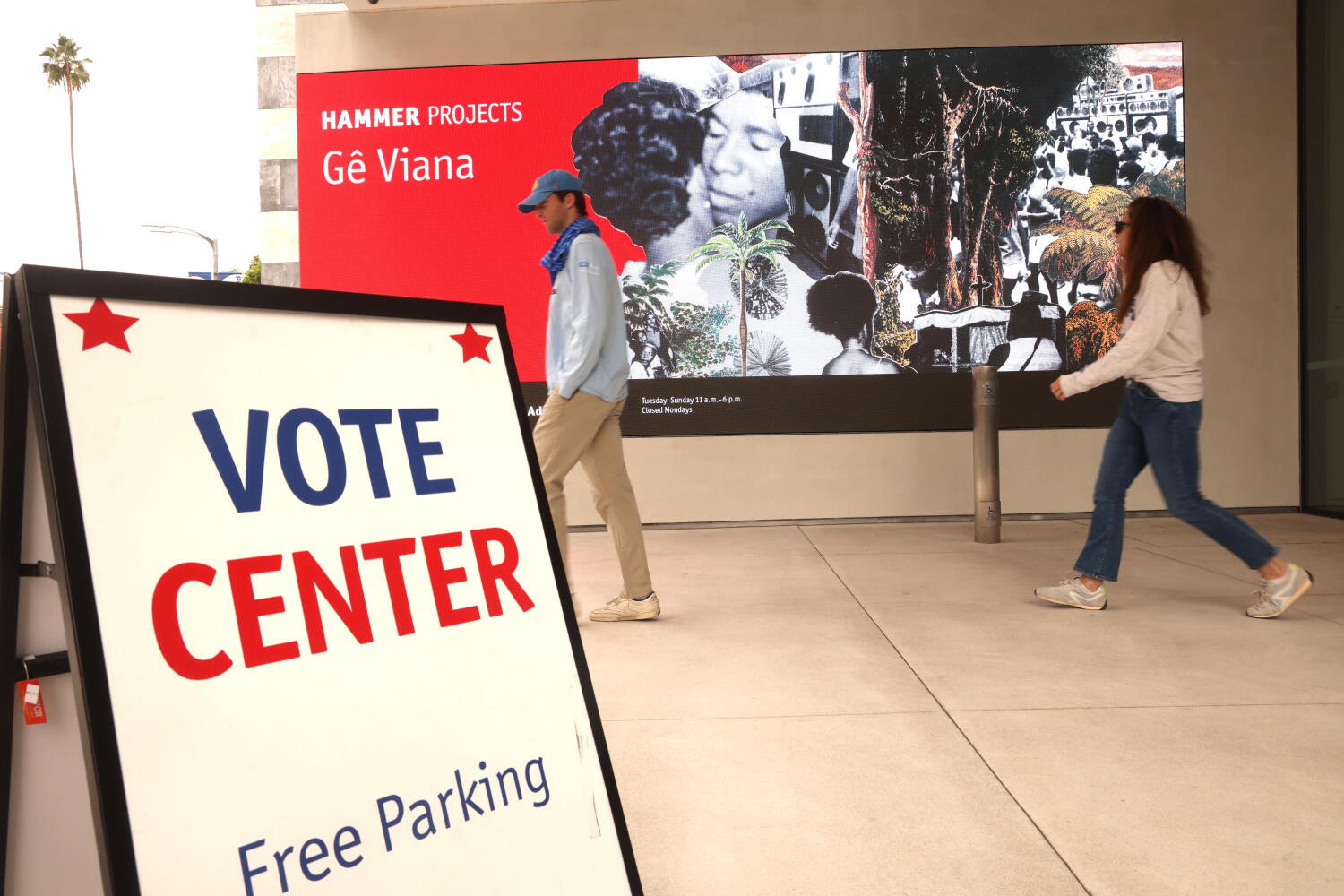
Standing in a slow-moving line at a Los Angeles Vote Center at 7:45 p.m. on Election Day with an unsealed mail-in ballot and zero idea what Measure PRT actually does isn't a civic duty flex. It's a self-inflicted headache. Every election cycle, thousands of Angelenos treat their ballot like a pop quiz they forgot to study for, frantically googling judicial candidates while poll workers try to keep the line moving.
Here's the truth. Voting in Los Angeles County is actually set up to make last-minute participation ridiculously forgiving—if you know how the rules work. Most people don't. They panic about missed registration deadlines, throw away slightly torn mail-in ballots, or skip half the page because they don't recognize the names.
Whether you're staring at a kitchen table covered in voter pamphlets or rushing to beat the 8:00 p.m. cutoff, you need clarity fast. Let's strip away the political noise and break down how the mechanics of L.A. voting work, what drives the biggest races on the ballot, and how to make smart calls on local measures without spending six hours reading legalese.
Stop Panicking About Missed Deadlines and Lost Ballots
The biggest myth in California politics is that if you missed the online registration deadline, you're locked out until the next cycle. Wrong. Dead wrong.
Under California law, Conditional Voter Registration—which everyone just calls same-day registration—lets you register and vote right up until 8:00 p.m. on Election Day. You can't do it online at the last second, so don't waste time refreshing the Secretary of State's website. Instead, walk into any of the 646 Vote Centers across Los Angeles County. You'll fill out a registration form on the spot and cast a provisional ballot. Once the Los Angeles County Registrar-Recorder/County Clerk verifies your eligibility during the official canvass, your vote counts.
What if you already registered, spilled coffee on your mail-in ballot, or lost the return envelope? You don't need to bring the ruined paper with you. Walk into any Vote Center in the county—not just one near your apartment—and tell the check-in worker you need an in-person ballot. Their electronic poll books sync in real time across the county, instantly voiding your unreturned mail ballot so you can vote cleanly on a Ballot Marking Device.
A few non-negotiable rules before you head out the door:
- The 8:00 p.m. line rule is ironclad. If you're physically standing in line at a Vote Center or an official drop box at 8:00 p.m., stay put. Poll workers are legally required to let everyone already in line cast a ballot.
- Sign the damn envelope. Every year, ballots get flagged because voters rush and forget their signature on the back of the pink or white return envelope, or their hurried scribble looks nothing like their DMV signature. Take three seconds and sign it properly.
- Check your postmark timing. If you're dropping your ballot into a USPS mailbox on Election Day, make sure it gets postmarked that same day. Better yet, skip the post office entirely and drop it in one of the county's bolted, graffiti-coated official drop boxes. Those ballots go straight to the Ballot Processing Center in the City of Industry without waiting on mail sorting.
- Leave the campaign gear in the car. California electioneering laws ban hats, shirts, buttons, or signs supporting or opposing any candidate or measure within 100 feet of a Vote Center entrance. Poll workers will ask you to turn your shirt inside out or leave it outside.
The Heavyweight Races Shaping Los Angeles
When you open an L.A. ballot, the top-of-the-ticket races look familiar, even if the stakes keep shifting. In local nonpartisan contests—like Mayor, City Attorney, and County Sheriff—party labels don't appear next to candidates' names. That trips up voters who rely on a quick "D" or "R" cue to speed through their choices.
The Battle for City Hall
Los Angeles runs on a strong-mayor and city council system, meaning the mayor acts as chief executive over city departments while the 15-member City Council controls legislation and land-use battles. In the 2026 Los Angeles mayoral showdown between incumbent Karen Bass and progressive City Councilmember Nithya Raman, voters faced a stark choice over how to run a city still dealing with disaster recovery and street-level homelessness.
Bass campaigned on steady institutional experience and her Inside Safe housing initiatives, arguing she needed a second four-year term to finish what she started. Raman, an urban planner backed by democratic socialists, ran directly at Bass's record—highlighting the devastating January 2025 Palisades Fire response while Bass was out of the country and pitching an aggressive timeline to cut tent encampments in half before the 2028 Olympic Games.
When evaluating any L.A. mayoral race at the last minute, ignore the glossy mailers stuffing your mailbox and look at two things: departmental accountability and housing execution. A mayor doesn't pass laws alone, so ask yourself which candidate can actually force agencies like the Los Angeles Fire Department, the Department of Water and Power, and the housing authority to hit measurable deadlines.
City Attorney and County Sheriff
Down-ballot executive offices often impact daily life in Los Angeles faster than anything happening in Sacramento.
Take the Los Angeles City Attorney race. Unlike the District Attorney, who prosecutes felonies across the entire county, the City Attorney handles misdemeanors inside city limits, acts as the city's corporate lawyer, and enforces tenant protections and consumer laws. In the 2026 contest between Marissa Roy and John McKinney, the ideological divide couldn't have been clearer. Roy pushed to use the office as a shield for renters and consumers while holding local police accountable. McKinney argued for aggressive misdemeanor prosecutions to tackle retail crime and street encampments. Your vote here comes down to whether you view the City Attorney primarily as a public-interest litigator or a quality-of-life prosecutor.
Then there's the Los Angeles County Sheriff, overseeing the largest sheriff's department in the nation and running the county's massive jail system. The high-profile rematch between incumbent Robert Luna and former Sheriff Alex Villanueva boiled down to oversight versus autonomy. Luna pointed to his 36-year policing career, cooperation with civilian oversight boards, and efforts to root out deputy gangs. Villanueva campaigned as a combative outsider promising to hire 2,000 deputies to end forced overtime and push back against county supervisors. If you're deciding between candidates in a sheriff's race, look closely at their relationship with the Civilian Oversight Commission and the Board of Supervisors—because gridlock between the Sheriff and the Board usually ends up costing taxpayers millions in legal settlements.
Decoding Local Ballot Measures Without Losing Your Mind
Nothing makes a last-minute voter freeze up faster than a wall of dense charter amendments and tax measures. In the November 2026 election alone, City of Los Angeles voters had to wade through eight local ballot measures alongside countywide measures and 14 statewide propositions.
You don't need a law degree to vote smartly on these. You just need a framework. Whenever I look at L.A. ballot measures under a time crunch, I sort them into three buckets: wallet impact, power shifts, and earmarked budgets.
Follow the Money and Tax Tweaks
Some measures hit your bank account directly, while others carve out exceptions to existing taxes. For example, Measure FD proposed a half-cent city sales tax hike specifically dedicated to funding the Los Angeles Fire Department. Anytime you see a dedicated sales tax on an L.A. ballot, remember that Los Angeles already carries one of the highest combined sales tax rates in California. Ask yourself whether the department genuinely lacks revenue or whether City Hall is using a popular agency like firefighters to bypass tough general-fund budget choices.
On the flip side, Measure TE targeted the city's "mansion tax" (Proposition ULA) by granting a one-time transfer tax exemption for residential properties damaged or destroyed in the January 2025 Palisades Fire if sold within five years. Even progressive and mainstream leaders who normally clash lined up behind Measure TE because penalizing disaster victims trying to sell burned parcels made zero sense, despite reducing ULA housing funds by an estimated $35 million to $66 million.
Charter Amendments and Power Shifts
The sneaky measures on an L.A. ballot are almost always City Charter amendments. They sound boring, so people skip them or blindly vote "yes." Don't do that. Charter amendments permanently rewrite how City Hall operates.
Look at how much structural change packed into the 2026 municipal slate:
- Measure EE reshaped city governance by cutting required City Council meetings from three days a week down to one, boosting penalties for campaign finance violations, barring Ethics Commissioners from running for local office for five years, and raising signature thresholds for ballot referendums. Supporters called it modernization and accountability; critics warned that fewer meetings and harder referendum rules insulate politicians from public pushback.
- Measure PL consolidated Los Angeles's seven Area Planning Commissions into a single Neighborhood Appeals Commission and tightened review timelines to speed up housing and development approvals. If you hate how slowly L.A. builds housing, streamlining wins your vote. If you want local neighborhood boards keeping a tighter leash on developers, you vote no.
- Measure LA expanded the authority of the Director of Public Works over major construction and contracting while lifting old charter bans that stopped the city from running revenue-generating business enterprises—like selling asphalt from city plants—or mortgaging city property.
- Measure PRK locked in a mandate to double the Department of Recreation and Parks' minimum budget over 10 years, while Measure PRT overhauled lease rules and added local community seats to the Board of Airport Commissioners near LAX and Van Nuys.
When you're stuck on a charter amendment, check who signed the official ballot arguments in the City Clerk's Voter Information Pamphlet. If labor unions, business chambers, and opposing council factions all signed the "Yes" argument with zero formal opposition filed, it's usually a consensus administrative fix. When you see public-sector unions fighting taxpayer associations or progressive advocacy groups like La Defensa splitting from establishment leaders, stop and read the fiscal impact statement.
What About Judges and Neighborhood Boards?
Every Los Angeles voter hits a brick wall near the bottom of the ballot: Superior Court judges and water or community college board seats. Honestly, even full-time political reporters have to dig to find dirt on judicial races.
Here's the practical reality. Incumbent Los Angeles County Superior Court judges rarely face challengers unless something controversial happened in their courtroom or an ambitious deputy district attorney spots an open seat. You won't find party affiliations or flashy policy platforms here. Instead, pull up the Los Angeles County Bar Association (LACBA) judicial evaluations on your phone before you walk into the booth. LACBA vets candidates through peer interviews and rates them from "Exceptionally Well Qualified" down to "Not Qualified." It takes 60 seconds to check, and it's infinitely more reliable than guessing based on whether a candidate's ballot title says "Criminal Prosecutor" or "Public Defender."
And remember this crucial rule that nobody tells new voters: you do not have to vote on every single race. Leaving a judicial contest or a obscure water district race blank will never invalidate the rest of your ballot. If you haven't researched a down-ballot office and don't trust a quick endorsement check, skip it and let your votes on the races you actually care about carry full weight.
Your 10-Minute Pre-Booth Action Plan
If you're heading out to vote right now, don't walk in cold. Take ten minutes at your kitchen table or in your parked car and run through this exact routine:
- Verify your registration and nearest drop-off spot. Pull up LAVOTE.GOV on your phone to confirm your registration status and find the closest Vote Center or 24-hour ballot drop box with the shortest wait times.
- Pre-mark a sample ballot on your phone. Use a nonpartisan tool like CalMatters' Voter Guide or the interactive sample ballot on the L.A. County Registrar's site to tap through your choices beforehand. You're allowed to bring notes or your phone into the voting booth—just don't take selfies with your marked ballot or film other voters.
- Check two endorsements you trust—and one you hate. Look up a trusted local voter guide like LAist's Voter Game Plan alongside an advocacy group whose values mirror yours, then glance at the opposing side's argument in the official pamphlet to make sure you aren't missing an unintended tax or power grab.
- Track your ballot after you cast it. Sign up for Where's My Ballot (California BallotTrax) so you get an automatic text or email confirming your ballot was received and counted—or alerting you immediately if your signature needs curing.
Grab your keys, bring a backup ID just in case you're doing same-day registration, and get your ballot in before 8:00 p.m.