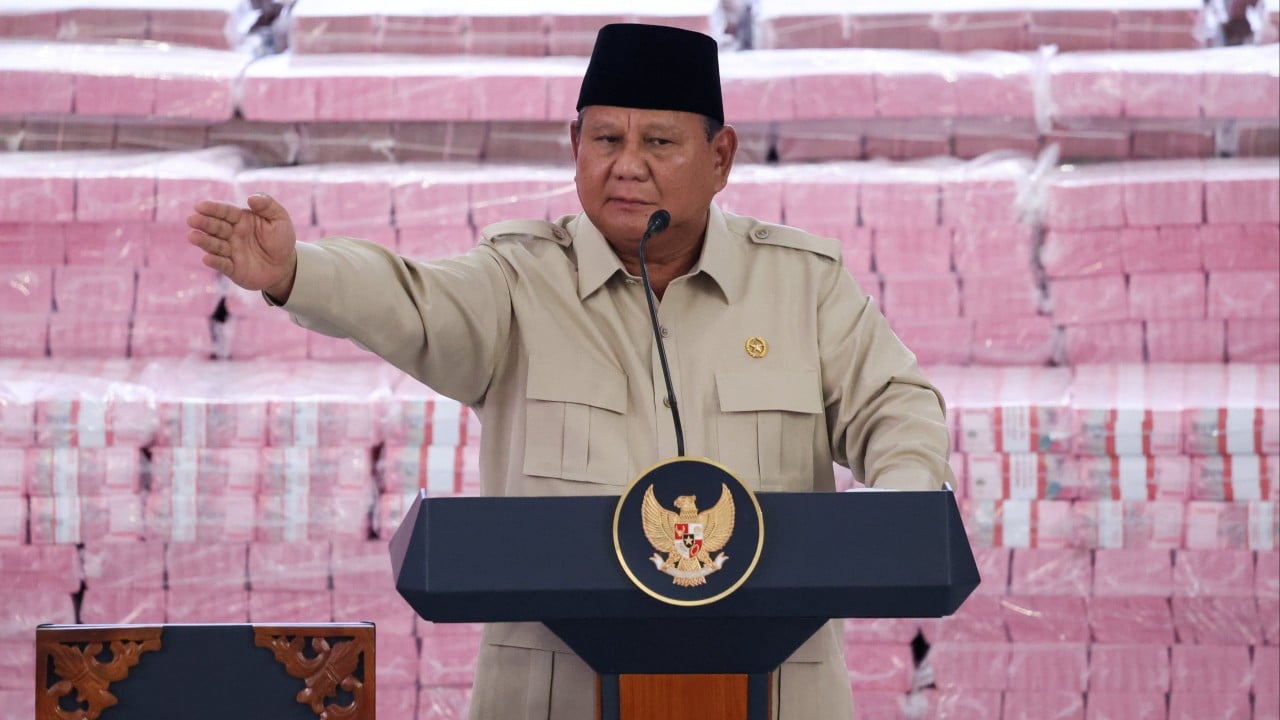
Saying sorry on a regional stage sounds like closure, yet the diplomatic reality behind Indonesian President Prabowo Subianto apologising to Singapore and Malaysia over transboundary haze is far messier than a polite headline suggests. On November 15, 2026, during a plenary session at the 49th ASEAN Leaders' Summit in Manila, Prabowo addressed nearly four months of choking forest and land fires. He offered an apology to his neighbours. Then he immediately added a caveat that caught regional observers off guard.
"It is not our fault, but once again we apologise, but we have done our best," Prabowo told fellow leaders.
If you've followed Southeast Asian environmental politics for any length of time, that phrasing feels familiar. It's a classic diplomatic tightrope walk. On one side sits domestic political pride in Jakarta, where admitting full culpability invites fierce nationalist pushback. On the other sits genuine regional frustration in Kuala Lumpur and Singapore, where residents have spent months breathing toxic air and watching healthcare costs climb. Most news reports treat the apology as a simple story of neighbourly goodwill, missing the hard legal, economic, and meteorological friction driving every word of that speech.
Why Prabowo Apologised While Blaming a 50-Year El Nino
Context matters here because Prabowo didn't walk into Manila looking to take unconditional blame. Just days before the summit, he had publicly railed against countries that "like to insult" Indonesia over wildfires. Shifting from defensive rhetoric to a formal apology in front of ASEAN leaders required a framing that protected Indonesia's sovereignty while acknowledging cross-border damage.
His solution was pointing to the sky. Prabowo attributed the severity of the blazes to the harshest El Nino weather phenomenon in 50 years.
Meteorologically, severe El Nino conditions do dry out tropical peatlands and turn minor agricultural burns into uncontrollable infernos. Practically, blaming the weather lets Jakarta frame the crisis as a natural disaster rather than a regulatory failure. You can't prosecute a climate cycle. Yet environmental analysts across Southeast Asia know that dry weather only provides the tinder—human land-clearing practices almost always supply the match.
The Human and Operational Cost Inside Indonesia
Western and regional coverage often focuses on skyline visibility in Marina Bay or Kuala Lumpur, which makes it easy to forget that Indonesians bear the worst of the smoke. In cities like Palangka Raya on Indonesian Borneo, authorities had to run free buses fitted with oxygen tanks just so residents could breathe during peak pollution weeks.
During his Manila address, Prabowo laid out the scale of Jakarta's emergency response to prove his government wasn't sitting idle:
- 71,000 personnel were mobilised on the ground to battle forest and land fires.
- 16 firefighters died during operations, with many others suffering serious injuries.
- Two helicopters were lost in active firefighting missions.
These numbers aren't minor talking points. They explain why Jakarta bristles when outsiders imply Indonesia ignores the flames. Fighting subsurface peat fires across rugged terrain is exhausting, lethal work, and Indonesia paid a heavy price in lives and equipment over nearly four months of burning.
Corporate Crackdowns and the 104 Companies Under Investigation
Acknowledging firefighter sacrifices doesn't let negligent plantation operators off the hook. If you want to know whether this apology carries real weight, look at the enforcement numbers Prabowo cited rather than his diplomatic phrasing.
Indonesia has traditionally struggled to hold powerful agribusiness and forestry firms accountable once the smoke clears. This time, Prabowo announced specific legal and administrative actions against companies linked to the fires:
- 17 corporate concessions have already been permanently revoked.
- 11 corporations have been formally indicted.
- 23 additional firms are slated to face indictment.
- 26 companies remain under active administrative investigation, bringing the total number of companies under police investigation to 104.
Revoking 17 concessions hits companies where it actually hurts—their land banks and future revenue. Fines get written off as a cost of doing business, whereas losing operating licenses threatens corporate survival. Still, seasoned observers remain cautious. Indictments in Jakarta don't always translate into swift convictions, and corporate ownership structures across Indonesia, Malaysia, and Singapore often obscure who truly controls the burning land.
How Much the 2026 Haze Actually Cost Singapore and Malaysia
Diplomacy moves slowly, while economic damage compounds daily. To understand why Singapore and Malaysia pushed so hard for regional accountability ahead of the Manila summit, you have to look at the financial and public health toll recorded across the Strait of Malacca.
In Singapore, economic losses from the haze crisis reached an estimated S$2.32 billion (US$1.81 billion) by October 31, surpassing the previous record set during the 2015 haze crisis by roughly 4 percent. Productivity dropped, tourism softened, and outdoor industries stalled. Rather than waiting solely for bilateral goodwill, Singapore's Parliament debated and passed amendments to its Transboundary Haze Pollution Act on November 4, strengthening enforcement powers and introducing tougher penalties—including fines up to $15 million and arrest threats—against firms linked to cross-border smoke.
Malaysia absorbed an equally punishing blow. Recent assessments estimate that the haze caused RM8 billion (US$1.97 billion) in welfare losses across Malaysia and may have contributed to roughly 1,700 premature deaths. Public clinics felt the immediate strain, with five clinics in Selangor alone logging over 15,500 upper respiratory tract infection cases during the smoke episode.
When a neighbour's land-clearing practices cost your economy nearly two billion dollars and strain your hospital wards, a summit apology feels like a starting point rather than a settlement.
Why ASEAN Haze Agreements Keep Stalling on Enforcement
People often ask why Southeast Asia hasn't solved this problem after decades of recurring crises. ASEAN actually adopted its Agreement on Transboundary Haze Pollution back in 2002, creating a regional framework for fire monitoring and mitigation. Indonesia ratified that agreement in 2014.
On paper, the architecture exists. In practice, sovereignty laws block cross-border enforcement.
When Singaporean or Malaysian regulators suspect a plantation company of burning peatland in Sumatra or Kalimantan, they need high-resolution concession maps and ownership registries to prove legal liability in court. Jakarta has historically been reluctant to hand over detailed concession data, citing national security and domestic privacy rules. Without shared evidentiary data, extraterritorial laws like Singapore's Transboundary Haze Pollution Act hit a brick wall.
At the 49th ASEAN Summit, Singapore Prime Minister Lawrence Wong directly targeted this bottleneck. He proposed expanding the bilateral Singapore-Indonesia haze task force into an ASEAN-wide platform for sharing information and evidence so member states can actually hold culpable companies accountable. Malaysia is also preparing a special panel ahead of taking on regional haze chairmanship duties, signaling coordinated pressure from Kuala Lumpur and Singapore to turn diplomatic pledges into shared data pipelines.
What You Should Watch Over the Next Six Months
Prabowo announced that Indonesia is preparing to establish a dedicated new agency alongside fresh fire-prevention programmes to stop future outbreaks before they cross borders. Creating new bureaucratic bodies sounds promising on stage, yet wet-season rains always make it easy for governments to lose urgency once blue skies return.
If you're tracking whether this apology leads to cleaner air next year, watch three concrete indicators rather than political speeches:
- Concession map transparency: Check whether Jakarta actually shares verifiable land-ownership data through Prime Minister Wong's proposed ASEAN-wide information platform. Without shared maps, corporate prosecutions across borders remain nearly impossible.
- Court outcomes for the 104 investigated firms: Follow how many of the 11 indicted companies and 23 pending indictments result in upheld convictions and permanent license cancellations rather than quiet settlements.
- Peatland rewetting budgets: Track whether Prabowo's proposed fire-prevention agency receives sustained funding during rainy months to keep drained peatlands wet before the next dry season arrives.
Monitor those three benchmarks through regional environmental registries and ASEAN Secretariat updates, and you'll know long before the next dry season whether Manila marked a genuine policy shift or just another round of summit diplomacy.