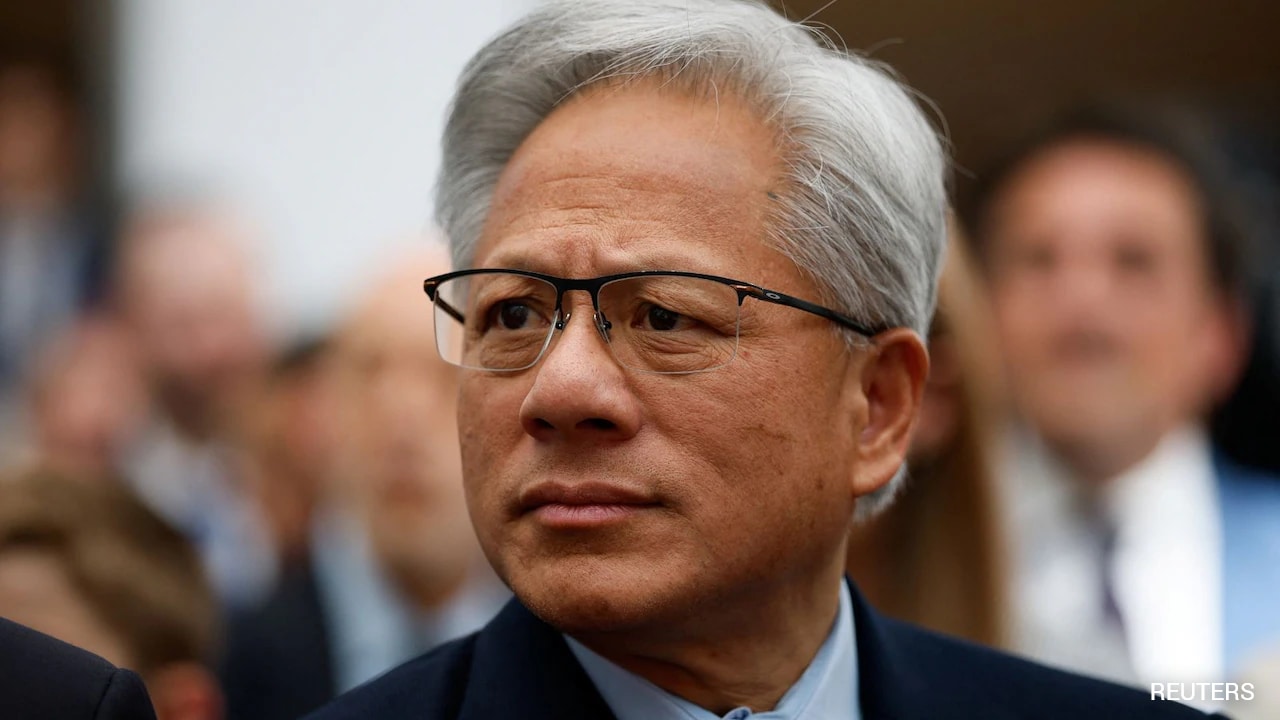
Public denials rarely tell the whole story when billion-dollar semiconductor deals and national security collide. When reports surfaced that Donald Trump was briefed during a trip to China about Chinese intelligence efforts targeting Nvidia CEO Jensen Huang, the immediate political reflex was flat denial. Yet the paper trail, intelligence protocols, and geopolitical stakes surrounding Nvidia's dominance in artificial intelligence tell a much sharper story.
If you're looking for the core truth behind the headline, it's straightforward. U.S. intelligence agencies routinely brief traveling presidents and senior officials on active counterintelligence threats involving critical American executives, especially when those executives sit at the center of the global AI hardware supply chain. Whether a political team publicly walks back the specifics of a briefing or disputes how a conversation unfolded doesn't change the operational reality on the ground in Beijing.
Why Jensen Huang Is a Prime Intelligence Target
Think about what Nvidia actually represents right now. It isn't just another Silicon Valley chip designer with a massive market capitalization. Nvidia's graphics processing units, particularly architectures like Hopper, Blackwell, and Rubin, form the foundational compute layer for modern artificial intelligence, defense modeling, and supercomputing.
That makes Jensen Huang one of the most consequential private citizens in the world.
When an executive holds the keys to the hardware bottleneck that every major superpower wants to control, foreign intelligence services don't sit on their hands. In my experience analyzing tech policy and export controls, people severely underestimate how aggressively state actors track corporate leaders who bridge U.S. innovation and Asian manufacturing. Huang travels frequently to Taiwan and mainland China, meeting with supply chain partners, foundry executives at TSMC, and local regulators. Every single one of those trips creates an intelligence collection opportunity.
Beijing's Ministry of State Security has spent years prioritizing semiconductor acquisition and supply chain visibility. They want to know how Nvidia plans to navigate U.S. Department of Commerce export restrictions. They want to know what modified chips—like the H20 series designed specifically to comply with federal rules—are in the pipeline before official announcements hit the press. Tracking the CEO's movements, communications, and local meetings isn't an anomaly. It's standard operating procedure.
How Presidential Briefings on Counterintelligence Actually Work
There's a massive gap between how Washington insiders talk to reporters and how intelligence briefings happen inside secure facilities.
When a U.S. president or high-level delegation travels to China, the CIA, NSA, and FBI counterintelligence divisions prepare exhaustive threat assessments. You don't walk into Beijing without a clear picture of who is being watched, which hotel rooms are compromised, and which American business leaders are currently in the crosshairs of state surveillance.
If Nvidia's leadership was under active surveillance during overlapping windows or around high-stakes trade discussions, that information goes straight into the briefing book. Why? Because economic espionage directly impacts trade negotiations. If Chinese negotiators already know Nvidia's fallback positions on export licenses or supply chain contingencies because they've monitored corporate communications, the U.S. side walks into the room at a disadvantage.
So why the public denial?
Politics and business don't like messy headlines. Admitting that the U.S. government briefed a president on active spying against America's most valuable chipmaker creates immediate friction. It forces uncomfortable questions about why Nvidia is still permitted to sell tailored chips into the Chinese market at all. It also puts Huang in an awkward spot—trying to maintain commercial relationships in China while Washington treats his company's technology like a strategic weapon.
What People Often Miss About the Nvidia and China Balancing Act
Most commentary treats the relationship between Nvidia, Washington, and Beijing like a simple binary choice. Either Nvidia is loyal to U.S. national security, or it's chasing Chinese revenue at any cost. That framing is lazy and completely ignores how the semiconductor industry actually operates.
Nvidia operates as a fabless chip designer. It doesn't own the massive fabrication plants that etch transistors onto silicon wafers. Instead, it relies heavily on Taiwan Semiconductor Manufacturing Company and a sprawling network of packaging, testing, and component suppliers across East Asia. Mainland China remains both a massive market for commercial AI hardware and a deeply integrated node in the broader electronics assembly ecosystem.
Here's what happens when U.S. export controls tighten:
- Washington bans the sale of top-tier AI accelerators like the A100, H100, and B200 to Chinese entities.
- Nvidia engineers quickly design downgraded versions—such as the A800, H800, and later the H20—that fall just below the federal performance thresholds for interconnect speed and processing density.
- Commerce Department officials eventually close those loopholes too, forcing another round of redesigns.
- Meanwhile, Chinese tech giants like Huawei push domestic alternatives like the Ascend 910B and 910C to fill the vacuum.
Every single step in that cycle creates intense friction. Huang has publicly argued that cutting U.S. chipmakers out of China completely doesn't stop Chinese AI development—it just hands the market to Huawei and accelerates Beijing's push for technological self-reliance. Hawks in Washington see it differently. They argue that every Nvidia chip sold into China, even a downgraded one, trains Chinese models and strengthens a geopolitical rival.
When you understand that tension, the intelligence angle clicks into focus. Beijing needs to know whether Washington is about to crush Nvidia's remaining China revenue streams. Spying on the company's leadership isn't just about stealing circuit blueprints anymore. It's about political and regulatory intelligence.
The Reality of Corporate Espionage in the AI Hardware Race
If you run a technology company, work in policy, or invest in semiconductor stocks, you can't afford to take diplomatic denials at face value. State-sponsored surveillance against executives isn't a relic of the Cold War—it's happening every day in hotel lobbies, airport lounges, and boardrooms across major tech hubs.
Look at the broader pattern documented by the FBI and the National Counterintelligence and Security Center over the past decade. Chinese intelligence operations routinely target:
- Executive travel itineraries and device traffic when senior leaders connect to local telecom networks or hotel Wi-Fi in mainland China.
- Supply chain intermediaries who handle logistics, customs clearance, and local regulatory approvals for hardware firms.
- Joint venture partners and local subsidiaries where domestic laws require data sharing or government oversight.
Even when a CEO takes strict operational security precautions—using burner phones, leaving primary laptops at home, and avoiding unsecured networks—the people around them rarely maintain the same discipline. Local lawyers, consultants, government affairs staff, and regional managers often operate on standard commercial devices. Intelligence agencies map the entire human network around a target, not just the target themselves.
Why Political Denials Happen Even When the Intelligence Is Solid
You might wonder why a political camp would deny receiving a briefing if the underlying intelligence is routine. Honestly, it usually comes down to narrative control and legal sensitivity.
First, acknowledging a specific intelligence briefing in the press confirms sources and methods. If a former or current official admits, "Yes, we were told Beijing was spying on Jensen Huang," foreign counterintelligence teams immediately audit how the U.S. knew about the operation. Was it a human source inside the Ministry of State Security? Was it an intercepted communication? Officials deny stories simply to avoid validating leaks.
Second, political leaders hate looking reactive. If a president is pursuing a specific trade deal, tariff structure, or diplomatic reset with Beijing, headlines about aggressive Chinese espionage against an iconic American CEO derail the messaging. It gives critics ammunition to argue that diplomatic engagement is naive while corporate espionage runs unchecked.
Third, corporate leadership itself prefers quiet resolution over public drama. Nvidia has billions of dollars in market value tied to investor confidence and global supply chain stability. Getting dragged into a public partisan fight over who knew what during a diplomatic trip helps nobody in Santa Clara.
How Investors and Tech Leaders Should Read These Signals
When high-level intelligence leaks clash with official denials, don't get distracted by the political theater. Look at the structural incentives instead.
The geopolitical reality surrounding AI hardware isn't softening. Regardless of who occupies the White House or what gets said at press conferences, the U.S. government views advanced semiconductors as the ultimate strategic choke point. At the same time, Beijing views breaking that choke point as an existential priority.
If you're tracking the semiconductor sector or managing cross-border tech operations, pay attention to three concrete indicators rather than press statements:
- Watch Federal Register updates from the Bureau of Industry and Security. New export control rules tell you what the intelligence community is actually worried about far more accurately than political speeches ever will.
- Monitor Nvidia's revenue breakdown by region in quarterly SEC filings. When China's share of data center revenue drops from over 20 percent down to single digits, you're seeing the real-world impact of national security pressure overriding commercial diplomacy.
- Audit your own cross-border operational security. If the CEO of a multi-trillion-dollar company with government-grade security advice is still a prime surveillance target, mid-market tech executives and researchers traveling in the region have zero margin for sloppy digital hygiene.
Take the denials for what they are—standard political damage control—and base your decisions on the underlying reality that high-stakes tech leadership and espionage are permanently intertwined.