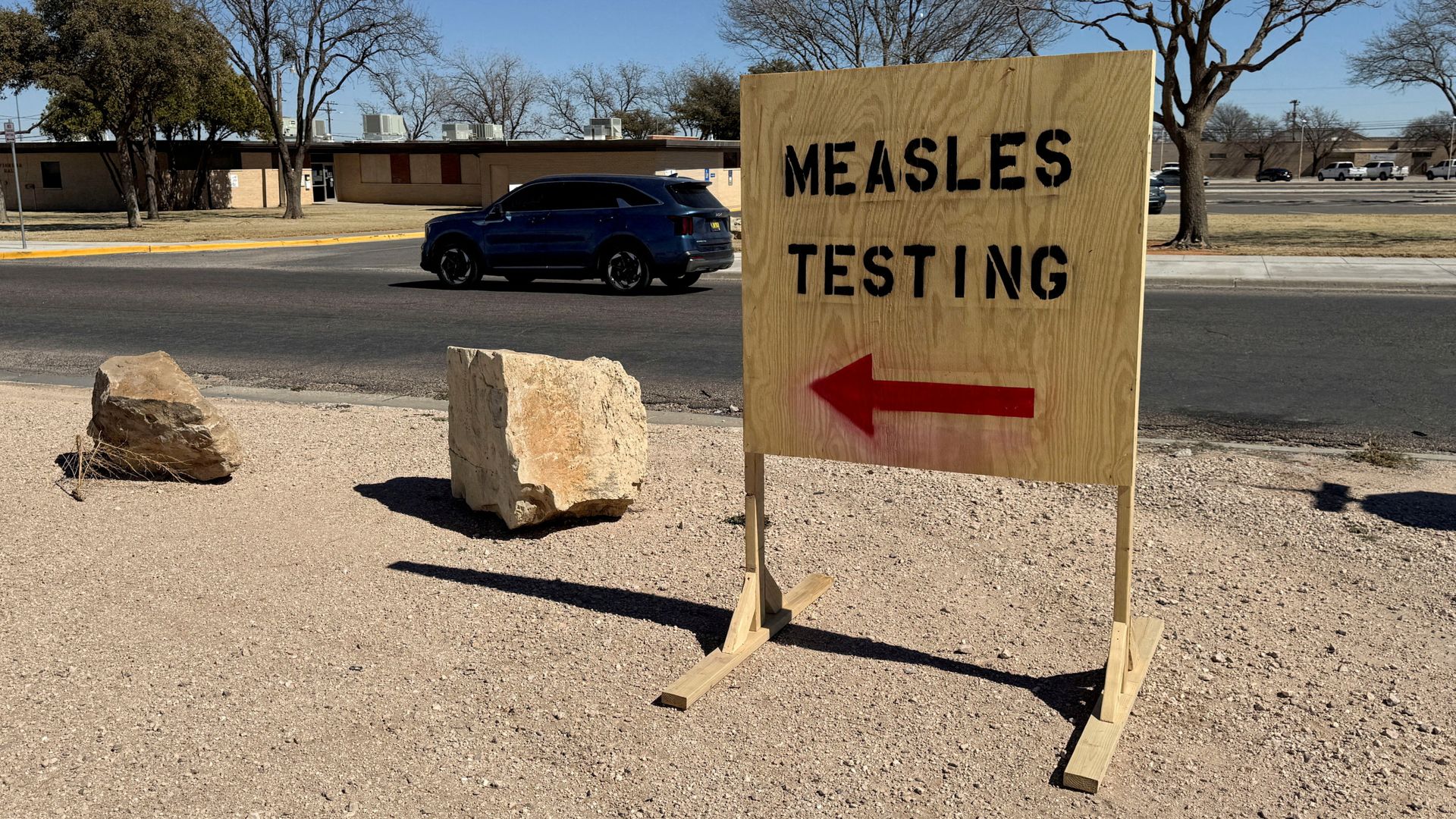
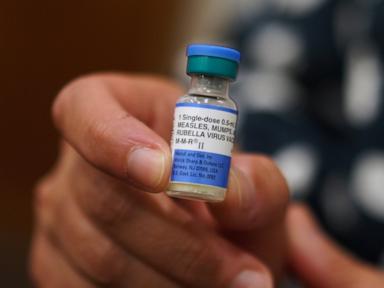
The United States lost its measles elimination status because of a simple, brutal mathematical rule. Under World Health Organization (WHO) and Pan American Health Organization (PAHO) guidelines, a country loses its elimination status the exact moment a single chain of measles transmission lasts continuously for 12 months or longer.
It isn't about hitting a random number of total cases. It's about duration.
When a virus spreads uninterrupted from person to person inside a country's borders for an entire year, health authorities officially classify it as endemic again. That's the line the U.S. crossed, reversing a public health milestone it had held since the year 2000.
If you've been following the headlines, you might think this happened overnight or that the MMR vaccine suddenly stopped working. Neither is true. What actually happened is a slow-motion collapse in localized vaccination rates, combined with global travel and a virus that finds every single crack in our collective immunity.
What Measles Elimination Status Actually Means
People hear "eliminated" and assume the virus vanished from the face of the earth. That's eradication, and we've only pulled that off once in human history with smallpox.
Elimination is different. It means the disease is no longer constantly circulating inside a specific geographic area. You can still get imported cases. Someone visits Europe or Asia, catches the virus, flies back to New York or Texas, and gets sick. That happens every year.
As long as local health departments trace those contacts, isolate the sick, and rely on high neighborhood immunity to snuff out the spark before it spreads for 12 straight months, the elimination badge stays intact.
In 2000, the U.S. reached that benchmark. For over two decades, even during bad outbreak years like 2019—when the U.S. saw 1,274 cases across 31 states, largely centered in under-vaccinated communities in New York—contact tracers barely managed to break the transmission chains right before the 12-month clock ran out.
Eventually, the clock ran out. When sustained transmission stretches past day 365, PAHO's regional verification commission reviews the genetic sequencing of the virus, confirms it's the exact same strain passing from neighbor to neighbor, and revokes the designation.
Why Measles Is So Unforgiving
You can't treat measles like the flu or even COVID-19. In infectious disease epidemiology, measles sits in a league of its own because of its basic reproduction number, known as R0.
For every one person infected with measles in a completely susceptible population, they will pass it to roughly 12 to 18 other people. Compare that to seasonal flu, which usually spreads to one or two people. Measles is wildly contagious.
Here is why it's so hard to contain once it enters a community:
- It hangs in the air. If an infected person coughs or sneezes in a grocery store aisle and walks away, the virus stays active in the air and on surfaces for up to two hours. You don't even have to be in the same room at the same time to catch it.
- You spread it before you know you're sick. People become contagious about four days before the telltale red rash ever shows up on their skin. By the time a parent realizes their kid has measles and not just a stubborn cold, the kid has already been to school, soccer practice, and a birthday party.
- The herd immunity threshold is razor-thin. Because it spreads so effortlessly, roughly 95% of a community needs to be immune to stop sustained outbreaks. Drop down to 90% or 88%, and the virus suddenly has plenty of fuel to keep burning month after month.
The Real Drivers Behind the Resurgence
Blaming this on a single event misses the bigger picture. Looking at epidemiological data from the Centers for Disease Control and Prevention (CDC), three distinct factors collided to break the U.S. firewall.
Falling Kindergarten Vaccination Rates
National averages look fine on paper, hovering just below the 95% target. National averages don't stop local outbreaks, though. Viruses don't care about state-wide statistics; they care about zip codes, school districts, and social circles.
During the COVID-19 pandemic, millions of kids missed routine pediatric checkups. While many families eventually caught up, a noticeable gap remained. According to CDC data tracking kindergarteners, national MMR coverage slipped from 95.2% in the 2019–2020 school year down to around 93% in subsequent years.
In specific states and counties, the drop was much steeper. In states like Idaho, kindergarten exemption rates climbed past 12%, leaving entire classrooms sitting way below the 95% safety threshold. When an imported case lands in a school where 15% of the kids aren't vaccinated, the outbreak practically writes itself.
Global Outbreaks Feeding Local Sparks
The U.S. doesn't exist in a bubble. When routine immunization programs stalled worldwide during the early 2020s, global measles cases exploded. The WHO and CDC reported millions of cases globally, with massive surges across parts of Europe, Africa, and Southeast Asia.
Every time global cases spike, the number of travelers carrying the virus into major U.S. international hubs—places like Chicago, Miami, Los Angeles, and New York—goes up. In 2024 alone, the U.S. saw a sharp jump in outbreaks linked directly to international travel, including a major cluster in a Chicago migrant shelter and dozens of smaller flare-ups across more than 30 jurisdictions.
Each imported case acts like a lit match. Years ago, those matches landed on wet wood and fizzled out. Now, they're landing on dry kindling.
Exhausted Local Public Health Departments
Stopping a 12-month transmission chain takes grueling, unglamorous shoe-leather epidemiology. Health workers have to interview every patient, list every restaurant, waiting room, and flight they took over a week-long window, call hundreds of strangers, check vaccination records, and arrange quarantine protocols.
After years of burnout, staff turnover, and budget cuts following the pandemic, many county health departments simply don't have the staffing levels they had a decade ago. A few missed contacts in a tight-knit, under-vaccinated community is all it takes for a chain of transmission to slip underground and survive past the one-year mark.
Common Myths That Cloud the Conversation
Whenever measles makes headlines, misinformation floods social media right alongside it. Clearing up the noise matters because confusion leads to bad health decisions.
Myth 1: "Measles is just a harmless childhood rash."
Before the measles vaccine was introduced in 1963, the U.S. saw roughly 3 to 4 million cases every year. Around 48,000 people were hospitalized annually, 1,000 developed encephalitis (brain swelling) that often left them deaf or intellectually disabled, and 400 to 500 people died—mostly previously healthy kids. Roughly 1 in 5 unvaccinated people who catch measles today end up in the hospital.
Myth 2: "Vaccinated people are the ones spreading it."
Two doses of the MMR (measles, mumps, rubella) vaccine are about 97% effective at preventing measles. One dose is about 93% effective. Can a fully vaccinated person occasionally catch measles if they're exposed to a massive viral load? Yes, in roughly 3% of cases. When they do, their symptoms are usually much milder, and they are far less likely to pass it on. Overwhelmingly, CDC outbreak data consistently shows that 85% to 95% of cases in U.S. outbreaks occur in people who are unvaccinated or whose vaccination status is unknown.
Myth 3: "Vitamin A replaces the vaccine."
You'll see this floating around wellness forums constantly. Doctors do use high-dose Vitamin A in hospitals to treat kids who already have severe measles, because the virus rapidly depletes the body's Vitamin A stores and increases the risk of blindness and death. Taking Vitamin A supplements beforehand does nothing to prevent you from catching the virus in the first place. Only immunity stops infection.
What Losing Elimination Status Changes in Real Life
Does losing this status mean the government is shutting down schools or issuing travel bans? No. Life on the street doesn't change overnight.
What changes is the reality on the ground for doctors, parents, and public health systems.
First, pediatricians and emergency room doctors have to change how they diagnose fevers and rashes. For 25 years, a young doctor in Ohio or Arizona might go their entire career without ever seeing a real case of measles. Now, doctors have to put measles back on their differential diagnosis list immediately. Missing an early case in an ER waiting room is one of the fastest ways to infect dozens of vulnerable people—including infants too young for their first shot and immunocompromised cancer patients.
Second, regaining elimination status is harder than losing it. To get that designation back from PAHO, the U.S. has to prove at least 12 consecutive months without any endemic transmission, backed by rigorous surveillance data proving they didn't just miss cases because nobody was testing for them.
Third, it puts serious pressure on state lawmakers regarding school vaccine exemptions. Some states only allow medical exemptions, while others allow philosophical or personal belief exemptions with little more than a signed form. Every time an outbreak forces hundreds of kids into a 21-day quarantine—the standard isolation period for exposed, unvaccinated students—parents and school boards start rethinking how easy those exemptions should be.
How to Check Your Own Immunity Right Now
If you're wondering where you stand, don't guess. Most adults fall into one of three clear buckets based on when they were born and what their medical records say.
Born before 1957: Public health agencies generally consider you immune. Measles was so widespread prior to 1957 that virtually everyone caught it naturally as a child and carries lifelong immunity.
Born between 1957 and 1989: Pay close attention here. Until 1989, doctors only recommended one dose of the measles vaccine. Also, a small percentage of people vaccinated between 1963 and 1967 received an inactivated (killed) version of the vaccine that wasn't effective. If you fall into this age bracket and work in healthcare, plan to travel internationally, or live near an active outbreak, ask your doctor about getting a second booster dose. Getting an extra MMR shot when you're already immune carries no harm.
Born after 1989: Standard pediatric guidelines call for two doses—the first at 12 to 15 months old, and the second between ages 4 and 6. If you got both shots, you're sitting at that 97% protection level for life.
If you lost your childhood vaccine card and your old pediatrician's office closed down years ago, you have two straightforward options. You can ask your primary care doctor for a simple blood test called an MMR titer, which checks your blood for measles antibodies. Even simpler, the CDC notes that if you can't find written proof of immunity, you can just go to a local pharmacy or clinic and get vaccinated. There's no need to test first.
Check your state's immunization registry online, pull up your family's records, and make sure everyone in your house has two documented doses on file before the next local exposure notice hits your school district.