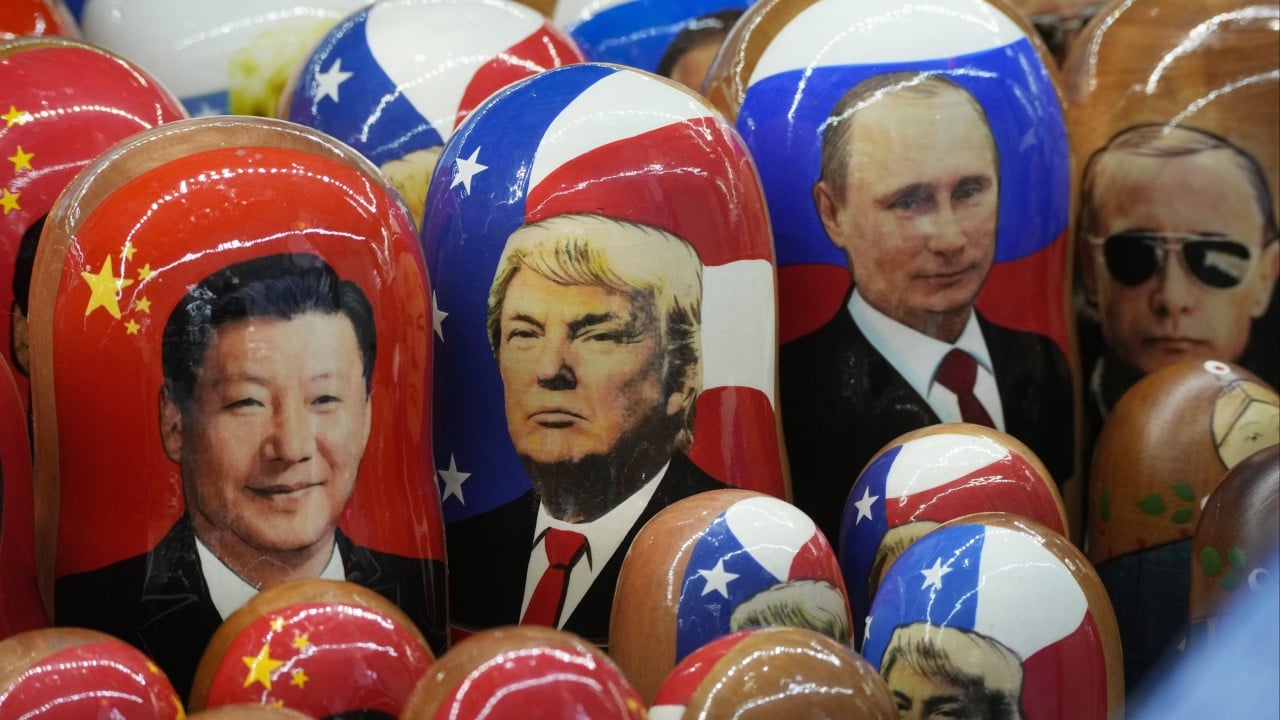
Washington loves a neat geopolitical off-ramp. If you've spent any time watching foreign policy analysts talk about the Middle East, you've probably heard the latest comforting theory making the rounds. It goes something like this: Donald Trump wants out of a messy, escalating standoff with Iran, and Xi Jinping and Vladimir Putin are the exact two leaders who hold the keys to Tehran's front door.
It sounds clever on cable news. Honestly, it's mostly wishful thinking.
The idea that Xi Jinping and Vladimir Putin can simply hand Donald Trump the Iran exit he needs assumes Moscow and Beijing actually want the crisis to go away on American terms. They don't. While both leaders have real influence in Tehran—more than any Western capital could dream of right now—using that influence to bail out a U.S. president doesn't match their interests, their leverage limits, or the reality of how Iran makes decisions.
Why Washington Thinks Beijing and Moscow Hold the Cards
To understand why this theory keeps popping up, look at the bind Trump is in. "Maximum pressure" sanctions and military deterrence create plenty of friction, yet they rarely produce a clean diplomatic surrender without a massive political cost at home. If Trump steps back without major concessions, critics call him weak. If he pushes forward into a full-scale regional conflict, oil prices spike, inflation roars back, and his promise to avoid endless foreign wars goes up in smoke.
Enter Beijing and Moscow.
On paper, they look like the ultimate power brokers. China buys the overwhelming majority of Iran's sanctioned crude oil—often routed through independent "teapot" refineries in Shandong province via ship-to-ship transfers that bypass Western financial networks. Without Chinese cash, Iran's economy doesn't just struggle. It collapses.
Russia, meanwhile, has built a deep military and security partnership with Tehran over the past few years. Driven by Moscow's need for Shahed drones, ballistic missiles, and artillery shells for its war in Ukraine, the Kremlin has upgraded Iran's status from an awkward regional neighbor to a vital defense partner. Putin meets regularly with Iranian leadership, shares intelligence, and provides diplomatic cover at the United Nations Security Council.
So the logic in Washington feels obvious. Trump talks to Putin. Trump makes a trade deal with Xi. In exchange, Moscow and Beijing lean on Tehran to freeze its nuclear program, rein in regional proxies, and sign a face-saving agreement that lets Trump declare victory and walk away.
Simple, right? Except international politics doesn't work like a real estate swap.
Xi Jinping Wants Cheap Oil and an American Distraction
Let's look at Beijing first. People often assume China craves stability in the Middle East above all else because of its energy needs. That's half true. China wants the Strait of Hormuz open so tankers keep moving, sure. Beyond avoiding an all-out regional war that halts global shipping, though, a tense standoff between Washington and Tehran works out pretty well for Xi Jinping.
Every carrier strike group, air defense battery, and diplomatic hour the United States spends tied down in the Persian Gulf is an asset not deployed to the Indo-Pacific. For a Chinese leadership focused on Taiwan, the South China Sea, and tech competition, a distracted America is a strategic gift.
Then there's the money. Because of U.S. sanctions, Iran has almost nowhere else to sell its oil. That gives Chinese buyers massive pricing power, letting them scoop up Iranian crude at steep discounts below global benchmarks. If Xi helps broker a grand bargain that lifts American sanctions on Tehran, Iran suddenly gets access to European and Asian markets again. China loses its captive supplier and its discount overnight.
Ask yourself a basic question. Why would Xi Jinping burn political capital in Tehran just to hand Donald Trump a foreign policy win and raise China's own energy bill? He wouldn't. At best, Beijing might tell Tehran to avoid crossing a red line that triggers a massive war. Beijing isn't going to force Iran to accept American demands.
Vladimir Putin Benefits From the Chaos
If Xi is reluctant, Putin is actively opposed to handing Trump a clean exit.
I've watched Russian diplomacy in the Middle East for years, and one rule holds steady: Moscow thrives when Washington is bogged down. During the 2015 nuclear negotiations, Russia played a constructive role because Putin wanted sanctions relief and global legitimacy after annexing Crimea. That era is dead and buried.
Today, Russia is locked in a grinding confrontation with the West. Moscow and Tehran are bound together by shared sanctions, shared hostility toward American power, and cold military necessity. Russia needs Iranian munitions and drone technology, while Iran wants Russian Su-35 fighter jets, advanced air defenses, and technical expertise for its missile and space programs.
More importantly, a flare-up in the Middle East pushes global oil prices higher. Higher oil prices directly fund the Kremlin's war machine in Ukraine. A peaceful resolution that brings millions of barrels of Iranian oil back onto legitimate global markets would drive crude prices down, hurting Russia's budget right when it can least afford it.
Putin might dangle the idea of helping with Iran during phone calls with Trump. He's a master at using potential cooperation on secondary issues to extract concessions on his core priorities, like Ukraine or NATO expansion. Offering to "talk to Tehran" costs Putin nothing. Actually delivering a compliant Iran to the White House is something he has zero incentive to do.
The Big Blind Spot Nobody Talks About
Even if Xi and Putin woke up tomorrow and decided to team up for Trump's benefit, there's a massive problem with this whole scenario. It treats Iran like a puppet state that takes orders from Moscow and Beijing.
That's a huge misreading of the Islamic Republic.
Iran's leadership has spent over four decades building an identity around "resistance" to foreign domination—not just from the United States, but from Russia and Britain before that. Iranians haven't forgotten nineteenth-century Russian imperial treaties that carved up Persian territory, nor did they miss how Moscow delayed delivering S-300 air defense systems for years whenever it suited Russian interests.
Tehran partners with China and Russia out of necessity, not obedience. When it comes to core issues of regime survival—its nuclear threshold capability, its ballistic missile arsenal, and its regional deterrence network—the Supreme Leader and the Islamic Revolutionary Guard Corps (IRGC) make their own calls.
You can see this in how Tehran handles diplomatic pressure. Chinese officials have quietly urged Iran to stop Houthi attacks on Red Sea shipping because those strikes disrupt Chinese cargo vessels heading to Europe. Did the attacks magically stop on Beijing's command? No. Tehran calibrated them based on its own tactical needs in Gaza and Lebanon, largely ignoring Chinese complaints until it suited Iranian goals.
If Xi can't get Tehran to completely halt strikes on ships carrying Chinese goods, he definitely can't force Iran to dismantle its nuclear infrastructure for Donald Trump.
What an Actual Iran Off-Ramp Looks Like
If waiting for a Beijing-Moscow rescue mission is a dead end, how does Trump actually get out of an Iran trap without stumbling into a war?
The answer lies in direct, transactional diplomacy—something Trump has always preferred over multilateral hand-holding anyway. Instead of outsourcing leverage to Xi and Putin, any real de-escalation has to come from Washington and Tehran trading specific, verifiable concessions directly or through quiet regional intermediaries like Oman or Qatar.
Here is what actually moves the needle in Tehran:
- Targeted economic relief over grand treaties. Iran's leadership knows any sweeping nuclear deal could be torn up by the next U.S. president, just like the 2015 JCPOA was in 2018. Tehran is far more likely to accept a smaller, unwritten understanding—freezing uranium enrichment below weapons-grade levels in exchange for unfreezing specific overseas assets or relaxing enforcement on limited oil sales.
- Clear deterrence paired with a face-saving exit. Hardliners in Tehran only compromise when the cost of escalation clearly outweighs the political humiliation of talking. Combining credible military readiness with private diplomatic channels gives Iranian pragmatists the ammunition they need to argue for a pause.
- Separating nuclear limits from regional behavior. Trying to solve Iran's nuclear program, missile production, and proxy networks in one giant package guarantees failure. Every administration that tries to get everything ends up getting nothing. Narrowing the immediate goal to preventing a nuclear breakout creates space for a deal Trump can sell as a win without forcing Iran to surrender its entire regional strategy.
Stop Looking to Beijing and Moscow for a Favor
Believing that Xi Jinping and Vladimir Putin will rescue American foreign policy in the Middle East is a classic Washington trap. It's easier to imagine a grand triangle of superpower deals than it is to confront the messy, stubborn reality of Tehran's own ambitions.
Xi wants cheap oil and an America focused away from Taiwan. Putin wants higher oil prices and leverage over Ukraine. Neither man is going to burn his relationship with Tehran just to make Donald Trump's life easier.
If the White House wants an off-ramp with Iran, it won't find one in Beijing or Moscow. Keep your eye on quiet backchannels in Muscat and Doha, watch whether Washington narrows its demands to nuclear containment rather than regime overhaul, and ignore the noise about Russia and China riding to the rescue.