Diplomacy rarely looks like the polished press conferences we watch on evening broadcasts. Sometimes it looks like a headline that stops political analysts dead in their tracks, forcing everyone to double-check their news feeds and question everything they thought they knew about Washington and Kyiv.
When reports surfaced about Ukrainian President Volodymyr Zelensky honouring Melania Trump with a Ukrainian state award for allegedly brokering a truce in Oleshky, the internet did what it always does. People reacted instantly. Partisans claimed victory, skeptics cried foul, and most casual readers missed the actual mechanics of how wartime diplomacy, state honours, and viral geopolitical claims collide.
Let's clear the air right away. The claim that Volodymyr Zelensky awarded Melania Trump a Ukrainian honour for brokering an Oleshky truce touches on real places, real leaders, and real diplomatic tools, yet the viral narrative circulating online mixes verified geopolitical realities with unverified or fabricated diplomatic claims. If you want to separate genuine diplomatic history from modern information warfare, you need to look at how Ukraine actually issues awards, what is really happening on the ground in Oleshky, and why Melania Trump's name keeps getting pulled into Eastern European diplomacy.
Why the Oleshky Truce Narrative Spread So Fast
Oleshky isn't just another dot on a map. Located on the left bank of the Dnipro River in the Kherson region, right across from Kherson city, it has been one of the most contested, brutal, and strategically sensitive sectors of the war since 2022.
Because Oleshky sits in a geographic chokepoint, any mention of a ceasefire or localized truce there immediately grabs attention. People desperate for signs of de-escalation latch onto stories suggesting an unexpected backchannel succeeded where formal diplomats stalled.
Enter Melania Trump.
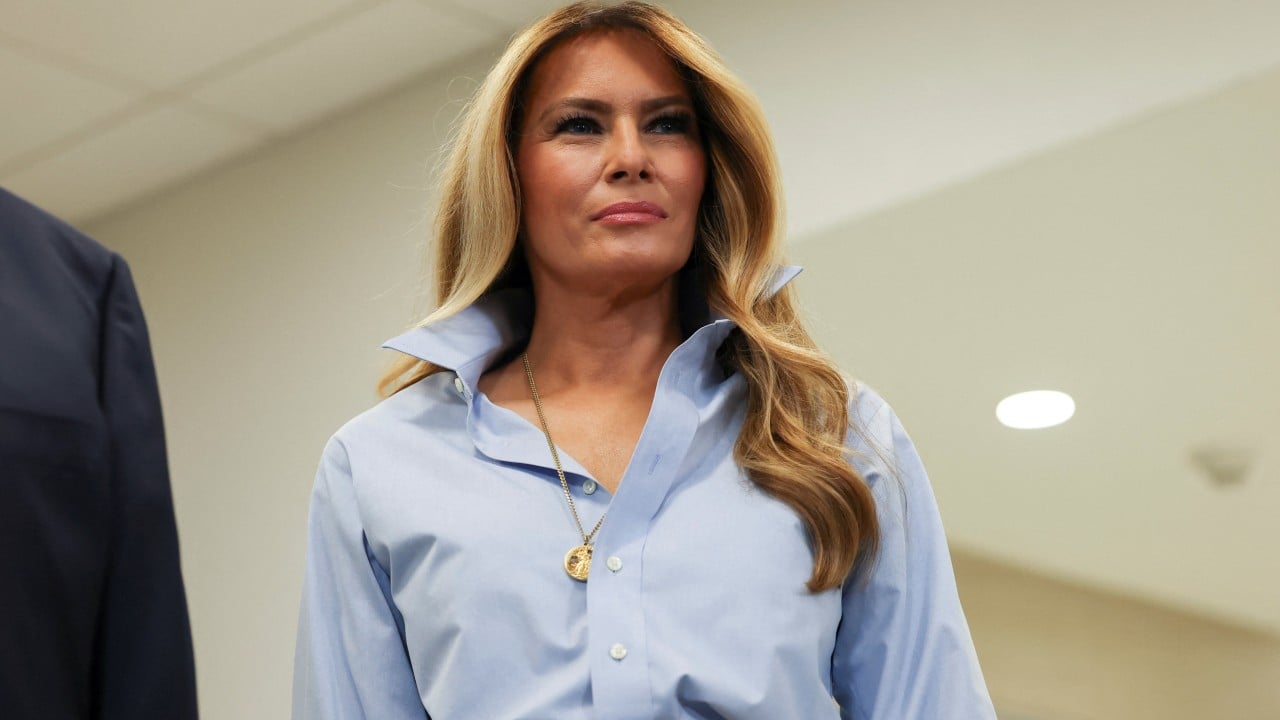
She grew up in Slovenia, speaks multiple languages, and maintains an image distinct from traditional Washington political operators. That background makes her an easy canvas for rumors about quiet, behind-the-scenes European mediation. Add Volodymyr Zelensky—a leader known for using symbolic diplomacy and public recognition to keep international focus locked on Ukraine—and you have all the ingredients for a story people want to believe, regardless of whether official records back it up.
Honestly, that's how modern political myths take root. They take two real, recognizable figures, attach them to an active conflict zone like Oleshky, and wrap the whole thing in the formal language of state honours.
How Ukrainian State Awards Actually Work
To spot whether a story about a Ukrainian award holds water, you have to understand Kyiv's actual protocol. Ukraine doesn't hand out state decorations quietly in the dark without a paper trail.
Every legitimate state award issued by the President of Ukraine—whether it's the Order of Princess Olga, the Order of Merit, or the Order of Liberty—goes through a strict, public administrative process.
- Presidential Decrees: Every single recipient is named in an official decree published directly on the website of the Office of the President of Ukraine (president.gov.ua).
- Legal Citations: Each decree carries a specific registration number, date, and formal citation explaining the exact grounds for the award.
- Public Verification: Journalists, historians, and foreign governments cross-reference these decrees within minutes of publication.
Think about the high-profile Americans and international figures Zelensky has genuinely honoured over the past few years. When figures like Nancy Pelosi, Mitch McConnell, or European Commission President Ursula von der Leyen received Ukrainian state orders, the ceremonies were photographed, televised, and backed by numbered presidential decrees.
If Melania Trump had legitimately received a Ukrainian state award for brokering a truce in Oleshky, there wouldn't be vague, unsourced whispers or dead URLs floating around social media. There would be an official decree on Kyiv's presidential registry, formal statements from the U.S. State Department or Trump's office, and wall-to-wall coverage from major wire services like Reuters and the Associated Press.
No such decree exists in official Ukrainian state records. Nor is there any verified military or diplomatic record of a Melania Trump-brokered truce in Oleshky.
What Is Actually Happening in Oleshky
When a viral story claims someone "brokered a truce" in a specific town, checking the military reality on the ground usually exposes the gap between fiction and fact.
Oleshky has remained under Russian military occupation since the early days of the 2022 full-scale invasion. Following the liberation of Kherson city on the right bank of the Dnipro in November 2022, the river itself became the frontline. Oleshky suffered catastrophic flooding after the destruction of the Kakhovka Dam in June 2023, turning an already devastated town into an environmental and humanitarian disaster zone.
Since then, the left bank around Oleshky and nearby Krynky has seen relentless artillery exchanges, drone warfare, and small-unit amphibious raids. Neither Moscow nor Kyiv has signed or implemented a localized diplomatic truce for Oleshky.
Why does that matter? Because localized truces in modern warfare require massive, verifiable infrastructure to function.
- Third-party monitoring: Organizations like the International Committee of the Red Cross or United Nations observers typically have to verify troop pullbacks or humanitarian corridors.
- Command-level orders: Both the Ukrainian General Staff and the Russian Ministry of Defense would have to issue standing orders halting fire along specific grid coordinates.
- Public accountability: When genuine localized pauses happen—such as temporary evacuations from Mariupol's Azovstal plant in 2022—both sides announce the terms publicly so civilians know when it's safe to move.
None of those mechanisms were triggered for an Oleshky truce involving Melania Trump. Treating an unverified headline as established diplomatic history insults the reality faced by civilians and soldiers still enduring daily shelling along the Dnipro.
Melania Trump's Real Relationship With Eastern European Diplomacy
People often confuse public curiosity about Melania Trump's background with actual diplomatic authority. That's a mistake.
Born in Novo Mesto, Slovenia (then part of Yugoslavia), Melania Trump is the first naturalized U.S. citizen to become First Lady. Because of her Central European roots, commentators frequently speculate about her private views on Russia, Ukraine, and NATO. During Donald Trump's presidency and subsequent political campaigns, she occasionally made brief public statements expressing sympathy for families affected by global conflicts, including a notable call for peace and humanitarian support after the invasion of Ukraine began.
Expressing humanitarian concern, however, is worlds apart from acting as a special envoy or ceasefire negotiator.
In U.S. foreign policy, brokering a military truce requires formal diplomatic credentials, intelligence briefings, secure communications channels, and direct authorization from the executive branch. Even when informal backchannels operate in international conflicts—like business figures or former diplomats testing the waters—they answer to intelligence agencies and state departments. They don't secretly negotiate localized ceasefires on the Dnipro River without a single diplomat, general, or intelligence official noticing.
Why Fabricated Diplomacy Stories Keep Appearing Online
If you spend enough time tracking geopolitical news, you start noticing a pattern. Headlines like "Zelensky honours Melania Trump with Ukraine award for brokering Oleshky truce" aren't random typos. They're engineered to exploit specific psychological blind spots.
First, they tap into confirmation bias. Supporters of the Trump family see a story that paints Melania Trump as an understated, effective peacemaker capable of solving problems career diplomats can't touch. Meanwhile, critics of Western aid to Ukraine see a story that makes Kyiv's diplomacy look erratic or transactional. Both sides share the headline before checking the source.
Second, these stories thrive on keyword hijacking. Search algorithms and news aggregators constantly scan for high-volume names like "Zelensky," "Melania Trump," and "Ukraine." By pairing those massive search terms with a real, specific battleground name like "Oleshky," content farms and disinformation networks trick automated feeds into indexing false narratives alongside legitimate journalism.
Third, broken or undefined source links are a classic hallmark of scraped or fabricated content. When an article references a specific diplomatic event without linking to a primary government decree, an established news agency, or a verified press briefing, you're looking at digital smoke without fire.
How to Verify High-Stakes Diplomatic Claims Yourself
You don't need a security clearance to verify whether a world leader handed out a state award or signed a ceasefire. You just need a disciplined habit of checking primary sources before reacting.
Whenever a shocking geopolitical headline crosses your screen, run it through four quick checks:
- Check the primary government registry: For Ukrainian state awards, search the official decrees section of the President of Ukraine's website. Every legitimate award is logged there by date and recipient name.
- Look for wire service confirmation: Major diplomatic breakthroughs—especially anything involving a ceasefire or a high-profile American political figure—will always be reported independently by at least two major wire services, such as Reuters, AP, or AFP.
- Inspect the geography and timeline: Look up the current status of the location named in the headline. In Oleshky's case, basic open-source conflict mapping shows continuous frontline hostilities rather than a negotiated truce.
- Trace the original link: If an article cites a competitor or external URL that resolves to nothing, lacks a domain, or hides behind generic aggregator text, treat the entire premise as unverified.
Geopolitics is complicated enough without chasing phantom truces and imaginary medals. Stick to documented decrees, verified frontline reporting, and primary sources—because in wartime, accuracy isn't just good media literacy, it's the only way to understand what is actually happening on the ground.