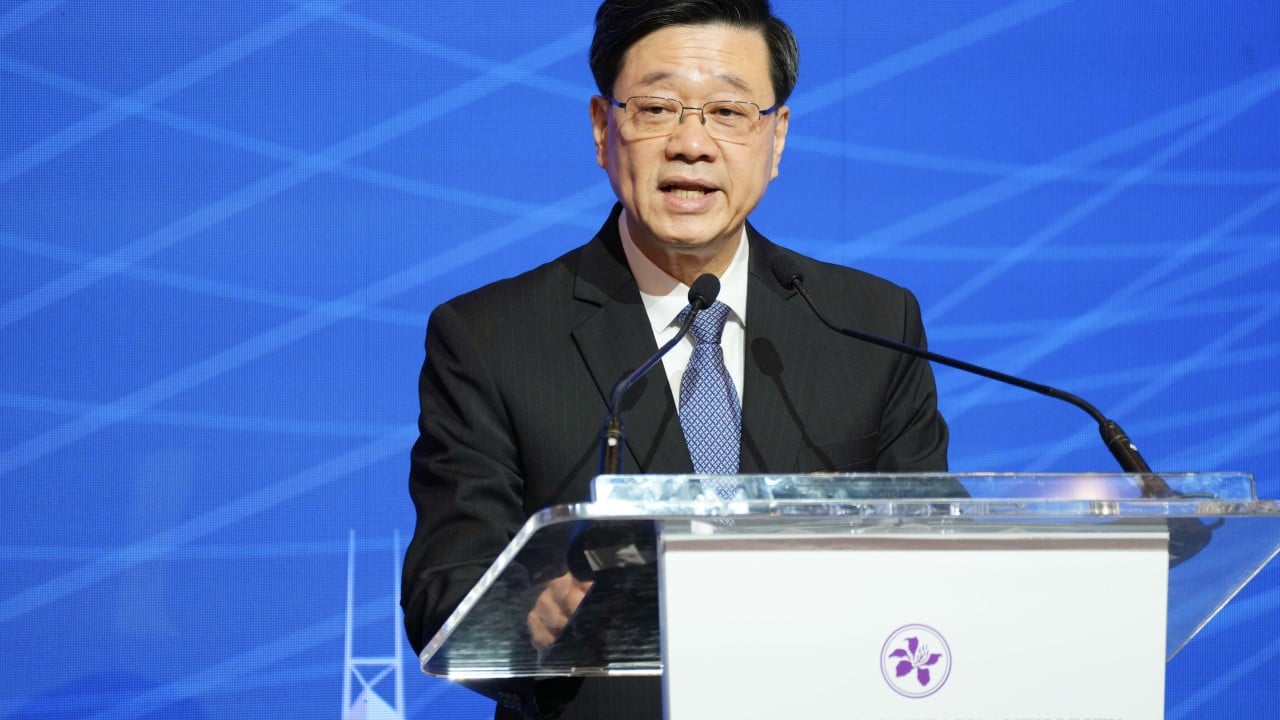
Watch what happens when a city built on hands-off capitalism suddenly writes a five-year plan. Chief Executive John Lee isn't just tossing out polite talking points about stability. He's trying to rewire how Hong Kong makes money while global trade splinters, artificial intelligence reshapes labor, and cross-border capital picks sides.
Anyone who has tracked boardrooms and trading floors in Asia over the past few years knows the old script felt tired. Purely waiting for Western capital or classic re-export trade to bail out every cycle doesn't work the way it used to. By pairing his 2026 Policy Address with Hong Kong's first-ever five-year economic and social development blueprint, Lee is betting that structured state direction and free-market mechanics can pull in the same direction.
Why Hong Kong Is Rewriting Its Playbook Right Now
If you listen closely to John Lee's speeches across the Global Financial Leaders' Investment Summit and the 2026 Policy Address, the urgency isn't subtle. Global markets are swinging hard between geopolitical friction, tariff shifts, and rapid tech disruption. Standing still isn't a strategy when supply chains and capital pools move overnight.
Numbers help explain why officials feel pushed to act boldly rather than coast. Real GDP grew 3.5% in 2025, then picked up speed in early 2026, rising 5.9% year-on-year in the first quarter and 4.3% in the second quarter. Even with AI-related electronics demand lifting merchandise exports, policymakers know an economy can't rely on one windfall forever.
There's also a practical reality for executives operating out of Central or Kowloon. You don't keep global wealth managers, insurers, and corporate treasurers anchored in a city just by reciting slogans. You keep them by giving them clear rails for tokenization, cross-border settlement, and tech listings while keeping the rule of law and currency convertibility intact.
Five-Year Planning Meets Free-Market Reality
Here is where critics and boosters clash immediately. A five-year plan sounds suspiciously like central planning to anyone raised on textbook free-market orthodoxy. Lee has pushed back hard on that reading, insisting the blueprint respects Hong Kong's capitalist core and free-market advantages rather than distorting them.
What actually makes this blueprint different from past policy wish lists? It sets out 22 key performance indicators—five binding targets with accountability if missed, and 17 aspirational goals stretching toward the 2030s. That's a noticeable shift from vague slogans toward measurable milestones.
- Double down on innovation: The plan aims to nearly double innovation spending and lift manufacturing and new industries to 5.5% of the economy.
- Build new physical growth corridors: All nine New Development Areas in the Northern Metropolis are slated to begin, alongside three university towns and the Loop Academy One flagship tower.
- Widen capital and trade plumbing: Hong Kong is pushing deeper renminbi business, gold clearing and settlement trials, and listing enhancements for frontier tech and aerospace firms.
From working with regional business leaders, I've seen a familiar trap when governments unveil massive multi-year blueprints. Announcements are easy; coordination across land supply, talent visas, and cross-border regulations is the real grind. If developers and founders don't see lower friction on the ground, targets on paper won't move the needle.
Wealth, Tokenization, and the Cross-Border Bridge
Ask any portfolio manager what actually keeps Hong Kong relevant during global turmoil, and they'll usually point to money flows before speeches. In May 2026, Hong Kong became the world's largest cross-boundary wealth management center for the first time, with cross-boundary assets under management having jumped 20% year-on-year to a record US$270 billion.
That isn't an accident. Mainland companies continue using Hong Kong to raise capital, expand regionally, and manage treasury operations, while international investors still use channels like Stock Connect to reach mainland assets. According to HKTDC research, mainland enterprises accounted for 1,552 listings in Hong Kong by the end of 2025, representing roughly US$4.8 trillion in market capitalization.
Lee has also put heavy emphasis on blockchain, tokenization, and artificial intelligence as core pillars rather than side experiments. Tokenizing real-world and financial assets can cut settlement friction and open fractional access, though clear rules and cyber safeguards will decide whether institutions scale up or hold back.
Still, let's be honest about the risks. Relying heavily on a narrow pipeline of tech and mainland issuers can leave equity markets exposed if AI valuations cool or geopolitical tensions flare. And international investors always weigh legal predictability, compliance costs, and regional competition—especially from places like Singapore and Dubai—before committing fresh capital.
Demographics, Housing, and Everyday Pressure
Stability isn't just a spreadsheet metric on a summit stage. A city feels stable or fragile depending on whether young families can afford homes, aging parents get decent care, and buildings are safe.
Hong Kong faces a steep demographic curve. The population aged 65 and above is projected to climb from 1.45 million in 2021 to 2.74 million by 2046. To address that pressure, the 2026 policy package introduced 11 measures to encourage births—including a HK$30,000 bonus for a second child and lower down payments on subsidised housing for families with newborns—alongside a pilot scheme next year to bring in foreign elderly carers.
Safety and governance are right behind demographics. Following last year's fatal Tai Po fire, Lee pledged to overhaul building maintenance rules and emergency response while examining criminal penalties for bid-rigging. Anyone who has watched urban maintenance scandals play out knows that fixing procurement loopholes matters far more to public trust than ribbon-cutting ceremonies.
What Businesses and Investors Should Do Next
If you run a company, allocate capital, or plan regional expansion around Hong Kong, treat the new five-year blueprint as a map of incentives rather than a guarantee of smooth sailing. Policy signals tell you where subsidies, land, and regulatory attention are heading. Your own balance sheet still has to survive the bumps.
- Audit your cross-border footprint: Map where your revenue, funding, and settlement rails sit across Hong Kong, the Chinese Mainland, and other Asian hubs so a sudden tariff or rule change doesn't trap cash.
- Track specific KPIs, not headlines: Follow concrete milestones—like Northern Metropolis land releases, Chapter 18C listing updates, and Faster Payment System and UnionPay links—rather than broad speeches.
- Stress-test against geopolitical and market swings: Keep liquidity buffers strong and avoid betting everything on a single sector cycle, even when AI and capital market headlines look hot.
- Check talent and compliance readiness early: If you plan to tap new training visas, tech grants, or tokenized financial products, review legal and compliance requirements well ahead of launch dates.