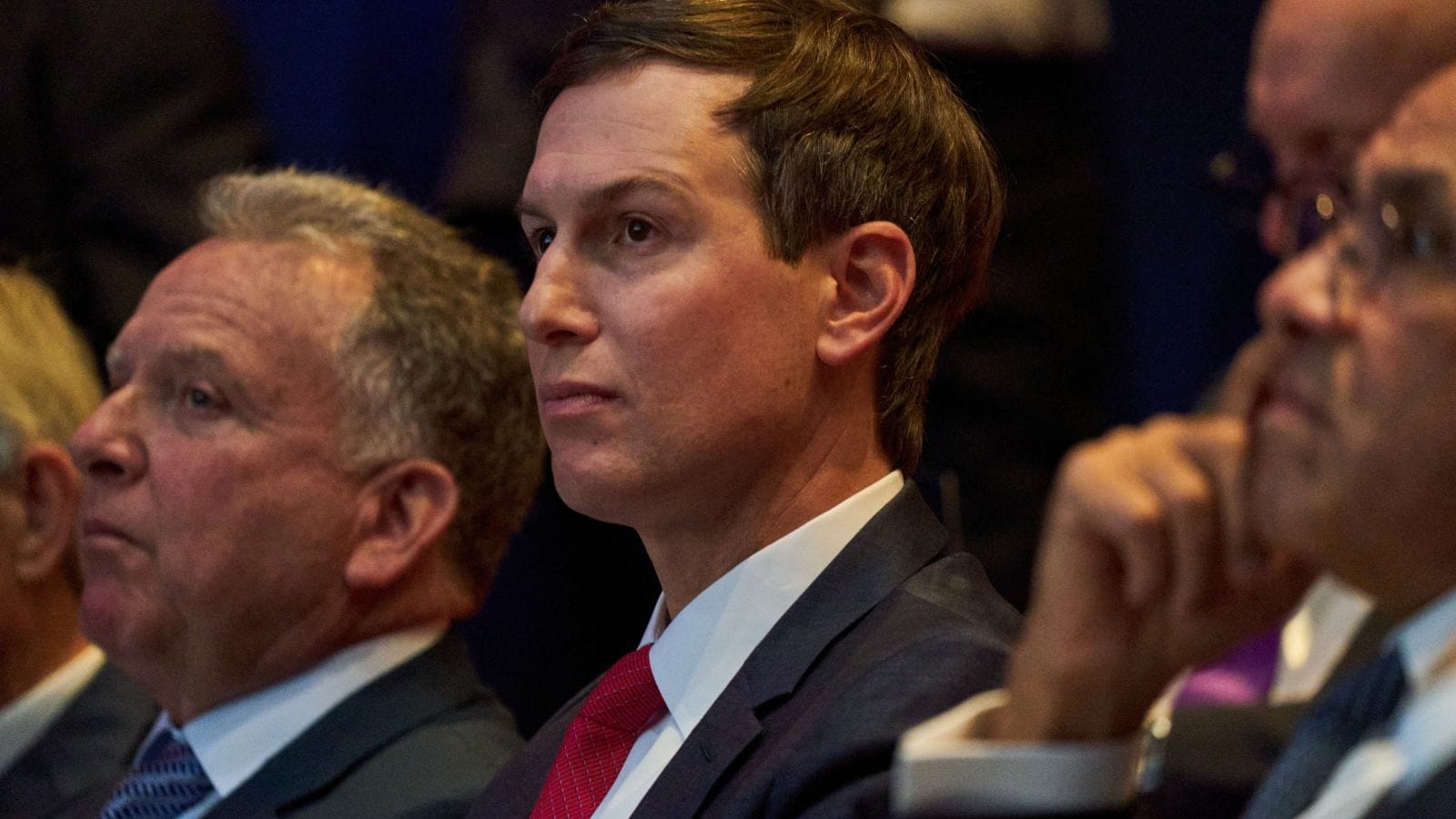
Washington just threw a massive wrench into decades of transatlantic diplomacy, and almost nobody is reading the fine print correctly. Jared Kushner’s latest push to outline a brand-new European security framework ahead of high-stakes Ukraine-Russia talks isn't just another routine diplomatic trial balloon. It's a fundamental rewrite of how security guarantees work on the European continent, built around transactional dealmaking rather than traditional alliance politics.
If you've followed foreign policy over the last few years, you know the standard playbook. Usually, talks surrounding the war in Ukraine revolve around NATO membership timelines, Article 5 commitments, and multilateral summits in Brussels. Kushner, operating alongside Donald Trump’s diplomatic team, is bypassing that entire structure. Instead, the proposed framework treats European security like a complex commercial restructuring—one where territorial realities, economic incentives, and bilateral enforcement mechanisms replace open-ended military pledges.
Why Kushner Is Involved in European Security Right Now
You might wonder why a former real estate executive best known for the Abraham Accords is suddenly shaping security architecture in Eastern Europe. It comes down to how Donald Trump delegates high-stakes negotiations. Trump doesn't trust traditional State Department channels to break deadlocks. He relies on a small circle of loyalists who view geopolitical conflicts through the lens of leverage, assets, and bottom-line outcomes.
During the first Trump administration, Kushner proved he could bypass entrenched diplomatic orthodoxies in the Middle East by focusing on shared economic interests and direct bilateral agreements. Now, that exact same methodology is being applied to Moscow, Kyiv, and European capitals. Rather than waiting for consensus among 32 NATO members—a process that routinely stalls over domestic politics in places like Budapest or Ankara—Kushner’s approach aims to establish a core framework first and force European allies to adapt to it afterward.
Honestly, it makes traditional diplomats break out in a cold sweat. Standard protocol dictates that nothing is agreed upon until everyone in the alliance signs off. Kushner’s team flips that logic upside down. By outlining the parameters of a new European security framework before formal Ukraine-Russia negotiations even begin, they are setting the ceiling and the floor for what Washington will actually backstop.
The Core Pillars of the Proposed European Security Framework
While the full diplomatic cables remain closely held, the contours of the plan outlined by Kushner and Trump’s inner circle rely on four distinct shifts away from post-Cold War norms.
Frozen Frontlines and Demilitarized Buffer Zones
The most controversial element involves accepting current territorial realities as the starting point for negotiations. Instead of demanding full Russian withdrawal prior to a ceasefire, the framework envisions freezing conflict lines where they stand and establishing heavily monitored demilitarized zones along the contact line.
Crucially, Washington isn't offering American troops to police those buffers. Under this model, European nations—specifically major powers like France, Germany, the United Kingdom, and Poland—would bear the primary responsibility for funding, staffing, and enforcing any ceasefire monitoring mission. The U.S. role shifts from frontline guarantor to intelligence provider and strategic backstop.
Replacing NATO Expansion With Bilateral Guarantees
For years, Kyiv’s ultimate goal has been formal accession into NATO. Moscow has treated that exact prospect as an existential red line. Kushner’s framework sidesteps the NATO question entirely by taking immediate membership off the table while offering an alternative set of bilateral security arrangements.
Think of it less like Article 5 and more like the defense pacts Washington maintains with non-NATO allies. Ukraine would receive long-term weapons supply commitments, air defense integration, and intelligence sharing, paired with strict neutrality clauses regarding foreign troop deployments on its soil. It's a bitter pill for Kyiv, which has repeatedly warned that anything short of NATO invites future Russian aggression. Yet from the perspective of Trump’s team, it removes the single biggest obstacle preventing Vladimir Putin from sitting down at the negotiating table.
Conditional Sanctions Relief Tied to Verification
Economic statecraft sits at the dead center of Kushner’s playbook. Western sanctions against Russia have reshaped global energy and financial flows, though they haven't forced a Kremlin retreat. The proposed framework uses phased sanctions relief as a primary bargaining chip.
Rather than lifting restrictions all at once, the plan ties specific economic concessions—such as access to frozen sovereign assets or eased restrictions on energy exports—to verifiable milestones on the ground. If Russian forces violate ceasefire parameters or interfere with reconstruction corridors, snap-back mechanisms automatically reinstate the penalties. At the same time, portions of frozen Russian central bank reserves would be funneled directly into a multilateral reconstruction fund for Ukrainian infrastructure, effectively forcing Moscow to subsidize the rebuilding of cities its military destroyed.
European Burden-Sharing as a Hard Prerequisite
Trump has spent years criticizing European allies for underinvesting in their own defense while relying on the American nuclear umbrella. Kushner’s security framework turns that political complaint into a structural requirement.
Under the new architecture, U.S. participation in European deterrence becomes explicitly conditional on European capitals meeting higher defense spending benchmarks and taking operational ownership of regional crises. Washington steps back from managing day-to-day continental security so it can redirect military hardware and diplomatic bandwidth toward the Indo-Pacific.
How This Differs From the Post-Cold War Security Order
To understand why this proposal is causing such friction in Berlin, Paris, and London, you have to look at what it replaces. Since the collapse of the Soviet Union in 1991, European security has rested on the idea of indivisible security—the belief that every nation has the sovereign right to choose its own alliances and that stability comes from expanding democratic institutions eastward.
Kushner’s framework operates on spheres of influence and hard power balances. It assumes that grand ideological projects don't stop artillery shells. Only clear borders, mutually assured economic costs, and credible local deterrence do.
Here is where critics point out a massive flaw. When you treat security guarantees like a real estate transaction, you assume both parties care more about financial upside than historical grievances. Vladimir Putin has spent two decades arguing that Ukraine isn't a real country and that Russia’s security requires dominating its neighbors. Skeptics argue—with plenty of evidence—that no amount of sanctions relief or commercial restructuring will permanently satisfy Moscow’s imperial ambitions.
What Kyiv, Moscow, and Brussels Actually Think
Nobody involved in this conflict is getting everything they want out of Kushner’s outline, which is precisely why Trump’s team believes it might work.
In Kyiv, the reaction is deeply guarded. President Volodymyr Zelenskyy faces intense domestic pressure not to cede territory that thousands of Ukrainian soldiers died defending. At the same time, Ukraine’s military faces severe manpower shortages and fatigue after years of grueling attrition. Ukrainian officials know they cannot sustain high-intensity combat operations without continuous American financial and military aid. If Washington conditions future assistance on entering talks under Kushner’s framework, Kyiv has very little room to refuse.
In Moscow, the Kremlin is playing its usual game of strategic patience. Russian officials publicly welcome any sign that Washington is willing to abandon NATO expansion and acknowledge territorial realities on the ground. Behind closed doors, however, Putin’s demands go much further than freezing current frontlines. Moscow wants formal recognition of annexed regions, strict caps on the size of Ukraine’s postwar military, and a permanent rollback of NATO deployments in Eastern Europe. Whether Kushner’s transactional incentives can bridge that gap remains an open question.
In Brussels and across European capitals, anxiety is running high. European leaders spent the last few years decoupling from Russian energy and ramping up domestic arms production, yet their defense industrial base still lags behind what’s needed to deter Russia independently. Being handed the bill for peacekeeping in Ukraine while Washington reduces its footprint feels less like a partnership and more like an eviction notice.
The Risks Nobody in Washington Wants to Talk About
Every diplomatic shortcut carries hidden costs, and Kushner’s European security framework has three glaring vulnerabilities that could unravel the entire effort before the ink dries.
First, enforcement without American muscle is notoriously weak. History shows that peacekeeping missions lacking credible backing from a superpower tend to collapse the moment a local commander tests the perimeter. Look at the Minsk agreements signed in 2014 and 2015. Those deals froze the conflict in eastern Ukraine on paper, only to turn into years of low-grade trench warfare that eventually exploded into a full-scale invasion. Without clear rules of engagement and automatic consequences for violations, a demilitarized zone simply gives Russia time to rearm and regroup.
Second, bypassing European institutions creates deep political fracture. If Washington negotiates bilateral side deals directly with Moscow and Kyiv, it undermines the collective authority of both NATO and the European Union. Smaller frontline states—like Estonia, Latvia, Lithuania, and Poland—worry that if Ukraine’s borders can be negotiated away over their heads, their own security guarantees could become bargaining chips down the road.
Third, the legal mechanisms for using frozen Russian assets remain untested. Roughly $300 billion in Russian central bank reserves are immobilized in Western financial institutions, mostly in Europe. Seizing or redirecting those funds without triggering massive legal challenges or spooked foreign investors from other countries requires delicate financial engineering. Treating that money as a ready-made slush fund for peace talks ignores how complicated international banking law actually is.
How to Watch the Upcoming Ukraine-Russia Talks
As preliminary discussions get underway, ignore the public posturing and press conferences. Diplomats always talk tough before sitting down. Instead, pay attention to three specific indicators that will tell you whether Kushner’s framework is actually gaining traction or stalling out.
- Watch the composition of the negotiating delegations. If Moscow sends senior security council officials and economic ministers rather than low-level diplomats, it signals the Kremlin is seriously engaging with the sanctions-relief and asset-restructuring components of the plan.
- Track European defense procurement announcements. If Berlin, Paris, and Warsaw abruptly accelerate joint funding for air defense systems and rapid-reaction brigades, it means European leaders have accepted that Washington is serious about handing over responsibility for continental security.
- Look at energy transit and grain corridor agreements. Transactional frameworks almost always start with narrow, commercially verifiable confidence-building measures before tackling core territorial disputes. Early movement on Black Sea shipping lanes or pipeline transit fees will show that Kushner’s dealmaking model is taking hold.
The post-Cold War era in Europe is over, regardless of how these negotiations turn out. Whether Kushner’s blueprint produces a durable settlement or merely a temporary pause in fighting, the days of automatic, open-ended American security guarantees for Europe are finished.