Most celebrity real estate headlines make it look like stars effortlessly print money every time they sign a deed. You see the numbers—Mark Wahlberg buys a vacant plot in Las Vegas for $15.6 million and flips it for $17.25 million—and it sounds like an easy $1.65 million payday.
It wasn't.
When you actually look at how luxury land deals work in Southern Nevada, a $1.65 million gross spread on a $15.6 million asset is closer to breaking even than hitting a jackpot. Between Nevada's real property transfer taxes, broker commissions, property taxes, and basic carrying costs, Wahlberg likely walked away with very little net profit. Yet the sale itself reveals something much bigger about where high-net-worth buyers are putting their money right now—and why Wahlberg's broader Vegas bet is still very much alive.
The Real Math Behind Mark Wahlberg Selling His Las Vegas Plot
Let's strip away the tabloid hype and look at the numbers like a real estate investor.
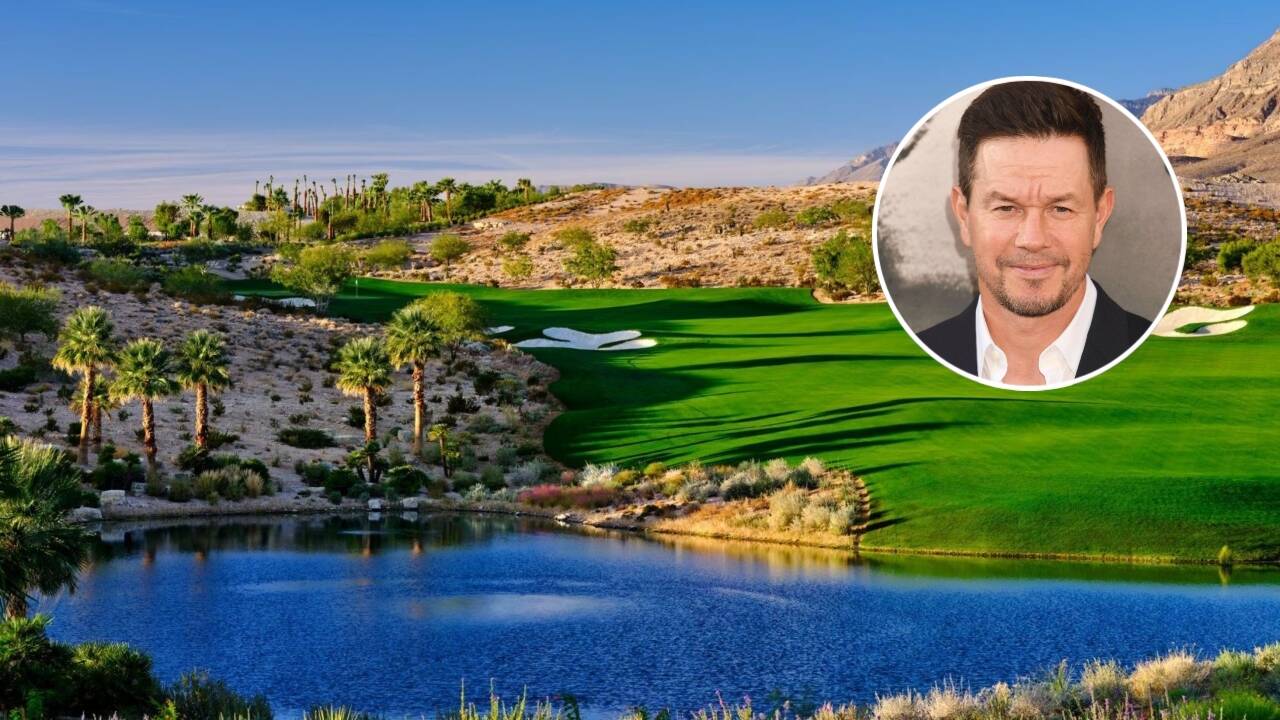
In August 2022, Wahlberg paid $15.6 million for a 2.5-acre parcel inside The Summit Club, an ultra-exclusive, guard-gated golf community in Summerlin, just west of the Las Vegas Strip. At the time, he was loudly championing his move out of California, relocating his family from Beverly Hills to Nevada to give his kids a quieter life and escape California's steep state income taxes.
Fast forward to the resale of that vacant lot at $17.25 million. On paper, that's a 10.5% gross appreciation. Not bad for raw dirt, right?
Except raw dirt doesn't generate rental income while you hold it. And selling luxury real estate in Clark County comes with heavy friction costs that eat straight into your margin.
Here is what actually comes off the top of a $17.25 million sale in Nevada:
- Broker Commissions: Even if Wahlberg negotiated a discounted listing fee on an eight-figure parcel, standard luxury land commissions run between 4% and 6% total across both sides of the transaction. At 5%, that's $862,500 gone immediately.
- Clark County Transfer Taxes: Nevada charges $2.55 per $500 of value in Clark County (which equates to $5.10 per $1,000). On a $17.25 million sale, that's roughly $87,975 in transfer taxes alone.
- HOA Dues and Holding Costs: The Summit Club isn't a standard suburban HOA. Developed by Discovery Land Company, its initiation fees and annual club dues run into the hundreds of thousands of dollars, alongside annual Clark County property taxes on a $15.6 million assessment. Over a couple of years, carrying costs easily cross $300,000 to $500,000.
Add those up. You're looking at roughly $1.3 million to $1.45 million in transaction and carrying expenses. Subtract that from the $1.65 million gross gain, and Wahlberg basically exited the lot flat—maybe pocketing a couple hundred thousand dollars after capital gains taxes, or simply breaking even.
In luxury real estate, breaking even on a pivot is actually a win. It means he tested a construction plan, changed his mind, and got out without taking a bath.
Why Wahlberg Pivoted Away From Building From Scratch
If you've ever built a custom home, you already know why someone worth hundreds of millions of dollars would ditch a $15.6 million empty lot.
Time.
Building a custom estate from the ground up inside a community like The Summit Club doesn't take six months. Between architectural reviews, Discovery Land's strict design guidelines, permitting in Clark County, and supply chain delays for imported stone and custom glass, you're looking at a three-to-four-year timeline before you even hang a picture on the wall.
When Wahlberg left California—selling his massive Beverly Hills mega-mansion in early 2023 for $55 million—he needed a home base in Vegas immediately. Before buying the $15.6 million parcel, he had already picked up a $14.5 million townhome inside The Summit Club as a temporary landing spot.
Once you experience turnkey luxury living—where the Tom Fazio-designed golf course, private dining, wellness facilities, and security are already operating—staring at an empty 2.5-acre construction site loses its appeal fast. Why spend four years managing contractors and dust when you can buy an existing estate or upgrade within the same gates?
That's the mistake most outside observers make when reading celebrity property news. They assume every sale is a calculated "flip." Nine times out of ten, it's just a lifestyle adjustment.
Inside The Summit Club Why Land Costs $17 Million
To understand why a patch of desert dirt commands $17.25 million without a single brick on it, you have to understand Discovery Land Company and Summerlin.
Founded by Mike Meldman, Discovery Land doesn't just build neighborhoods; they build insulated ecosystems for billionaires and A-list talent. The Summit Club sits on 555 acres bordering Red Rock Canyon, offering direct views of the Las Vegas Strip skyline from an elevated desert ridge.
Unlike traditional country clubs where memberships are semi-public or capped at a few hundred local executives, The Summit Club strictly limits membership to property owners. There are only around 260 residences planned across the entire development. Scarcity is baked into the master plan.
When Wahlberg bought his lot in 2022, California's wealth migration was at peak frenzy. Tech founders, hedge fund managers, and Hollywood producers were flooding into Summerlin and Henderson's MacDonald Highlands to escape California's 13.3% top marginal income tax rate—plus the looming threat of additional wealth and mansion taxes in Los Angeles.
Nevada has zero state income tax. Zero corporate income tax. Zero inheritance tax.
For someone earning tens of millions annually from film deals, production companies, and consumer brands, moving residency from Beverly Hills to Summerlin saves millions of dollars every single year in state taxes alone. Even if Wahlberg barely made a dime on the $17.25 million lot sale, the tax savings from establishing Nevada residency paid for that land several times over.
Wahlberg's Bigger Vegas Bet Isn't Slowing Down
Anyone claiming Wahlberg is "leaving Las Vegas" because he sold one piece of land isn't paying attention to his actual business footprint in Nevada.
He didn't move to the desert just to play golf. Over the past few years, Wahlberg has been vocal about turning Las Vegas into "Hollywood 2.0."
His strategy involves multiple moving parts across Southern Nevada:
- Studio Infrastructure: Wahlberg has actively lobbied Nevada lawmakers alongside companies like Sony Pictures and Howard Hughes Holdings to expand state film tax credits, aiming to build massive production studios in Summerlin so film crews don't have to commute from Los Angeles.
- Hospitality and Retail: He opened Flecha Cantina, a high-end Mexican restaurant at Town Square Las Vegas, expanding his hospitality footprint beyond the Wahlburgers chain.
- Fitness and Apparel: He moved the headquarters and operations for several of his business ventures—including his Municipal apparel brand and performance nutrition lines—closer to his Nevada base, frequently filming workouts at local Summerlin gyms.
Selling a vacant residential lot doesn't signal a retreat. It signals capital reallocation. Smart operators don't leave $15.6 million tied up in non-productive dirt when they can deploy that liquidity into operating businesses, film production infrastructure, or turnkey real estate.
What Real Estate Investors Can Learn From This Deal
You don't need an eight-figure net worth to take away a few hard rules from how Wahlberg handled this property.
First, never confuse gross appreciation with net profit. Whenever you evaluate a property flip—whether it's a $300,000 suburban fixer-upper or a $17.25 million Summerlin parcel—subtract 8% to 10% right off the top for selling costs, transfer taxes, and holding expenses before celebrating a win. If the deal doesn't survive that haircut, it isn't a flip; it's a hobby.
Second, land banking requires massive patience and liquidity. Vacant land produces zero cash flow while costing you money every month in taxes and association dues. Unless you have a clear development timeline—or you're buying in the direct path of major infrastructure growth—holding raw land ties up capital that could be compounding elsewhere.
Third, location scarcity protects your downside. The only reason Wahlberg could exit a $15.6 million land purchase at $17.25 million without taking a loss is because he bought inside a supply-constrained, tier-one community. In downturns or shifting rate environments, A+ locations hold their floor while B and C locations sit on the market for years.
If you're tracking luxury real estate trends in Las Vegas or evaluating high-end land investments yourself, stop watching headline sale prices and start looking at price per acre, days on market, and net carrying costs inside guard-gated communities like The Summit Club, The Ridges, and Ascaya. Pull recent Clark County recorder data rather than relying on splashy press releases—because the real story is always buried in the closing costs.