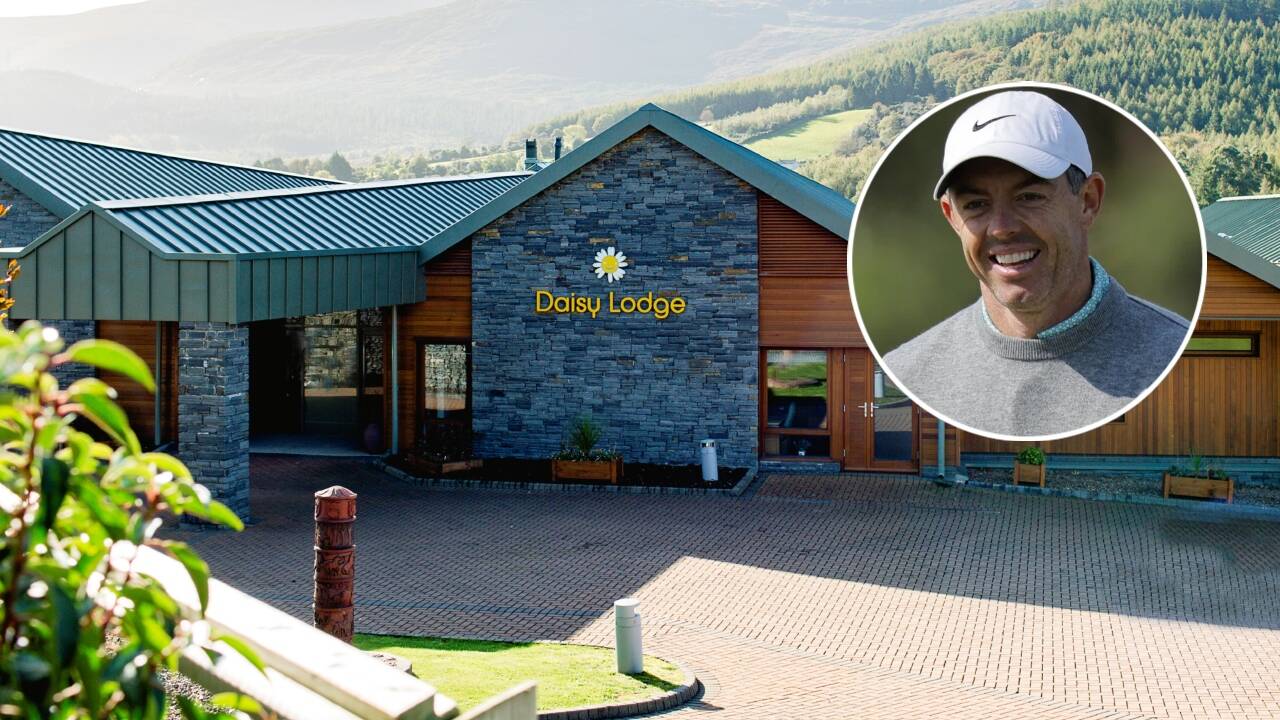
Most celebrity charity donations disappear into administrative overhead or get forgotten two news cycles after the press release drops. Rory McIlroy’s £1 million gift to Daisy Lodge wasn't one of those check-writing photo ops.
Back in 2013, the Northern Irish golfer stepped up through his charitable arm, the Rory Foundation, to fund a therapeutic short-break center in Newcastle, County Down. That money didn't just pay for bricks and mortar at the foot of the Mourne Mountains. It changed how families dealing with childhood cancer across the entire island of Ireland survive the worst years of their lives.
You probably know McIlroy for four major championships, a massive PGA Tour career, and his vocal stance on professional golf's civil war. Fewer people know the actual mechanics of how his early philanthropy saved a struggling project and turned it into a permanent lifeline for Cancer Fund for Children.
Why Daisy Lodge Almost Stalled Before Opening
Building a specialized therapeutic facility for children with cancer isn't cheap. Cancer Fund for Children had an ambitious vision for Daisy Lodge in County Down, replacing an older, smaller facility that simply couldn't keep up with demand.
They needed millions of pounds during the tail end of a brutal global recession. Fundraising was tough. Corporate sponsorships were drying up across Northern Ireland, and the charity faced a massive funding gap right when construction needed momentum.
Then McIlroy got involved.
In 2013, he established the Rory Foundation specifically to help children live better lives. One of his very first major commitments was a £1 million donation to the Daisy Lodge appeal. That single injection of cash did two things immediately. First, it closed a critical gap in the capital build budget so the facility could actually open its doors in 2014. Second, it put an international spotlight on a local Belfast-based charity that desperately needed global donors to pay attention.
When one of the most famous athletes on the planet puts his own money and name behind a local build, other wealthy donors stop sitting on their hands. Philanthropy works on social proof just like venture capital does.
Inside the Newcastle Facility and What Happens There
If you've never dealt with pediatric oncology, it's hard to picture what a "short-break center" actually does. It isn't a hospital. There are no chemo drips, sterile hallways, or beeping monitors.
Daisy Lodge is a purpose-built therapeutic retreat nestled right below Slieve Donard in Newcastle. It accommodates up to six families at a time, completely free of charge. When a child is diagnosed with cancer, the entire family unit fractures under the stress of hospital stays, financial strain, and constant fear. Siblings often get pushed to the sidelines while parents focus entirely on keeping the sick child alive.
At Daisy Lodge, families get three days to just breathe.
- Dedicated therapeutic spaces allow trained specialists to work with both the diagnosed child and their brothers and sisters through play, art, and conversation.
- Complimentary holistic therapies give exhausted parents a rare chance to step out of caregiver mode for an hour without worrying about medical bills or meal prep.
- Peer connection happens naturally around the dinner table, where parents meet other mothers and fathers who actually understand what a sudden midnight fever means when white blood cell counts are low.
Honestly, the brilliance of the model is that it treats the whole family rather than just the patient. Hospitals treat tumors. Daisy Lodge treats the trauma left behind in everyone else's head.
How the Rory Foundation Kept Pushing Beyond the First Check
Lots of athletes write a big check once, cut a ribbon, and move on to the next PR cycle. McIlroy didn't bounce after the 2014 opening.
He used the Irish Open as a literal fundraising engine for the charity. When the Rory Foundation took over hosting duties for the European Tour's Irish Open starting in 2015 at Royal County Down—literally right down the road from Daisy Lodge—every ticket sold and sponsor signed fed directly back into children's charities, with Cancer Fund for Children sitting right at the top of the list.
Think about the logistics of that move. Hosting a flagship European Tour event takes massive political and financial leverage. McIlroy didn't just show up to play four rounds of golf; he leveraged his star power to bring the world's best players to Northern Ireland, driving tourism revenue into Newcastle while funneling tournament proceeds straight into keeping Daisy Lodge running.
Over several years of hosting the Irish Open, the Rory Foundation raised millions more for its beneficiaries. That sustained backing allowed Cancer Fund for Children to support thousands of families across both Northern Ireland and the Republic of Ireland.
The Ripple Effect in County Mayo
Success creates a new problem in healthcare philanthropy. Once families realized what Daisy Lodge in Newcastle offered, waiting lists grew fast.
Cancer Fund for Children quickly saw that one six-family lodge in County Down couldn't serve every family on the island, especially those living in the west and south of Ireland who faced grueling five-hour drives just to reach Newcastle. A long road trip is torture for a kid recovering from intensive chemotherapy.
Because the Newcastle site proved the concept worked—backed heavily by the credibility and financial foundation McIlroy helped establish—the charity launched plans for a second Daisy Lodge in Cong, County Mayo.
Construction on the Mayo facility moved forward with backing from the Irish government, philanthropic trusts, and individual donors who had watched the County Down lodge transform lives over a decade. Without that initial £1 million push in 2013 proving the model at scale, a second lodge in the west of Ireland would have remained a pipe dream on a whiteboard.
What Sports Philanthropy Usually Gets Wrong
Most athlete foundations fail quietly. You see it constantly across the PGA Tour, the Premier League, and the NBA. A player sets up a 501(c)(3) or a UK charitable trust because an agent says it's good for their brand, hires a cousin to run it, hosts one overpriced gala dinner, and spends 60% of the raised cash on event catering and administrative salaries.
McIlroy’s team avoided that trap by partnering with an established, audited charity that already knew how to deliver frontline care.
The Rory Foundation didn't try to invent a new pediatric cancer program from scratch. They didn't hire their own social workers or build a competing bureaucracy. Instead, they acted as a capital accelerator for Cancer Fund for Children, an organization that already had the clinical relationships, safeguarding protocols, and therapeutic expertise in place.
That distinction matters. When celebrity money funds proven operational infrastructure rather than ego-driven vanity projects, every pound stretches twice as far.
How You Can Support Daisy Lodge Right Now
You don't need a major championship paycheck or a seven-figure foundation to keep places like Daisy Lodge open for families facing childhood cancer. Cancer Fund for Children relies heavily on public fundraising to cover the ongoing operational costs of hosting families free of charge.
If you want to contribute directly to the work McIlroy helped scale in Northern Ireland and across Ireland, skip third-party aggregator sites that take a cut of processing fees and go straight to the source. Visit the official Cancer Fund for Children website to fund a family's stay, sign up for one of their regional community challenges, or set up a monthly direct debit that pays for therapeutic sessions year-round.