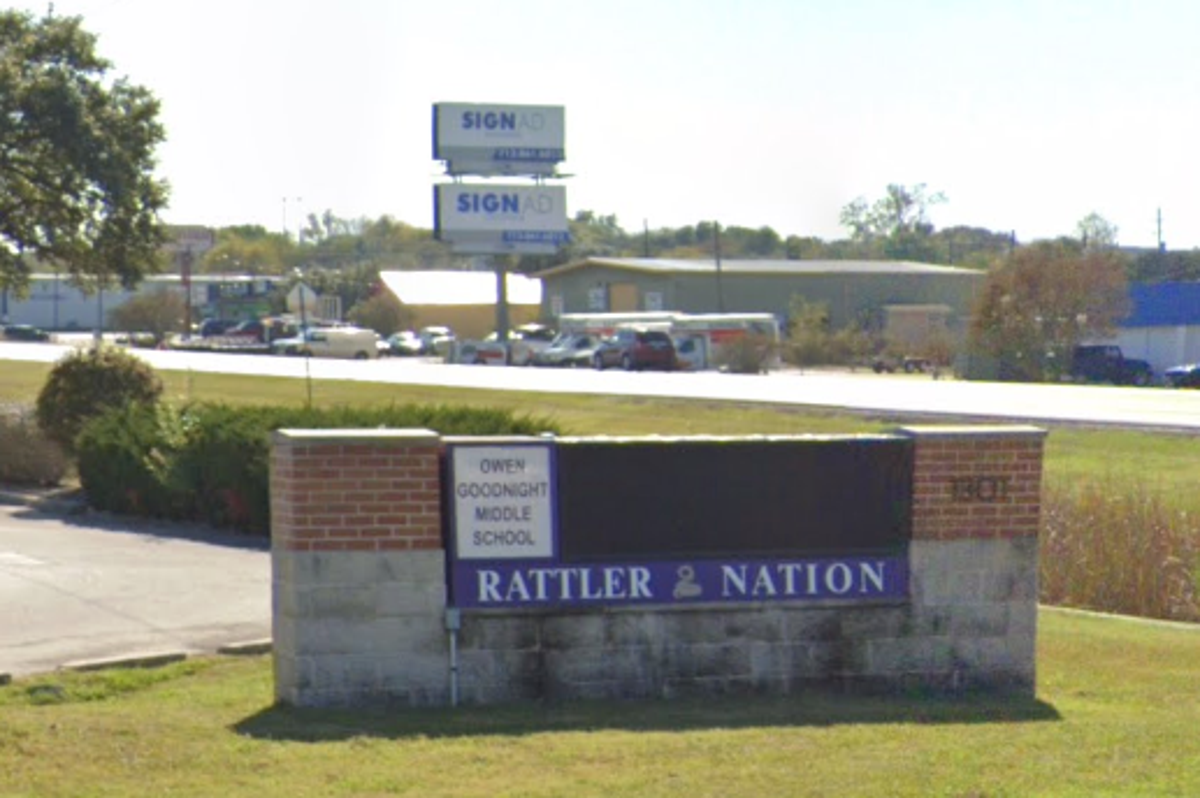
The hallways of Murchison Middle School usually hum with the predictable, chaotic energy of Austin youth. There is the rhythmic slamming of lockers, the high-pitched social jockeying of lunch breaks, and the smell of floor wax and overcooked cafeteria pizza. But on a Tuesday that began like any other, that rhythm broke. It didn't break with a bang or a fire alarm. It broke with a stomach ache. Then a dizzy spell. Then the realization that the basic social contract between a student and a school official had been quietly, systematically dismantled.
We entrust our children to institutions under a very simple, unspoken agreement: within these walls, they are safe. When a staff member—a person whose very presence is meant to signify authority and protection—walks into that environment, they carry the weight of that trust. On this particular afternoon, a staff member didn't bring lesson plans or guidance. They brought a batch of cookies. For a more detailed analysis into similar topics, we suggest: this related article.
To a middle schooler, a cookie from a teacher or a staff member is more than a snack. It is a reward. It is a moment of connection. It is a gesture of kindness in a world of standardized testing and social anxiety. But these cookies were a Trojan horse. Shortly after eating them, several students began to drift. Their vision blurred. Their stomachs turned. The school nurse’s office, usually a place for scraped knees and feigned headaches to skip gym class, suddenly became a triage center for a mystery illness.
The Anatomy of a Betrayal
Emergency responders arrived at the North Austin campus as the panic began to ripple through the parent groups. When you get a notification that your child’s school is under medical distress, your mind goes to the dark places first. You think of gas leaks. You think of food poisoning from a tainted batch of spinach. You rarely think that a member of the faculty purposefully distributed something that would make children lose their grip on the afternoon. For further background on the matter, extensive analysis can also be found on BBC News.
The facts, as they crystallized, were chilling. Austin Independent School District officials eventually confirmed that a staff member had sold these "treats" to the students. This wasn't a bake sale for the band. This wasn't a sanctioned event. It was a private transaction conducted in the shadows of the school day. While the district remained tight-lipped about the exact ingredients, the symptoms described by the hospitalized students pointed toward a substance that had no business being in a minor’s bloodstream.
Consider the perspective of a twelve-year-old in that moment. You are sitting in a plastic chair, the fluorescent lights overhead starting to hum a little too loudly. Your heart rate climbs. You feel a sudden, inexplicable sense of dread or a heavy, sedative fog rolling over your brain. You look to the adults for help, only to realize that the adult who caused this is the one standing at the front of the room. That is the invisible stake: the permanent scarring of a child’s sense of security.
The Fragility of the System
This incident at Murchison isn't just a local news blip about a "bad apple." It is a glaring spotlight on the vulnerabilities of our educational ecosystems. We have built high fences and installed metal detectors to keep the "outside" threats at bay, but we are often defenseless against the threats that already have a key to the front door.
The staff member was quickly removed from the campus and, as the district later confirmed, "no longer employed" by the time the sun set on the investigation. But termination is a bureaucratic solution to a human catastrophe. The legal system will likely handle the rest—charges of delivery of a controlled substance to a minor or child endangerment are the standard hurdles for such actions. Yet, the legal terminology fails to capture the visceral anger of the parents who stood outside the school gates, waiting to see if their child was the one being wheeled out on a stretcher.
The mechanics of the "sale" are particularly disturbing. Selling items to students isn't just a violation of school policy; it’s a predatory exploitation of a power dynamic. A student looks up to a staff member. If that adult says, "Hey, try this," the student's natural instinct to question is suppressed by years of being told to follow directions.
When the Sanctuary is Pierced
Schools are meant to be the "third place"—that sacred ground between home and the world where a child can grow without the immediate weight of adult consequences. When a staff member introduces illicit substances into that space, they aren't just breaking the law; they are polluting the sanctuary.
Austin is a city that prides itself on being "weird," on being progressive and community-oriented. But there is nothing quirky about this breach. The medical fallout—the nausea, the lethargy, the terrifying disorientation—eventually fades. The body is resilient. It filters out the toxins. It heals the lining of the stomach. What remains is the psychological residue.
Imagine a hypothetical student named Leo. Leo likes math, plays soccer, and generally trusts his teachers. After the cookie incident, Leo doesn't just look at treats differently; he looks at every adult in the building with a newfound, cynical edge. He wonders what else is being hidden. He wonders if the next "kind gesture" is a trap. This is the tax we pay when authority figures fail so spectacularly. It is a tax on the innocence of an entire grade level.
The Ripple Effect
The administrative response followed the standard playbook: a letter home, a promise of a "thorough investigation," and an assurance that "the safety of our students is our top priority." These phrases are the white noise of modern crisis management. They are designed to lower the temperature, to reassure the public that the machinery of the state is still turning.
But for the families involved, the temperature doesn't just drop because a PDF was attached to an email. The questions remain. How was this person hired? Were there red flags in the months leading up to the sale? How many other students were approached but didn't buy? The investigation into the Murchison incident must go deeper than one person’s employment file. It has to look at the culture of the school—how much autonomy do staff members have, and where was the peer oversight?
In the age of the fentanyl crisis and the skyrocketing rates of accidental ingestions among youth, the stakes of bringing any unknown substance into a school are astronomical. We are no longer in an era where a "prank" or a "mistake" can be laughed off. We are in an era of lethal consequences.
The Long Walk Home
As the students were released to their parents that evening, the mood in the parking lot was somber. It was the silence of a community that had been shaken. There is a specific kind of exhaustion that comes with realizing that the places you thought were safe are actually just as porous as the rest of the world.
The staff member is gone. The cookies are in a lab being analyzed. The students are, physically, "stable." But as the yellow school buses pulled away from Murchison Middle School, the air felt different. The transition from the safety of the classroom to the reality of the street had been blurred.
Trust is a heavy thing to carry, and it is even heavier when it has been shattered into a thousand jagged pieces. It takes years to build a reputation of safety and only one afternoon—and one batch of cookies—to burn it to the ground. The lesson learned that day wasn't in the curriculum. It was a far harder, colder reality: sometimes, the people we are told to follow are the ones leading us into the dark.
The lights in the classrooms eventually flickered off, leaving the hallways empty and still. The school would open again the next day. The bells would ring. The students would return. But they would be walking a little more cautiously, looking a little more closely at the hands that feed them, searching for the truth behind a smile that used to be enough.