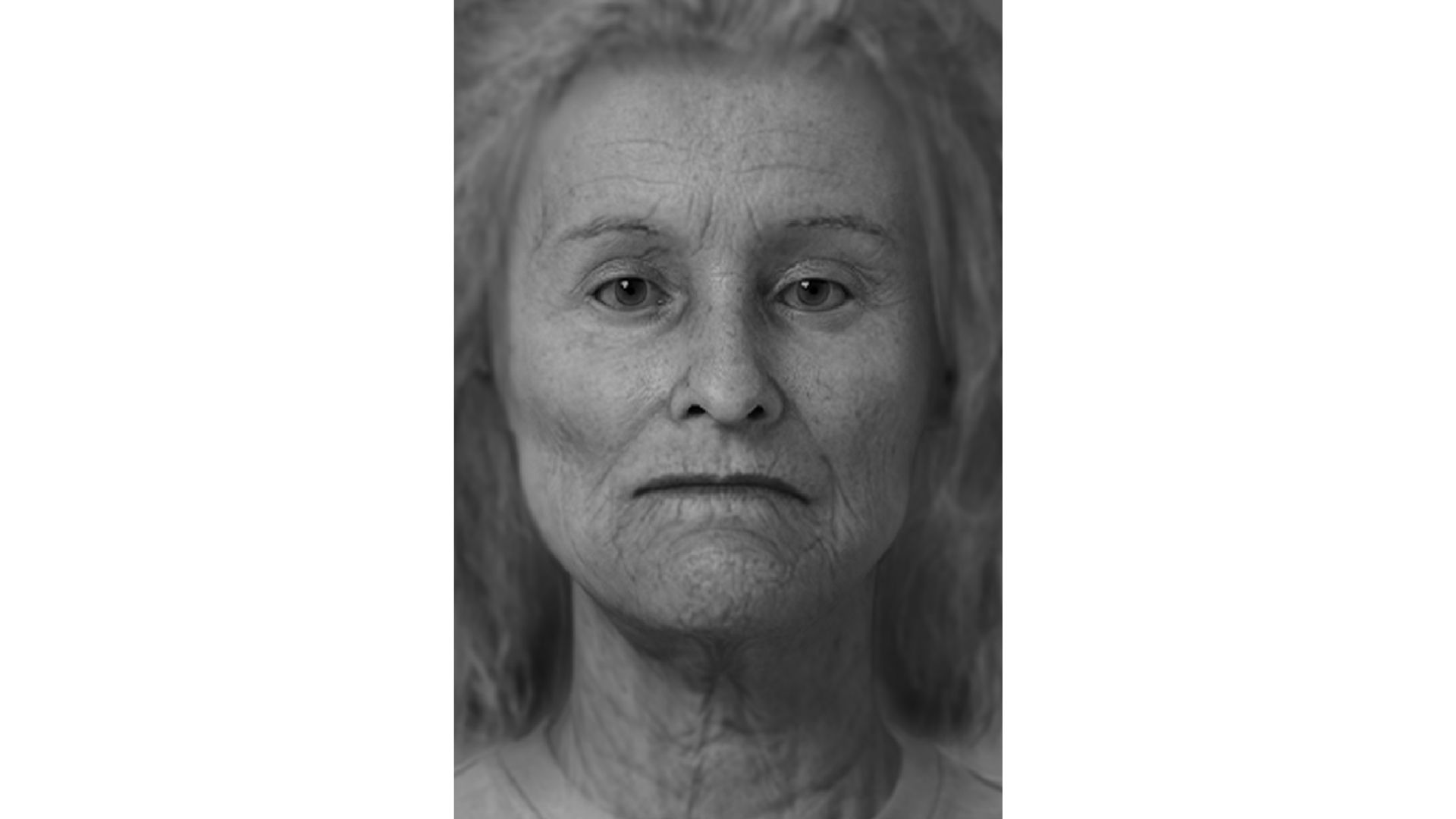
Every few months, a local police department releases a haunting digital composite or clay sculpture of an unidentified homicide victim. The headlines write themselves. "'Face' of mystery woman found dead in bin bag in park released by police." True crime forums light up. Amateur sleuths squint at their screens, convinced they recognize the jawline of a neighbor who moved away in 2018. Tip lines flood with thousands of well-meaning, entirely useless leads.
And the case stays cold.
For decades, law enforcement and legacy media have treated forensic facial approximation as a silver bullet for cold cases. It makes for gripping evening news. It signals to a grieving public that investigators are exhausting every avenue. Yet behind closed doors, forensic anthropologists and veteran cold-case detectives know an uncomfortable truth. Releasing speculative facial reconstructions to the general public often buries viable investigations under mountains of cognitive noise, distorts witness memory, and wastes critical investigative hours that should be spent on hard biological intelligence.
The consensus treats a released composite as progress. In reality, it is frequently an act of investigative desperation dressed up as modern science.
The Myth of the Exact Likeness
To understand why public facial releases fail so routinely, you have to strip away the Hollywood mythology popularized by network crime dramas. When a body is discovered in an advanced state of decomposition, skeletalized, or severely traumatized, investigators turn to forensic artists or 3D digital modeling software to estimate what the person looked like in life.
Here is what the press releases rarely emphasize. A forensic facial reconstruction is not a portrait. It is an educated anatomical guess.
Forensic artists rely on tissue-depth markers—standardized averages collected from cadaver studies that estimate how thick skin and muscle sit over specific points of the skull. The problem is right there in the terminology. Averages. A skull can tell a trained anthropologist a great deal about biological sex, broad ancestry, approximate age, and major dental trauma. What a skull cannot tell anyone with certainty is whether a victim weighed 115 pounds or 190 pounds at the time of death. Bone does not record whether a woman wore her hair in a tight bun, dyed it platinum blonde, had a prominent mole on her left cheek, smiled with a crooked lip, or wore thick-rimmed glasses.
Yet when a digital rendering hits the front page of a news site, the human brain does not process it as a statistical approximation of cranial structure. The human brain processes it as a photograph.
I have watched major metropolitan task forces burn through six-figure overtime budgets chasing phantom sightings generated by a single released sketch. One detective puts a rendering on a press podium, and within forty-eight hours, three hundred people call in swearing they saw that exact woman at a bus stop, a diner, or a border crossing. Every single tip has to be logged, cross-referenced, and cleared. Meanwhile, the real victim—who looked slightly gaunt from illness, or had different eyebrows, or wore a completely different hairstyle—goes unrecognized by her own cousin because the rendering looks just different enough to trigger the brain's "not her" filter.
Why Eyewitness Recognition Breaks Down Under Speculation
Cognitive psychology has demonstrated for decades that human facial recognition is fragile, holistic, and heavily dependent on external cues. Pioneering researchers in eyewitness memory, including Elizabeth Loftus and Gary Wells, have documented how easily visual suggestions contaminate recall. When police publish a speculative face, they are not simply asking the public to search their memories. They are actively overwriting them.
Consider how recognition works in real life. You rarely recognize an acquaintance solely by the distance between their orbits and the width of their nasal aperture—the exact metrics skeletal reconstruction relies upon. You recognize them by their posture, the way their eyes crinkle, their hairline, their skin texture, and context.
When a forensic artist adds hair, skin tone, lip fullness, and eye color to make a 3D model look "lifelike," those artistic choices become visual anchors. If the artist guesses a medium-brown bob and the victim actually had long, curly black hair, the public subconsciously screens out anyone who does not match the hairstyle. Worse, if a potential witness actually saw the victim alive near the park where her body was dumped, viewing the composite alters their memory of the encounter. Later, if a real suspect or an actual photograph surfaces, the witness's testimony is compromised because their recall has fused with the police drawing.
The Forensic Reality of Modern Identification
If facial reconstructions are so prone to misdirection, why do departments still trot them out for the cameras? Because traditional media demands visuals. A press conference featuring a spreadsheet of stable isotope ratios does not get picked up by national syndicates. A haunting digital face does.
| Identification Method | Primary Mechanism | Key Limitation | Investigative Signal-to-Noise Ratio |
|---|---|---|---|
| Facial Reconstruction | Tissue-depth averages applied to skeletal morphology | Cannot determine weight, hair, aging nuances, or expression | Low; generates massive volumes of false-positive public tips |
| Forensic Genetic Genealogy | SNP DNA profiling cross-referenced with public ancestry databases | Requires extractable DNA and sufficient genealogical records | High; narrows search directly to biological family trees |
| Isotope & Chemical Analysis | Ratios of oxygen, strontium, and carbon in teeth and bone | Identifies geographic regions lived in, not individual identity | Medium-High; eliminates irrelevant geographic jurisdictions |
| Dental & Medical Records | Radiographs, prosthetics, surgical hardware serial numbers | Requires a pre-existing antemortem record to match against | Definitive; provides legally binding confirmation |
Look at how real cold cases are actually cracked today. When unidentified remains are recovered from a park or an urban waterway, the breakthroughs almost never come from a stranger recognizing a clay bust on the evening news. They come from the laboratory.
Forensic Genetic Genealogy (FGG) has fundamentally exposed the obsolescence of public facial guessing games. By extracting single nucleotide polymorphism (SNP) profiles from degraded bone or hair and uploading them to opt-in genealogical databases, investigators bypass public speculation entirely. Instead of asking ten million strangers to play a visual guessing game, geneticists build biological family trees backward from second and third cousins until a single missing person emerges at the intersection of two lineages.
Alongside genetics, stable isotope analysis of tooth enamel and bone collagen acts as a chemical passport. Oxygen and strontium isotopes locked into teeth during childhood reflect the specific local drinking water and geology where a person grew up. Carbon and nitrogen ratios reveal diet. Before a single sketch is ever drawn, a competent forensic lab can tell investigators whether a mystery woman spent her childhood in northern England, the American Midwest, or coastal Spain, and whether she moved regions in the final years of her life.
The Uncomfortable Downside of Going Silent
Challenging the utility of public facial releases does not mean pretending modern forensics is magic. Every investigative strategy carries trade-offs, and abandoning visual appeals has real costs that honest practitioners must confront.
Forensic genetic genealogy is expensive, legally complex, and slow. Processing degraded DNA from remains left exposed in a damp park can take months of specialized extraction work. In jurisdictions with strict privacy statutes or limited public lab funding, DNA backlogs stretch for years. Furthermore, if a victim comes from an underrepresented population in commercial ancestry databases, genetic genealogy hits a brick wall. Distant cousin matches simply do not exist in the system.
In those edge cases—where DNA is destroyed by fire or chemicals, dental records do not exist, and family trees are blank—a visual depiction remains a last-ditch hail mary. Sometimes, a distinctive tattoo, an unusual piece of jewelry, or a healed childhood fracture shown alongside a conservative bust really does jog the memory of a social worker or an estranged sibling.
The failure is not that facial reconstruction exists. The failure is using it as a first-line publicity stunt rather than a tightly controlled, last-resort tool.
How Law Enforcement and Media Must Change Protocol
If police departments and journalists actually want to identify victims found in anonymous graves and city parks—rather than simply farming engagement from true-crime voyeurs—the playbook needs an immediate overhaul.
- Lead with non-facial physical markers. Before releasing a speculative face, release high-resolution photographs of clothing tags, dental work patterns, unique jewelry, healed fractures, and geographic isotope profiles. Objects and medical anomalies do not suffer from artistic bias. A specific brand of boot or a distinct dental crown triggers exact, factual recognition rather than vague emotional familiarity.
- Strip the artistic styling from necessary reconstructions. When a facial approximation must be published, keep it strictly clinical. Avoid adding speculative hairstyles, makeup, dramatic lighting, or hyper-realistic skin textures. Presenting a neutral, grey-scale anatomical form forces the human brain to look at bone structure rather than getting tricked by a digital artist's choice of haircut.
- Target the distribution geographically using isotope data. Stop blasting composites globally across social media where algorithm-driven true-crime accounts turn murder victims into entertainment. Use chemical isotope mapping and missing-person analytics to push targeted appeals strictly to the specific towns, clinics, and community boards where the victim actually lived.
- Reframe media coverage around missing-person reporting gaps. The real scandal behind almost every unidentified homicide victim is not a lack of forensic artistry. It is that someone vanished from a community, a workplace, or a family, and either nobody reported them missing or police dismissed the report as a voluntary disappearance.
Every time a news outlet runs a sensational headline about a "mystery face" pulled from a skull, it lets institutions off the hook for the systemic failures that allowed a human being to disappear unnoticed in the first place. Stop treating digital guesswork like a breakthrough. Put the funding into DNA sequencing, fix the broken missing-person intake pipelines, and quit asking the public to solve murders with a blindfold on.