Canada’s political class loves a predictable script. Whenever a province hints at pulling the emergency brake on confederation, the Ottawa establishment rolls out the exact same talking points. They talk about economic ruin. They invoke international trade nightmares. They treat the electorate like children who don’t understand the mechanics of their own checkbooks.
We saw this paternalistic dance play out again after Prime Minister Mark Carney tried to lecture Alberta about its upcoming provincial referendum. Carney drew an immediate line between Western Canadian frustration and the United Kingdom’s messy exit from the European Union, calling Alberta's planned vote a "very dangerous bluff."
But the real story isn't Carney’s predictable defense of the federal status quo. It’s the backup that arrived from an unexpected corner of the country.
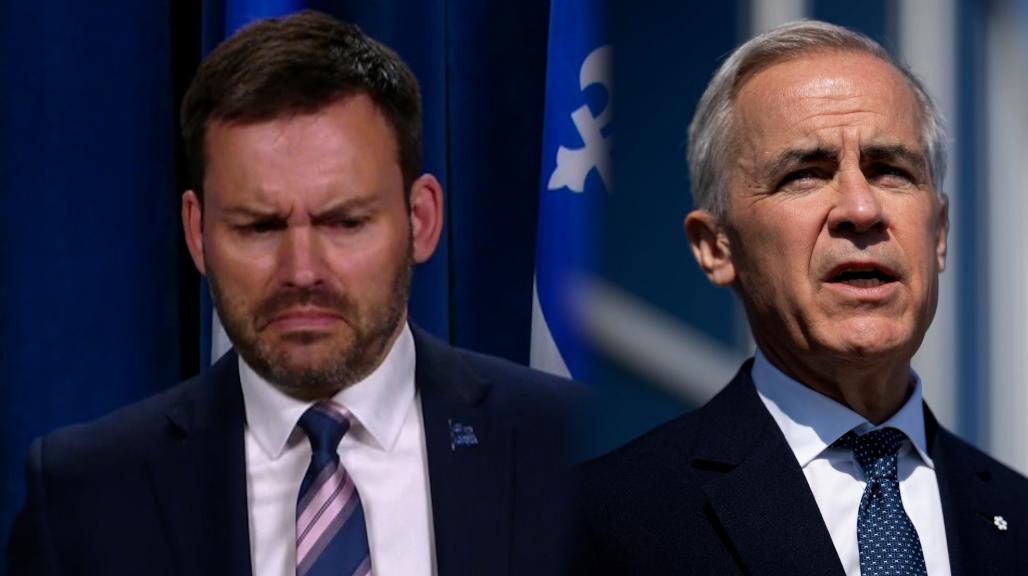
Parti Québécois Leader Paul St-Pierre Plamondon stepped up to defend Alberta Premier Danielle Smith’s right to poll her citizens. He called Carney’s critique "really out of line" and reasserted a fundamental democratic truth that Ottawa desperately wants to ignore. Provinces don’t need federal permission to ask their people what they want.
The Federal Playbook of Economic Fear
Carney’s critique comes from a familiar place. He watched Brexit firsthand during his tenure as the governor of the Bank of England, and he’s using that scar tissue to shape federal strategy in Canada. He argues that secession movements sell voters a fantasy. They pitch independence as a risk-free negotiation tactic to get a better deal from the central government, only to leave citizens holding an empty bag when the economic reality hits.
It’s an easy argument to make if you view the country purely through a spreadsheet. Carney promises to campaign hard for Canadian unity, relying on arguments about massive internal markets and shared social safety nets.
That view completely misses the emotional and structural reality of why these movements exist. Albertans aren't looking at a referendum because they don't understand economics. They're looking at it because they feel the current federal framework systematically drains their resources while ignoring their political voice. When a federal leader dismisses that deep-seated alienation as a mere bluff, it doesn't calm the waters. It confirms the exact bias the separatists are fighting against.
Why Quebec’s Sovereignists Are Backing Alberta
Plamondon’s quick defense of Alberta might look like a strange alliance on the surface. Quebec and Alberta sit on opposite sides of many national debates, from environmental policy to equalization payments. But when it comes to provincial autonomy, they share the exact same DNA.
The PQ leader pointed directly to Quebec’s own legal and political history to justify Alberta’s strategy. Quebec went to the polls in 1980 and 1995 to vote on its place in Canada. The 1995 vote came down to a razor-thin margin, with the federalist side scraping by with just 50.58% of the vote. That history created a precedent: the people living in a province have an inherent right to be consulted about their future.
Plamondon’s intervention is a calculated political move. The Parti Québécois is riding high in the polls ahead of the province's October 5 provincial election. Plamondon has already promised that if his party wins a mandate, they will trigger a sovereignty referendum before 2030.
By defending Danielle Smith’s right to hold an advisory vote this autumn, Plamondon is protecting his own backyard. If the federal government successfully brands Alberta’s democratic exercise as illegitimate or illegal, Ottawa will use that exact same playbook against Quebec the moment the PQ takes power in Quebec City.
Two Disconnected Movements Facing a Shared Legal Wall
While the political rhetoric aligns, the actual legal paths for Quebec and Alberta are radically different. You can't just copy and paste Quebec's sovereignty framework onto the Western prairies.
Alberta's separatist movement hit a major legal roadblock earlier this year when the Court of King’s Bench threw out a citizen petition demanding a separation vote. Justice Shaina Leonard ruled that the organizers failed to consult with First Nations, noting that any push for separation directly impacts and potentially infringes on treaty rights.
This creates a massive hurdle that Quebec hasn't had to navigate in the same way, though the northern province faces its own indigenous sovereignty challenges. Quebec has 11 distinct Indigenous nations. Back in 1995, regions like the Inuit territories voted overwhelmingly to remain part of Canada, signaling that a provincial exit wouldn't automatically mean a clean break for the entire geographic map.
Plamondon acknowledged these differences himself, noting that the legislative parameters in Alberta don't mirror Quebec’s framework. But the overarching principle remains. Whether you're talking about the oil fields of Fort McMurray or the cultural heartland of Chicoutimi, the desire to bypass Ottawa’s central control is driven by the same fundamental grievance.
The Failure of Ottawa’s Corporate Federalism
The federal government keeps treating provincial discontent like a public relations problem that can be solved with better messaging and vague promises of "co-operative federalism." Carney talks about building unity through regional action, but that rhetoric rings hollow to voters who see a structural imbalance in how the federation operates.
When the political establishment dismisses provincial referendums as dangerous games, they alienate the very voters they need to win over. Danielle Smith's plan to ask Albertans whether they want to stay or begin a separation process is a direct reaction to a system that feels unresponsive. Calling it a bluff implies that the anger isn't real.
If federalists want to save the country, they need to stop hiding behind economic scare tactics and start addressing the structural flaws that make independence look attractive to millions of Canadians. Until they do, leaders like Plamondon and Smith will continue to find common ground, proving that the threat to Canadian unity isn't just a regional anomaly—it's a systemic failure.
To understand how these arguments play out on the ground, look at how federal leaders position themselves against provincial challenges. For a detailed breakdown of the federal response to this growing provincial push, check out this report on the PM Carney calls Alberta separation referendum a ‘dangerous bluff’, which highlights the growing tension between Ottawa and the provinces over regional self-determination.