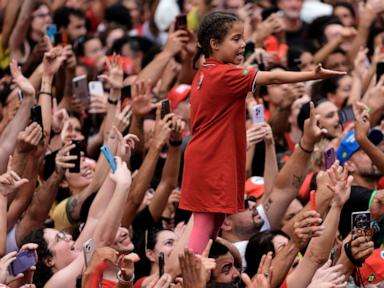
High-profile political endorsements in battleground states operate as capital allocation events rather than mere ceremonial appearances. When former President Barack Obama campaigns alongside a candidate like Abdul El-Sayed in Michigan ahead of critical midterm elections, the strategic objective is to resolve two distinct electoral bottlenecks: turnout elasticity among base demographics and credibility deficits among undecided moderates. Standard political commentary treats these rallies as emotional spectacles, missing the underlying operational mechanics of coalition assembly, media arbitrage, and down-ballot coattail transfer.
To understand the true utility of a presidential surrogate in Michigan, strategists must separate the optics of a rally from the quantifiable conversion funnels required to win statewide or district-level contests in the Great Lakes region. For another view, read: this related article.
The Structural Anatomy of Michigan's Electoral Map
Michigan is not a monolithic voting bloc; it is a fragile coalition of three distinct political geographies with conflicting turnout triggers. Any successful midterm strategy requires optimizing resource deployment across these zones without triggering counter-mobilization in opposing districts.
- The Wayne-Washtenaw Urban Core: Encompassing Detroit and Ann Arbor, this region provides the raw vote margin necessary for Democratic statewide viability. The primary operational risk here is not persuasion, but turnout attrition during non-presidential election cycles.
- The Oakland-Macomb Suburban Collar: These counties represent the swing territory where elections are won or lost. Voters here exhibit high sensitivity to economic messaging, institutional stability, and perceived ideological extremism.
- The Outstate Industrial and Rural Periphery: Spanning from Grand Rapids to the Upper Peninsula, these areas require defensive margin management to prevent overwhelming deficits from neutralizing urban gains.
A rally featuring Barack Obama and Abdul El-Sayed directly targets the friction between the first two zones. El-Sayed, a former Detroit Health Department director and progressive standard-bearer, naturally commands high enthusiasm among younger, progressive, and Arab-American voters concentrated in Washtenaw and parts of Wayne County. However, progressive candidates frequently encounter skepticism in the suburban collar, where moderate voters associate populist rhetoric with institutional disruption. Further insight on this trend has been provided by Al Jazeera.
Obama’s presence acts as an institutional bridge. By lending his political capital to El-Sayed, the former president signals to risk-averse suburban Democrats and independents that the candidate operates within the established party consensus. Simultaneously, Obama’s enduring popularity within Detroit’s Black electorate addresses the chronic midterm drop-off problem in Wayne County.
The Three Functions of Surrogate Deployment
Political campaigns do not deploy Tier-1 surrogates randomly. The timing and location of an appearance before a midterm election are governed by three specific operational functions.
1. Earned Media Arbitrage
Paid advertising in Michigan media markets—specifically Detroit, Grand Rapids, and Flint-Saginaw—becomes prohibitively expensive in the final weeks of a midterm cycle. Ad inventory saturates, leading to diminishing returns on every dollar spent on television and digital impressions.
A joint rally generates a localized media monopoly. Local news affiliates, which retain significantly higher trust ratings among older, high-propensity voters than national cable networks, cover a presidential visit as a primary news event rather than a paid political message. This allows the campaign to bypass ad-blockers and viewer fatigue, injecting their core message directly into evening broadcasts at a fraction of the cost of a statewide media buy.
2. Volunteer and Donor Conversion
Rallies are data-harvesting operations disguised as public gatherings. Attendees are rarely undecided voters; they are overwhelmingly committed partisans. The operational value of assembling thousands of supporters in a single venue lies in converting passive sympathy into active labor.
- List Acquisition: Registration gates capture cell phone numbers, email addresses, and zip codes, updating the campaign’s voter file with verified, high-propensity contacts.
- Shift Commitments: Field organizers work the crowd lines to lock in canvassing and phone-banking shifts for the final push, where person-to-person contact yields the highest conversion rates for low-propensity voters.
- Small-Dollar Velocity: High-visibility events create urgency spikes that campaigns immediately monetize through targeted SMS and email fundraising blasts within hours of the event concluding.
3. Coalition De-Escalation
Primary elections and ideological divides often leave factions within a political party alienated before the general election. Progressive wings frequently criticize the party establishment for policy caution, while moderates worry that progressive platforms alienate swing voters.
When an establishment figure like Obama shares a stage with a progressive figure like El-Sayed, it executes a public truce. The visual alignment communicates to fractured voter blocs that internal grievances are subordinate to the broader electoral threat. This reduces the likelihood of third-party defections or intentional abstention—two factors that routinely decide Michigan elections by margins of less than one percent.
The Midterm Turnout Equation and Elasticity
Midterm elections suffer from predictable structural drop-off compared to presidential cycles. The electorate shrinks, becoming older, wealthier, and more ideologically rigid. For Democrats in Michigan, winning requires artificially inflating the midterm electorate to resemble a presidential coalition.
Voter elasticity—the likelihood that a citizen will change their behavior based on campaign stimulus—varies wildly across demographics. High-propensity voters require minimal stimulus; they will vote regardless of rallies or endorsements. Low-propensity voters, particularly those under thirty and intermittent voters in urban centers, require high-decibel cultural moments to register the election as urgent.
Obama remains one of the few political figures capable of generating cultural gravity sufficient to move low-propensity voters. However, this effect is subject to severe spatial decay. The turnout bump generated by a rally is heavily concentrated within a fifteen-to-twenty-mile radius of the event venue and dissipates rapidly within seventy-two hours unless captured by an aggressive ground game. If the campaign lacks the field infrastructure to follow up with attendees and their social networks, the rally produces zero net votes on Election Day.
Limitations and Counter-Mobilization Risks
Deploying a high-profile surrogate carries measurable downside risks that campaign analysts must weigh against projected gains. No political tactic operates in a vacuum, and every major push triggers an equal and opposite reaction from the opposition.
The Backlash Multiplier
While Obama consolidates the Democratic base, his presence simultaneously serves as a potent mobilization tool for conservative voters. Republican digital operations immediately clip footage from the rally to fundraise and drive turnout among their own base in Macomb County and outstate districts. The net gain of the event is therefore not the total number of Democrats mobilized, but the delta between Democratic turnout gains and Republican counter-mobilization.
The Authenticity Deficit
Voters in Michigan’s industrial corridors have grown increasingly skeptical of scripted political theater. If a candidate relies too heavily on national surrogates to validate their candidacy, opponents can effectively frame them as a proxy for national party interests rather than an independent advocate for local economic concerns. El-Sayed’s specific appeal rests on his outsider credentials and public health background; over-indexing on establishment endorsements risks diluting the exact brand attributes that attract independent populist voters.
Message Displacement
A presidential surrogate inevitably dominates the news cycle, often crowding out the specific policy platform of the local candidate. When the media narrative focuses entirely on Obama’s critique of the opposition, the local candidate’s specific economic or healthcare proposals—the very issues that persuade undecided suburban voters—receive minimal airtime.
Operationalizing the Endorsement Post-Rally
The rally itself is merely the top of the marketing funnel. The ultimate return on investment depends entirely on the campaign's execution during the subsequent operational phases.
First, the campaign must segment the newly acquired attendee data within twenty-four hours. Attendees from high-turnout precincts should be routed immediately into volunteer recruitment pipelines, while attendees from low-turnout precincts must be placed into relational organizing programs—such as friend-to-friend texting apps—where their social influence can be multiplied across their immediate peer groups.
Second, the digital team must strip the rally video into hyper-targeted micro-assets. Rather than broadcasting the entire speech, editors should isolate thirty-second clips addressing specific local issues—such as prescription drug costs, manufacturing jobs, or infrastructure—and serve those clips exclusively to undecided voters in Oakland, Kent, and Saginaw counties via programmatic video ads.
Third, field directors must deploy canvassers into the neighborhoods surrounding the rally venue within forty-eight hours while local media coverage remains fresh in residents' minds. Door-knockers referencing the event experience significantly higher contact and persuasion rates than those executing cold outreach.
Campaigns that treat a presidential rally as a victory lap waste their most valuable asset. The appearance only generates electoral value when the campaign immediately converts the temporary spike in public attention into permanent field capacity and targeted voter contact before the news cycle resets.