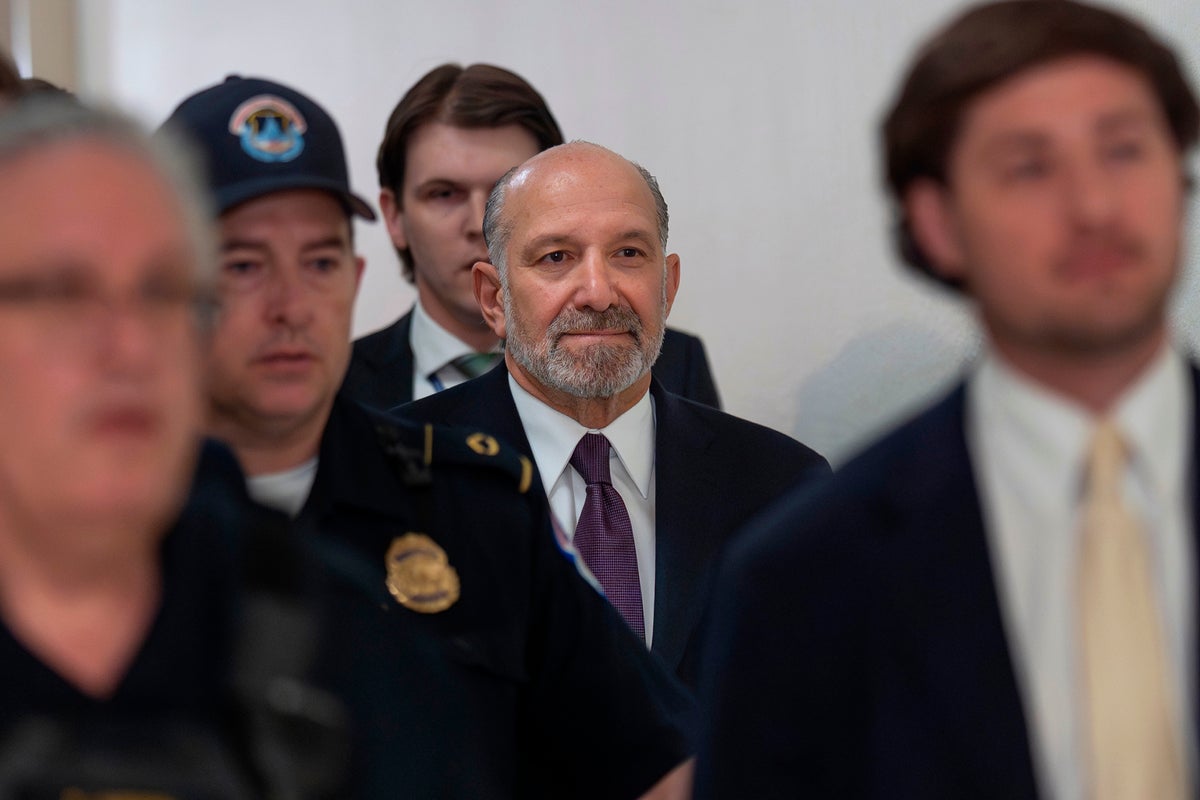
The House panel hearing featuring Commerce Secretary Howard Lutnick wasn't about finding the truth. It was about the optics of accountability in a system that thrives on selective amnesia. While the mainstream media fixates on the "changing story" regarding his past ties to Jeffrey Epstein, they are missing the systemic reality of how high finance and high-level government actually operate.
Watching a Congressional committee grill a billionaire-turned-cabinet-member is like watching professional wrestling. The punches are pulled, the script is written, and the audience is supposed to believe the grudge is real. But if you want to understand why Lutnick is sitting in that chair, you have to stop looking at the Epstein connection as a smoking gun and start looking at it as the price of admission for the global elite over the last thirty years.
The Myth of the Untainted Resume
The "lazy consensus" driving the current narrative suggests that Lutnick’s shifting explanations are a unique moral failing. This is a naive reading of how the C-suite functions. In the circles Lutnick has inhabited for decades—running Cantor Fitzgerald, navigating the aftermath of 9/11, and brokering deals across every continent—"proximity" is the primary currency.
Jeffrey Epstein was not a shadow figure in the 1990s and early 2000s; he was a social utility. To suggest that every executive who crossed his path should have conducted a private forensic investigation into his lifestyle before accepting a dinner invitation is a retrospective fantasy. The reality of the "Goldman-Sachs-to-Government" pipeline or the "Cantor-to-Commerce" shift is that these individuals are vetted for their ability to generate capital and manage crises, not for the purity of their Rolodex from twenty years ago.
The House panel isn't shocked by the Epstein ties. They are using those ties to score points because they can't effectively argue against Lutnick’s actual policy agenda. It is easier to talk about a dead pedophile than it is to talk about the complex, often brutal mechanics of global trade tariffs and domestic manufacturing shifts.
Why "Inconsistency" is a Survival Strategy
Critics point to Lutnick’s evolving statements as proof of guilt. I’ve spent enough time around boardrooms and legal teams to tell you that "consistency" is what kills careers in Washington. When the goalposts of social acceptability move, the narrative must move with them.
http://googleusercontent.com/image_content/193
When Lutnick says his relationship was minimal, then details emerge about more frequent contact, the media screams "liar." A seasoned industry insider sees a man performing a standard corporate pivot. In the world of high-stakes finance, you disclose only what is necessary to satisfy the current audit. If the audit changes, the disclosure updates.
This isn't an endorsement of dishonesty; it's a cold observation of professional survival. The House members grandstanding about "transparency" are the same people who take dark money from PACs and hide their own stock trades. The hypocrisy is the only thing in the room that is truly consistent.
The Distraction Economy
What is the Commerce Department actually doing while we argue about who sat next to whom at a 2002 charity gala?
- Weaponizing Export Controls: We are in the middle of a cold war over semiconductors.
- Reshaping Supply Chains: The push to decouple from China is the most significant economic shift since Bretton Woods.
- AI Sovereignty: The race to regulate—or deregulate—artificial intelligence will determine the next century of GDP growth.
By focusing on the Epstein drama, the public is being steered away from questioning how Lutnick’s Commerce Department will handle the massive subsidies of the CHIPS Act. We are debating a dead man’s ghost instead of the billions of taxpayer dollars being funneled into private tech firms.
Imagine a scenario where the hearing actually focused on the conflict of interest between Lutnick’s massive private holdings and his role as the gatekeeper of American industry. That would be a "game-changer," but the committee won't go there because half of them are invested in the same firms. It is much safer to talk about Epstein. It creates the illusion of moral rigor without risking a single dollar of market cap.
The "People Also Ask" Problem: Breaking the Premise
When people ask, "How could Lutnick not know?" they are asking the wrong question. The real question is: "Why does the system reward those who ignore red flags?"
In the 90s, if you were a shark in the New York financial scene, you ignored everything that didn't help you close the trade. That was the culture. To punish a man today for participating in the culture of yesterday is a form of chronological snobbery. If we purged every official who had dinner with a now-disgraced financier, the halls of the Treasury, Commerce, and State departments would be empty.
Brutal honesty: The Epstein connection is a tool for political leverage, not a search for justice. If Lutnick were a back-bench congressman, nobody would care. Because he is the architect of a new economic era, he is a target.
The Failure of Professional Journalism
The coverage of this hearing proves that political journalism has been subsumed by the "gotcha" cycle. Reporters aren't looking for the nuance of trade policy; they are looking for the clip that goes viral on social media.
- The Competitor's View: "Lutnick struggles to explain discrepancies in his timeline."
- The Insider's View: "Lutnick successfully burned three hours of hearing time talking about irrelevant social history instead of answering for his department's billion-dollar budget."
Lutnick didn't lose that hearing. He won. Every minute spent on Epstein was a minute he didn't have to explain how his policies might spike consumer prices or how his private business interests are being firewalled from his public duties.
The Price of Admission
If you want a Commerce Secretary who has never met a villain, you’ll end up with a secretary who has never met a billionaire. And in our current system, a Commerce Secretary who doesn't know the players is useless.
The uncomfortable truth is that the "battle scars" of a career in high finance often include proximity to the dark side of the elite. You don't get to the top of Cantor Fitzgerald by being a Boy Scout. You get there by being a predator among predators. The American public wants the benefits of a "tough negotiator" but is shocked when that negotiator has spent time in the company of other tough, often immoral, people.
We are currently witnessing a performance of "Moral Outrage Theater." The actors know their lines, the cameras are in position, and the ending is already decided. Lutnick will stay, the headlines will fade, and the real work of carving up the global economy will continue behind closed doors.
Stop looking at the finger pointing at the moon. Look at the moon. The Epstein story is the finger. The moon is the total reorganization of American commerce under a man who knows exactly how the world works because he helped build it.
If you’re waiting for a "moment of truth" in a Congressional hearing, you don’t understand how power works. Power doesn’t apologize; it rebrands.
The next time you see a headline about "changing stories," ask yourself what they are trying to make you forget. They aren't trying to demystify the past; they are trying to obfuscate the present.
The hearing wasn't an interrogation. It was a baptism. By the time it’s over, Lutnick will have been "vetted" by the fire of public scrutiny, leaving him free to execute his real agenda with a clean slate. The Epstein ties aren't his weakness; they are the smoke screen he's using to walk right through the front door.
Go back to sleep, the theater is almost over.