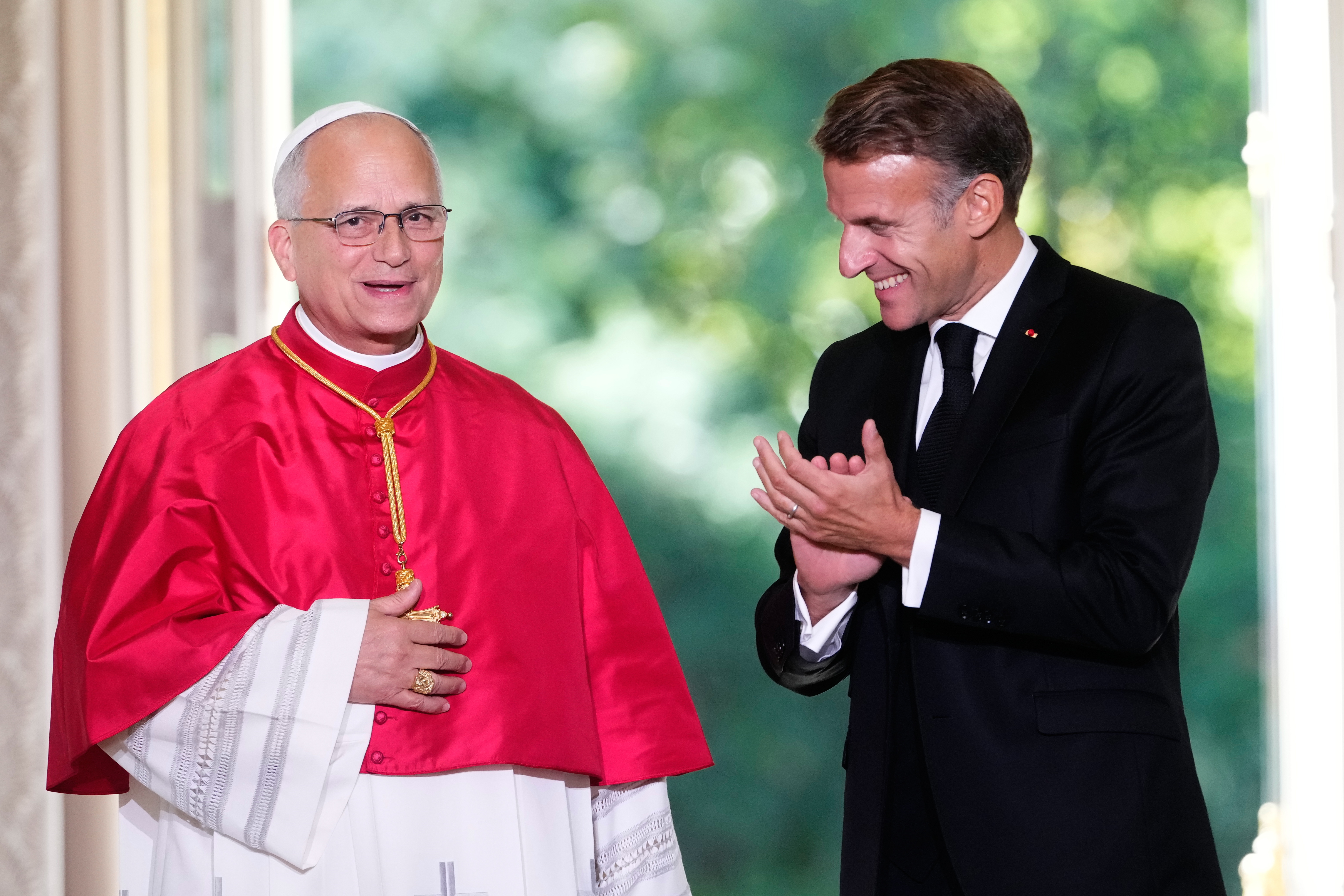
We are building a world that looks increasingly efficient on paper and increasingly hollow in practice. Every single day, tech executives roll out new tools promising effortless productivity. They talk about frictionless automation. They pitch a future where human effort becomes optional. Pope Leo XIV took one look at this relentless march toward total automation and called it what it actually is. A paradise of machines. And honestly, he warned that it might destroy us.
When the pontiff touched down in France for his high-profile visit, he didn't just exchange polite diplomatic pleasantries with President Emmanuel Macron. He zeroed in on the existential threat of our moment. We are obsessed with computational efficiency. We measure human output the same way we measure server latency. If you cannot produce at maximum velocity, society looks at you as obsolete. That is a terrifying standard to live under.
You see it everywhere now. Companies replace customer support staff with cheap chatbots that loop endlessly through canned apologies. Creative work gets commodified into prompt engineering. We treat human beings like malfunctioning biological units that need optimization. The Pope's critique cuts straight through the techno-optimist noise. He reminds us that true human dignity has nothing to do with algorithmic output.
Why Silicon Valley Should Pay Attention
Tech leaders love to frame their work as an unmitigated good. They tell us that artificial intelligence will cure diseases, solve logistics, and usher in an era of boundless leisure. But you don't have to look very far to see the cracks in that narrative. Look at the energy grid strain. Look at the water consumption of massive data centers humming away in rural towns. Look at the quiet displacement of working-class people whose livelihoods vanish overnight because a spreadsheet told an executive that an algorithm could do it cheaper.
When Leo warned about losing our humanity inside this automated paradise, he wasn't just recycling old anti-technology tropes. He was identifying a profound spiritual and moral vacuum. When you hand over your critical thinking to a machine, you slowly atrophy your own capacity for ethical discernment. You stop asking whether something should be done simply because it can be done.
Silicon Valley likes to move fast and break things. Usually, what gets broken is human connection. People are lonely. People are anxious. Millions turn to simulated companions because actual human relationships require messy emotional labor. We are constructing a society where artificial intimacy replaces the real thing. That is not progress. That is a retreat from reality.
The Danger of Measuring Human Worth by Efficiency
We have built an entire economic apparatus that worships efficiency above all else. If a process takes too long, it gets flagged. If a worker takes too many sick days, they get managed out. Corporations treat human labor as a friction point to be eliminated.
The Pope addressed this exact pathology during his addresses in Paris. He pointed out the glaring paradox of our era. We attribute high intelligence to lines of server code while simultaneously struggling to recognize the basic, unearned dignity of actual people. A human life gets evaluated purely through the cold lens of productivity. If you are producing, you matter. If you are elderly, sick, or simply slow, you get discarded.
Think about how insidious that mindset is. It creeps into education, healthcare, and public policy. We evaluate schools by test score metrics rather than the character of the students they shape. We evaluate healthcare by throughput rather than patient care. We treat citizens like data points on a dashboard.
When you accept that framework, you lose your soul piece by piece. You stop seeing your neighbor as a person with an inner life and start seeing them as an obstacle or an asset. Technology accelerates this dehumanization because it puts a shiny interface over pure utilitarian calculation.
Navigating Faith and Technology in Modern France
France makes for a fascinating backdrop for this warning. It is a nation deeply rooted in secularism, fiercely guarding the wall between church and state. Yet, it is also grappling with the exact same modern anxieties rattling the rest of the West. From intense debates over end-of-life legislation to the massive cultural shifts brought on by digital transformation, France sits right at the fault line of these modern dilemmas.
When Leo met with political leaders and cultural figures, he didn't shy away from controversy. He pushed back against the utilitarian drift that treats human existence as something disposable. He visited the newly reopened Notre-Dame cathedral, a monument built by human hands over centuries through grueling, painstaking labor. Contrast that ancient cathedral with a modern data center humming quietly in the suburbs, cooled by massive chillers, tended by a handful of technicians while millions of queries fly through fiber optic cables.
One required human community, shared struggle, and generational devotion. The other requires immense capital, rare earth minerals, and fossil fuel energy to generate synthetic text.
The contrast matters. We have traded the sacred slowness of human craft for the instant gratification of automated output. And we wonder why anxiety rates are through the roof.
What Happens When We Outsource Our Judgment
There is a deeper peril here that goes beyond economics or energy consumption. It is the outsourcing of human judgment.
When you let algorithms curate your news, choose your entertainment, draft your emails, and screen your job applicants, you stop exercising your own mind. You become a passive consumer in your own life. Algorithms are designed to maximize engagement, not truth. They feed you outrage because outrage keeps you staring at the screen. They flatten nuance because nuance doesn't go viral.
If you surrender your moral agency to a machine, you forfeit your responsibility as an ethical actor. A machine cannot feel guilt. It cannot experience empathy. It cannot look at a suffering human being and feel a punch in the gut. Those messy, inefficient human traits are precisely what keep us civilized.
We need to slow down. We need to demand that technology serves human flourishing instead of treating humans as raw material for tech monopolies.
The warning delivered in Paris wasn't an instruction to throw away your phone or retreat to the woods. It was a sharp, necessary reality check. We are building a paradise for machines, but we run the very real risk of turning it into a prison for ourselves. Stop worshipping the algorithm. Start valuing actual human life before efficiency eats what is left of our humanity.