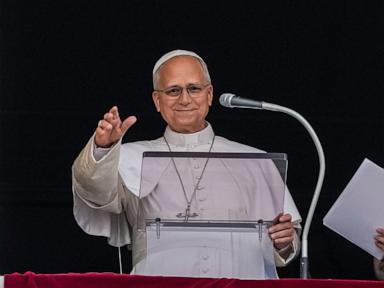
Seeing Pope Leo XIV wave from his Apostolic Palace window on Sunday, October 18, 2026, less than a day after leaving the hospital, caught plenty of people off guard. Just five days earlier, the 71-year-old pontiff had undergone a 90-minute operation at Rome's Agostino Gemelli Polyclinic to remove the lower lobe of his right lung after scans flagged a nodule. Pathology confirmed localized lung adenocarcinoma, the most common form of lung cancer.
Thousands of pilgrims packed St. Peter's Square under cloudy skies, clapping, cheering, and wiping away tears as he led the Angelus and gave his Sunday blessing. Honestly, that emotional crowd response is only half the story. What made the moment stand out—both clinically and culturally—was how early the lesion was caught, how unusually open the Vatican was about the diagnosis, and how fast a 71-year-old got back on his feet. If you found value in this post, you might want to look at: this related article.
Why Pope Leo XIV's Sunday Blessing Felt Different
Papal health scares used to come wrapped in polite euphemisms and late-night hospital bulletins. Remember 2023, when Pope Francis went in for what the Vatican initially described as scheduled tests before later revealing chest pain and bronchitis? Pope Leo XIV handled things differently. On Sunday, October 11, after leading the Angelus, he told crowds directly that recent medical checks had turned up a small, well-localized lung nodule and that surgery was scheduled for the coming days. For another angle on this story, refer to the recent coverage from TIME.
That candor set the tone for the whole week. By the time he returned to the Apostolic Palace window on October 18—having been discharged on October 17 ahead of the roughly weeklong stay initially projected—the mood in the square wasn't panic. It was relief mixed with genuine surprise. Pilgrims like Ylenia Casati from Siena and Ilaria Beatrice from Prato spoke about feeling reassured simply by seeing him upright, present, and speaking in his own voice.
During his remarks, Leo thanked supporters worldwide for their prayers and the Gemelli medical staff for their care, noting that the experience brought him closer to everyone living with illness or infirmity. He also marked the centenary of World Mission Sunday and said he'd resume his duties gradually. Three days later, on October 21, his lead thoracic surgeon, Dr. Stefano Margaritora, and his personal physician, Dr. Luigi Carbone, announced that histological and molecular testing confirmed the tumor was localized lung adenocarcinoma—and that no further cancer treatment like chemotherapy or immunotherapy was needed.
What Early Lung Cancer Detection Actually Looks Like
Here's the mistake a lot of people make when they hear "lung cancer": they picture late-stage symptoms, heavy smoking histories, and months of grueling therapy before anyone even leaves a hospital bed. That's not how early-stage lung adenocarcinoma often plays out.
According to medical reporting around the case, Pope Leo had no respiratory symptoms and felt well prior to the procedure. Before operating on October 13, doctors used a chest CT scan with contrast, a PET scan, and a robotic bronchoscopy with biopsy to evaluate the spot. Margaritora noted that had the nodule sat higher up, it might easily have gone unnoticed.
Two medical realities worth keeping straight:
- Nodules aren't automatically cancer, even when you're older. The American Thoracic Society notes that fewer than 5% of lung nodules overall turn out to be malignant, though risk climbs with age, nodule size, and smoking history. Still, when imaging looks suspicious and a biopsy or PET scan raises flags, removing the lesion early can be curative if it hasn't spread.
- Non-smokers get lung adenocarcinoma too. Lung specialists pointed out during coverage of Leo's surgery that roughly 1 in 5 people diagnosed with lung cancer have no history of smoking, and adenocarcinoma is frequently seen in people without heavy smoking exposure. Waiting for a cough or shortness of breath is a terrible strategy when an incidental scan spots something early.
At the same time, doctors aren't going to pretend a lobectomy is minor. Removing the lower lobe of the right lung is major thoracic surgery. What separated this case from a complicated recovery wasn't magic—it was catching a small, localized tumor before nodal or distant spread, combined with rapid mobilization right after surgery.
Inside a Fast Post-Surgery Recovery
If you've ever watched an older relative recover from chest or abdominal surgery, you know how quickly bed rest can knock someone flat. That's why early movement matters so much in thoracic care.
According to the Vatican and medical reports, Pope Leo started respiratory physical therapy the day after surgery, walked around his room, and went back to eating regular meals. Two days post-op, Margaritora even recounted spotting the pope arranging chairs in the chapel ahead of celebrating Mass—a detail that tells you a lot about his stubbornness and baseline conditioning, even if doctors gently reminded him they could handle the furniture.
"The lung's re-expansion after surgery is proceeding according to the usual timetable," Dr. Stefano Margaritora told Vatican News upon Pope Leo's discharge on October 17, adding that a full physical recovery from that kind of operation typically takes a couple of weeks.
Still, there's a fair debate among clinicians and observers about pacing. A four-day hospital stay and a Sunday Angelus wave five days after surgery look impressive on television, and Leo's doctors cleared him clinically for his ambitious November 6–17 trip to Uruguay, Argentina, and Peru—an itinerary involving a dozen flights and high-altitude helicopter hops. Yet even when a surgeon says there are no clinical obstacles, real-world recovery isn't linear. Fatigue, chest soreness, and reduced lung reserve can sneak up on anyone in their seventies once the adrenaline of coming home wears off.
That's why Leo's pledge to "gradually resume" activities actually makes medical sense. Waving from a window or riding through St. Peter's Square in the Popemobile for a weekly general audience—as he did on October 21, greeting pilgrims and giving shorter multilingual greetings in seven languages instead of nine—isn't the same as marathon travel or high-altitude exertion.
What This Moment Means for Families Facing a Scan Scare
Watching a public figure bounce back after a cancer diagnosis can be inspiring, sure, but it can also create unrealistic expectations if your own family is sitting in a waiting room. Every tumor has its own pathology, stage, and molecular profile; Pope Leo's team specifically waited on final histological and molecular testing before confirming he needed no further therapy.
If you or someone you love is navigating a new lung nodule, an upcoming thoracic procedure, or recovery after cancer surgery, a few practical steps can help you ask sharper questions and protect recovery:
- Ask how the nodule is being staged and tested. Find out whether doctors recommend watchful waiting with repeat CT scans, a PET scan, or a bronchoscopy/biopsy—and if surgery happens, ask what final pathology and molecular testing will confirm before deciding on next steps.
- Prioritize respiratory therapy and early walking after chest surgery. Gentle, guided breathing exercises and short walks help re-expand lung tissue and prevent setbacks, as long as you follow your surgical team's pain and activity limits.
- Plan a real buffer before big travel or heavy schedules. Even when doctors clear someone early, stamina takes weeks to rebuild. Build rest days into post-op calendars rather than treating discharge day as the finish line.
- Keep a written symptom and medication log at home. Track shortness of breath, fever, chest pain, energy levels, and pain medications so small warning signs don't get lost between checkups.
Pope Leo's Sunday return gave the faithful in St. Peter's Square the reassurance they came for, and his doctors' follow-up word that no further cancer treatment was needed gave them even better news. The real takeaway for the rest of us is simpler: early detection changes the math, and steady, unhurried recovery is what keeps a strong return from turning into a setback.