Silence.
That is the first thing you notice in a Kansas precinct gymnasium at nine o’clock on a Tuesday night in November, right after the poll workers tape the yellow receipt to the glass door and the fluorescent lights hum over empty folding chairs. For nearly a century, that silence has meant one thing in the Sunflower State. It meant the red tide had rolled in again, predictable as the winter wheat, washing away whatever hopeful blue shoots had dared to sprout in Lawrence or Wyandotte County. If you enjoyed this post, you should check out: this related article.
Since 1932, Kansas has not sent a single Democrat to the United States Senate. Not one. Think about that span of time. Herbert Hoover was still sitting in the Oval Office the last time a Kansas Democrat took the Senate oath. Dust Bowl winds were stripping the topsoil off Finney County. Men were standing in breadlines in Topeka. Empires rose and collapsed, wars were fought and forgotten, and through every single cycle, the political bedrock of Kansas remained immovable.
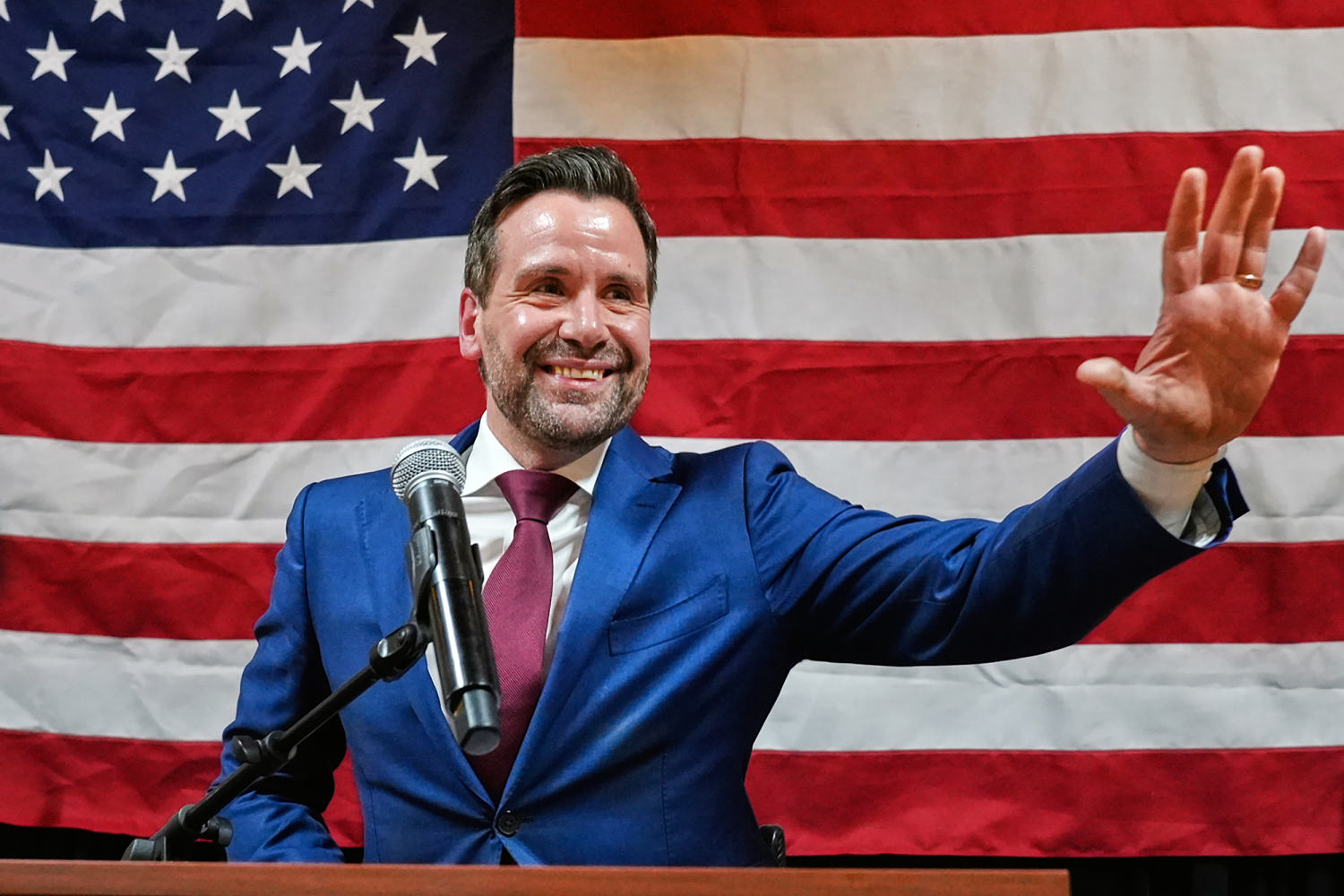
Until Adam Hamilton walked down the center aisle. For another perspective on this development, check out the recent update from TIME.
To understand how an incumbent Republican senator like Roger Marshall—a physician, a veteran, a man deeply embedded in the conservative machinery of western Kansas—lost his seat to a Methodist pastor from Leawood, you have to stop looking at electoral maps. Maps are cold. Maps flatten human beings into red and blue polygons, turning living, breathing anxieties into mere percentages. To understand what happened, you have to stand in the gravel parking lot of a grain elevator in Saline County at dusk, smelling the diesel exhaust and the dry dust, and listen to what people say when they think nobody from Washington is listening.
The Architecture of an Unbreakable Habit
Politics in the American heartland rarely operates on ideology alone; mostly, it runs on muscle memory.
For generations, voting Republican in Kansas was less of a political calculation and more of an inheritance, passed down like a cast-iron skillet or a deed to forty acres. You went to church on Sunday, you paid your property taxes on time, and on Election Day, you filled in the oval next to the GOP nominee. Roger Marshall understood that rhythm intimately. Having represented the sprawling "Big First" congressional district before winning his Senate seat in 2020, Marshall wore his background like a tailored suit—the small-town obstetrician who delivered thousands of babies, the fiscal conservative who spoke the language of agriculture and energy.
When the 2026 Senate race began, national handicappers barely glanced at Kansas. Why would they? Donald Trump had carried the state comfortably in three consecutive presidential elections. The structural advantage for any Republican incumbent was built like a concrete bunker. Strategists in D.C. filed Kansas under "Safe R" and moved their money to Pennsylvania, Michigan, and Arizona.
They missed the hairline fractures forming beneath the surface.
Consider a hypothetical family—let’s call them the Millers, a composite drawn from dozens of conversations across Johnson and Sedgwick counties—sitting around a kitchen table in Olathe. Mark Miller is a lifelong Republican who manages a mid-sized logistics firm; his wife, Sarah, teaches fourth grade in a public school district stretched thin by budget fights and culture-war mandates. For years, Mark voted red out of economic instinct. He wanted lower taxes and fewer regulations.
But over the last few years, the conversation at the Millers’ table changed. Mark watched the state’s political discourse drift further away from roads, schools, and hospital solvency, and deeper into performative outrage. Sarah watched colleagues leave the profession, exhausted by being treated like political combatants rather than educators. When Mark turned on the news, he didn't see the pragmatic conservatism of Bob Dole or Nancy Kassebaum—the giants of Kansas politics he had admired in his youth. He saw endless cable-news theater.
And Mark started wondering if his vote was being taken for granted.
Enter the Pastor from Leawood
Adam Hamilton was never supposed to be a politician.
As the founding pastor of the United Methodist Church of the Resurrection in Leawood, Hamilton built the largest mainline Protestant congregation in the United States—a sprawling, multi-campus community drawing tens of thousands of worshipers every week. If you have ever sat in his sanctuary on a Sunday morning, you know immediately why traditional political labels bounce right off him. He doesn't shout. He doesn't sneer. He speaks with the measured, disarming cadence of a man who has spent thirty-five years standing beside hospital beds, burying parents, and counseling marriages on the brink of collapse.
When Hamilton entered the race, party operatives in both camps were baffled. Democrats worried a pastor wouldn't have the stomach for the mud-slinging required to survive a modern Senate campaign. Republicans assumed he would be easy to caricature as a suburban liberal out of touch with rural values.
Both sides misread the room.
Hamilton did not run as a partisan warrior. He ran as a translator. In a political culture addicted to division, he brought the radical, almost subversive energy of a middle-ground seeker. Having spent decades preaching to a congregation split almost evenly between Republicans and Democrats, Hamilton knew how to speak to conservatives without triggering their defenses, and how to speak to progressives without losing their trust.
He called his approach "seeing the whole picture," borrowing from the title of his own writings on bridging cultural divides. Where Marshall’s campaign leaned heavily on nationalized talking points—border security, inflation, and loyalty to the national GOP brand—Hamilton kept pulling the conversation back to the local, tangible realities of Kansas life.
Rural hospitals were closing. Thirty-six percent of rural hospitals in Kansas were at immediate risk of shutting their doors, leaving mothers in places like Fort Scott or Independence driving an hour or more just to deliver a baby. Ironically, that was Roger Marshall’s own medical specialty. Hamilton didn't attack Marshall’s character; instead, he asked a quiet, devastating question at town halls from Dodge City to Pittsburg: If we have a doctor in the Senate, why are our rural emergency rooms boarding up?
The Invisible Shift in the Suburbs
To win statewide in Kansas as a Democrat, you have to execute a mathematical tightrope walk. You cannot simply run up the score in Lawrence and Topeka; there aren't enough votes there. You have to crush the margins in Johnson County—the affluent, educated, historically Republican suburbs south of Kansas City—while bleeding the GOP’s advantage in Sedgwick County (Wichita) and keeping the losses manageable in the vast rural expanse west of Salina.
I remember driving down Metcalf Avenue in Overland Park during the final week of October. The yard signs told a story no pollster had quite captured. In neighborhoods where neatly manicured lawns usually sported a uniform sea of red signs, there was a sudden, jarring visual dissonance. Next to signs for local Republican county commissioners stood blue signs for Adam Hamilton.
Split-ticket voting, long declared dead in American politics, was quietly breathing again.
Roger Marshall’s team saw the danger late, scrambling to flood the airwaves with attack ads painting Hamilton as a rubber stamp for national Democratic leadership. The ads featured ominous music, grainy black-and-white footage, and warnings about taxes and overreach. On paper, it was the standard playbook that had buried every Kansas Democrat since the Great Depression.
Except this time, the caricature didn't stick.
When you try to convince a voter in Lenexa or Shawnee that a soft-spoken Methodist minister—a man who married their neighbor’s daughter and led the local food drive—is a dangerous radical, the attack backfires. It doesn't make the voter afraid of the candidate; it makes the voter resent the person telling the lie.
Marshall, fighting on the defensive in a state he expected to win by double digits, struggled to pivot. His campaign events felt increasingly insular, preaching to the faithful while the vast middle of the Kansas electorate slipped quietly out the back door. He pointed to his record on farm bills and deregulation, solid credentials in a normal year, yet they landed like answers to questions voters were no longer asking. People weren't just voting on the price of diesel anymore; they were voting on exhaust. They were tired of the noise. They wanted someone who sounded like a neighbor rather than a pundit.
The Night the Streak Ended
Election night in Kansas usually ends before the popcorn gets cold. By 8:30 PM, the networks call the race, the concession speech is delivered by nine, and everyone goes to bed.
Not this time.
At 9:15 PM, the first major batches of early and mail-in ballots dropped from Johnson County. Across the state, political junkies refreshed their screens, expecting the usual early Democratic mirage that inevitably evaporates once the rural precincts report. Hamilton was leading by eighteen points in Johnson County—a margin wider than Laura Kelly’s 2022 gubernatorial victory.
Ten o’clock came. Sedgwick County reported. Instead of the comfortable Republican cushion Marshall needed to offset Kansas City, the race in Wichita was essentially a dead heat.
By eleven, the math had become a vise. As precincts from Ellis, Ford, and Finney counties trickled in, Marshall’s margins in western Kansas were solid, yet noticeably softer than four years prior. Farmers who had backed him overwhelmingly in 2020 had either stayed home or quietly left the Senate line blank. Meanwhile, turnout in Douglas, Wyandotte, and Riley counties surged past midterm expectations, driven by younger voters and suburban moderates who saw a rare chance to make history.
Inside the ballroom in Overland Park where Hamilton’s supporters had gathered, the mood shifted from hopeful curiosity to breathless disbelief. Nobody wanted to say it out loud. Ninety-four years of history teaches you not to celebrate early in Kansas. You wait until every box in Cheyenne County is counted. You wait until the math is ironclad.
At 12:42 AM, the Associated Press made the call.
The roar that went up in that ballroom wasn't the triumphant jeer of a conquering army. It sounded more like a collective exhale—the sound of hundreds of people realizing that the rules they thought were etched in stone had suddenly been rewritten.
What the Earthquake Actually Means
It is tempting for national commentators to look at Adam Hamilton’s upset over Roger Marshall and declare that Kansas has turned blue. That would be a profound misreading of the soil.
Kansas is not California. It is not even Colorado. It remains a deeply conservative state with a fierce streak of fiscal prudence and skepticism toward federal mandates. If national Democrats look at this result and conclude they can run a standard progressive playbook in the Great Plains, they will lose by twenty points in two years.
The real lesson of Kansas is far more uncomfortable for the political establishment of both parties.
Hamilton won because he broke the primary rule of modern campaign consulting: he refused to hate his opponents. He treated conservative voters not as adversaries to be defeated, but as neighbors to be persuaded. He stood on stages in conservative towns, acknowledged where he agreed with them, explained plainly where he didn't, and trusted them enough not to dumb down the conversation.
In an era when political algorithms reward the loudest, angriest voice in the room, a pastor won a Senate seat in a deep-red state by lowering his voice.
Consider what this signals for the broader American electorate. Beneath the algorithmic outrage of social media and the tribal warfare of cable news, there is a massive, exhausted majority of Americans starving for decency. They are willing to cross party lines—even historic, generational party lines—if you give them a candidate who respects their intelligence and speaks to their lived reality.
Marshall’s defeat is a warning shot across the bow of every incumbent sitting in a supposedly safe seat. Geographic monopolies are an illusion. When a party stops listening to the quiet anxieties of its own suburbs and takes its rural base for granted, the ground can give way overnight.
Morning on the Prairie
The day after the election, the wind was blowing hard out of the northwest, stripping the last yellow leaves off the cottonwoods along the Kansas River.
At a diner just off Interstate 70 near Junction City, the coffee pots were humming at six in the morning. Two retired mechanics in faded denim jackets sat at the counter, reading the front page of the morning paper over plates of hash browns and eggs. One of them had a faded GOP bumper sticker on his pickup truck outside; the other had voted for Democrats since the Carter administration.
They looked at the headline announcing the end of a ninety-four-year streak. Neither of them shouted. Neither of them gloat-danced or cursed the system.
"Well," the man in the denim jacket said, tapping his spoon against his mug, "reckon they'll have to pay attention to us now."
His friend nodded slowly, taking a sip of black coffee, and turned the page to check the high school football scores. Outside, the sun was coming up over the flat, endless horizon, lighting up the prairie in gold and grey, indifferent to maps, indifferent to pundits, waiting to see what grows next.