A Box in a Cold Warehouse
A cardboard box sits on a wooden pallet near the back of an unheated warehouse in Yorkshire. Inside are fifty plastic face shields, wrapped in thin polyethylene that has turned brittle with age. They were ordered during a panic, shipped across an ocean at five times the standard freight rate, and arrived three weeks after the emergency peaked.
Nobody will ever wear them.
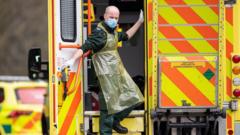
When the UK COVID-19 Inquiry released its findings on personal protective equipment, the media focused on the numbers: billions of pounds spent, millions of unusable items, procurement pathways that favored connections over capability. But spreadsheets cannot capture the precise feeling of a nurse taping a trash bag around her arms at three o'clock in the morning because the real gowns ran out twelve hours ago.
To understand how the national defense against a microscopic threat crumbled, you have to look past the financial ledgers and examine a far more human flaw: the habit of preparing for the last crisis instead of the current one.
The Illusion of the Stockpile
For years, policy makers maintained what they believed was a fortress. The national stockpile was filled to the brim with supplies meant to fight a severe strain of influenza. On paper, the strategy was solid. The inventory was checked, logged, and audited.
Then the nature of the threat shifted.
Influenza spreads quickly, but SARS-CoV-2 behaved differently. It required high-level airborne protection for medical staff performing everyday procedures. The stockpile held millions of simple surgical masks, but it lacked the specific FFP3 respirators needed for intensive care units. It was like stocking a castle with thousands of arrows, only to discover the enemy was bringing cannons.
Imagine a city spending twenty years building high concrete walls to protect against a flood, only for a wildfire to sweep in from the hills. The wall stands tall, pristine, and entirely useless.
When the demand spiked, the domestic supply chain did not just bend. It snapped.
The United Kingdom manufactured very little protective gear domestically, relying almost entirely on overseas factories—primarily in Asia—where factories were already shutting down or redirecting output for their own domestic emergencies. The country was left standing at an empty store shelf with a full wallet.
The Panic Market
By April 2020, global supply routes were broken. Freight costs skyrocketed overnight. Diplomatic customs rules vanished, replaced by an aggressive, cash-on-the-tarmac market where shipments were regularly bought out from under waiting planes by higher bidders.
Inside the civil service, teams of people who weeks earlier had been managing routine administrative tasks were suddenly thrust into a high-stakes, international trading frenzy. They were buying gear from brokers who had no track record, no physical inventory, and sometimes nothing more than a WhatsApp contact and a promise.
Consider a hypothetical procurement officer named Sarah. Two months prior, her job involved reviewing municipal contract renewals. Now, she is reviewing a twenty-million-pound contract for respirators from a firm that registered its business address at a residential flat three days ago. On her desk sits a list of hospitals running on a twelve-hour supply margin.
Does she sign?
She signs. Almost everyone in her position signed.
When fear drives procurement, due diligence becomes a luxury that decision-makers feel they cannot afford. The Inquiry's findings revealed that this atmosphere led directly to the creation of parallel buying channels—fast lanes that prioritized recommendations from political contacts. The intention may have been speed, but the result was an erosion of fairness and a massive waste of public funds.
The Human Cost of Compromise
While millions of pounds flowed out of Treasury accounts, the consequences trickled down to hospital corridors, care homes, and community clinics.
The gear that did arrive was often defective. Gowns lacked proper waterproofing. Mask straps snapped when stretched over a face. Visors arrived scratched so badly they blurred the user's vision.
In a hospital in the West Midlands, staff spent hours re-inspecting shipments late at night after long clinical shifts. They held masks up to the light, checking for thin spots in the melt-blown fabric. They learned to spot fake certification stamps. The burden of quality control had shifted from the manufacturer, past the buyer, straight onto the healthcare worker standing at the bedside.
Panic creates a secondary hazard: moral distress. Healthcare workers were forced to choose between entering a room without adequate protection or abandoning a patient in critical need. That choice is not a policy failure to be filed away in a report; it is a weight that individuals carry for years afterward.
The Waste That Remains
Eventually, the wave of emergency orders bore fruit—far too much of it, far too late.
As global production caught up, the frantic orders placed at the height of the crisis kept arriving. Ships unloaded containers full of equipment that was no longer needed in such vast quantities, or that failed basic safety standards upon arrival.
The result was a sprawling network of rented storage facilities, shipping containers parked in fields, and waste-incineration contracts designed to burn millions of unusable items. Public money spent to buy gear at inflated prices was followed by more public money spent to store it, and finally more public money spent to destroy it.
It is easy to blame individual bad actors, and the inquiry certainly highlighted instances of incompetence and greed. But the deeper truth revealed by the evidence is structural. The system was designed to optimize for efficiency during peace time, leaving zero elasticity for a crisis. It treated critical safety inventory as a just-in-time commodity rather than an essential infrastructure investment, like a power grid or a water supply.
Beyond the Report
Reports fade into library archives. Recommendations are distilled into executive summaries, debated in committee rooms, and eventually buried under new news cycles.
The real lesson of the crisis is not about masks or gowns or even government protocols. It is about how a society values security when there is no immediate danger visible on the horizon.
True preparation is expensive, quiet, and unglamorous. It requires maintaining factories that run below capacity during quiet years just so they exist when foreign ports close. It requires paying to store items that might expire before they are ever used. It requires building transparent, resilient systems that can handle extreme pressure without resorting to shortcuts that compromise integrity.
In that quiet Yorkshire warehouse, the brittle plastic shields sit in the dark. They are silent witnesses to a time when fear replaced foresight, and where the true cost was paid long before the final bill arrived.



