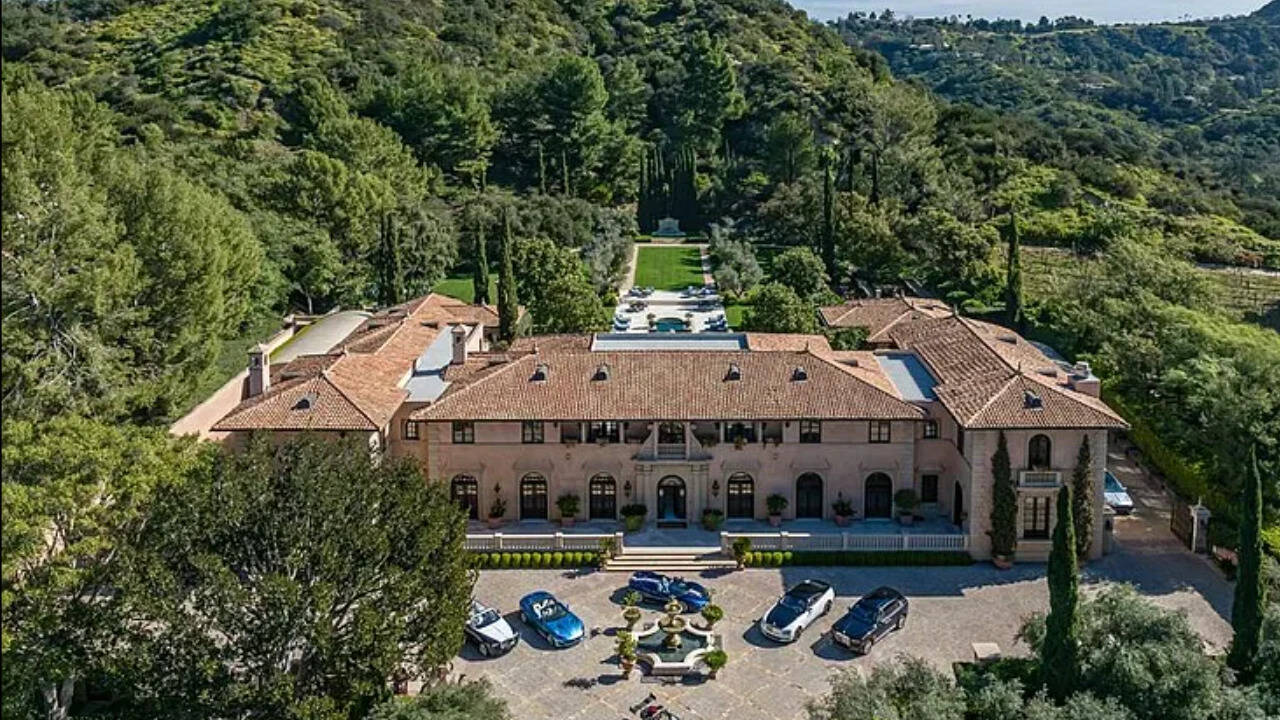
An eight-figure price reduction on a celebrity estate is rarely an act of desperation; it is the delayed recognition of structural illiquidity. When Prince’s former Beverly Park compound takes a $13.5 million markdown, surface-level real estate commentary treats the cut as a simple story of celebrity glamour meeting a cooling housing market. That framing misses the actual economic mechanics driving ultra-prime residential pricing. In the top 0.1 percent of residential real estate, properties do not clear through standard comparable sales models. They behave like bespoke financial instruments with high carrying costs, narrow buyer pools, and severe valuation dispersion.
Evaluating a $13.5 million price reduction requires separating observable market mechanisms from unverified speculation. Because the reference prompt provides only the headline—"Prince’s former Beverly Park estate gets $13.5M price cut"—and no underlying article text, exact listing figures, historical purchase prices, or square footage metrics from that specific piece cannot be cited as established facts. Instead of fabricating numbers, rigorous analysis relies on the structural realities of guard-gated Los Angeles enclaves, celebrity provenance economics, and the friction costs inherent to trophy assets.
The Structural Anatomy of Ultra-Prime Illiquidity
Standard residential real estate operates on high transaction velocity and dense comparable data. If a three-bedroom home in a suburban neighborhood lists 10 percent above recent sales, automated valuation models and buyer agents immediately penalize the overreach, forcing a rapid correction. Ultra-prime estates in enclaves like Beverly Park operate under entirely different market physics.
Three structural forces govern how these properties are priced and why they experience abrupt, massive price cuts rather than incremental adjustments:
Extreme Thinness of the Buyer Pool
At price points exceeding $20 million to $30 million, the number of qualified global buyers shrinks to a few thousand individuals. Within that cohort, only a fraction seeks a specific architectural style, lot orientation, and geographic micro-market at any given moment. Low buyer density means a listing can sit on the market for months without receiving a single qualified offer, starving the seller of real-time price discovery.Heterogeneity and Valuation Dispersion
No two trophy estates are directly interchangeable. Variations in lot acreage, privacy screening, view corridors, and interior customization create wide variance in what two different billionaires might consider fair value. Without standardized comparables, initial asking prices frequently reflect aspirational anchoring by sellers rather than empirical clearing prices.Asymmetric Carrying Costs
Holding an ultra-prime estate imposes severe negative cash flow. Property taxes in California—assessed under Proposition 13 rules at roughly 1.1 to 1.25 percent of the purchase price annually—combine with specialized landscape maintenance, private security, insurance premiums in high-fire-severity zones, and staff overhead. On a $30 million asset, annual carrying costs easily exceed $500,000 before accounting for the opportunity cost of tied-up capital.
When a seller finally executes a $13.5 million reduction, that figure represents the cumulative gap between aspirational anchoring and the clearing price dictated by these three constraints. A minor 2 or 3 percent discount fails to register in a market where transaction friction is high and buyers expect substantial concessions to absorb renovation budgets.
The Celebrity Provenance Fallacy
A persistent error in luxury real estate reporting is assuming that famous former ownership automatically commands a durable price premium. In reality, celebrity provenance operates as a bifurcated variable—it generates media attention, which reduces marketing costs, while simultaneously introducing architectural and functional liabilities that depress final sale prices.
Celebrity ownership functions effectively as a top-of-funnel marketing mechanism. Press coverage surrounding Prince’s former residence guarantees global visibility without requiring proportional spend on traditional luxury print or digital campaigns. Brokers use the biographical hook to capture attention from international wealth managers and family offices.
At the bottom of the funnel, however, high-net-worth buyers rarely pay an eight-figure premium simply because a musician or actor once lived on the parcel. In ultra-prime enclaves like Beverly Park, buyers are purchasing land value, security infrastructure, and social status among peers. Heavy customization tailored to an artist’s specific lifestyle—such as recording studios, theatrical lighting, or idiosyncratic aesthetic choices—often registers as functional obsolescence.
The buyer views bespoke celebrity interiors not as value-adds, but as demolition liabilities. When an estate requires a multi-million-dollar gut renovation to align with contemporary architectural preferences, the buyer deducts both the hard construction costs and the two-to-three-year opportunity cost of permitting and construction from their bid. A $13.5 million price cut frequently reflects the market forcing the seller to internalize the buyer’s future capital expenditure requirements.
Beverly Park Micro-Market Mechanics
To understand why a price adjustment of this magnitude occurs in Beverly Park specifically, one must examine the enclave’s physical and regulatory constraints. Situated in the mountains between Beverly Hills and the San Fernando Valley, Beverly Park is divided into North and South guard-gated communities. It is engineered specifically for maximum privacy and large-scale residential footprints.
The micro-market derives its value from three non-replicable attributes:
- Double-Gated Security Architecture: Perimeter security and strict access protocols insulate residents from paparazzi and unauthorized traffic, creating a defensive moat that standard Beverly Hills flats cannot match.
- Parcel Scale: Lots routinely span multiple acres, allowing for resort-scale amenities, subterranean garages, and guest compounds that are virtually impossible to assemble elsewhere in Los Angeles due to zoning restrictions.
- Regulatory Friction: Strict hillside grading ordinances, baseline mansionization rules, and environmental review processes in Los Angeles make ground-up development extraordinarily slow and expensive.
This regulatory friction creates a paradox. Existing estates benefit from high barriers to new supply, yet older estates within the gates face stiff competition from newly built, turnkey spec mansions. Ultra-wealthy buyers increasingly demonstrate a strong preference for turnkey properties—estates delivered fully furnished, equipped with modern smart-home infrastructure, and compliant with current seismic and energy codes. If a legacy estate linked to a late icon has not undergone comprehensive modernization, it sits at a severe disadvantage against newer inventory, regardless of its cultural pedigree.
The Financial Mechanics of Delayed Price Discovery
Why do sellers wait until a massive $13.5 million cut is necessary rather than pricing accurately at launch? The answer lies in behavioral economics and brokerage incentives.
Anchoring and Loss Aversion
Sellers anchor to peak historical valuations, whisper numbers from neighboring off-market deals, or their own sunk capital costs. Lowering an asking price triggers loss aversion—the psychological reluctance to formalize a paper loss. Sellers often test an aggressive number for six to twelve months under the hypothesis that a single emotional buyer will materialize.
The Stale Listing Penalty
In digital real estate ecosystems, days-on-market metrics are transparent to every buyer’s representative. Once an estate crosses the 180-day or 365-day threshold without going into escrow, market psychology shifts. Prospective buyers assume the property has hidden physical defects, title complications, or an unreasonable seller. To break the stigma of a stale listing, a fractional discount is useless. The price cut must be dramatic enough to reset the valuation narrative and trigger fresh automated alerts across brokerage networks.
Transaction Tax Friction
In the City of Los Angeles, high-value residential transactions face substantial transfer tax burdens, notably Measure ULA—commonly referred to as the "mansion tax"—which imposes a 4 percent transfer tax on sales above $5 million and a 5.5 percent tax on sales above $10 million (subject to periodic inflation adjustments). While Beverly Park sits within the City of Los Angeles boundaries (carrying a 90210 postal code but falling under LA municipal jurisdiction), sellers must absorb this 5.5 percent levy off the top of gross proceeds. On a $30 million sale, Measure ULA extracts $1.65 million directly at closing. This friction makes sellers initially reluctant to lower their asking price, and it forces buyers to demand deeper discounts if they anticipate reselling the asset within a five-to-seven-year horizon.
Separating Verified Facts from Analytical Hypotheses
Rigorous financial and real estate analysis demands strict boundaries between what is confirmed and what is inferred. Because the source material provided for this analysis consists solely of a headline, maintaining intellectual honesty requires categorizing the components of this transaction into verified baselines and operational hypotheses.
Confirmed Baseline Facts:
- The subject property is a residential estate located in Beverly Park, Los Angeles, previously associated with the musician Prince.
- The property underwent a specific downward price adjustment of $13.5 million.
Unverified Variables Requiring Verification:
- The exact current asking price following the $13.5 million reduction.
- The original listing price and cumulative days on market prior to the cut.
- Whether the current seller is an individual investor, a corporate entity, or an estate-related trust, as Prince passed away in 2016 and no longer holds direct title.
- The specific architectural condition of the structure—specifically whether the estate has been remodeled since Prince’s residency or retains legacy finishes.
Analytical Hypotheses:
- Hypothesis A (Over-Anchoring Correction): The initial list price was set during a period of lower interest rates or higher liquidity and failed to account for the contraction in debt-financed luxury purchases and elevated transfer taxes.
- Hypothesis B (CapEx Discounting): Prospective buyers toured the estate, calculated the cost of bringing the mechanical, electrical, and aesthetic systems up to modern turnkey standards, and refused to bid near the original ask, forcing the seller to price in the renovation discount upfront.
- Hypothesis C (Carrying Cost Fatigue): The cumulative burden of property taxes, insurance, and maintenance reached an inflection point where the seller prioritized capital redeployment over holding out for a peak valuation.
Tactical Framework for Evaluating Trophy Asset Discounts
When institutional analysts, family offices, or high-net-worth buyers evaluate an eight-figure price cut, they ignore the celebrity narrative and run the asset through a four-step valuation stress test:
Calculate Land Value Residual
Strip away the structure entirely. Determine the per-acre clearing price for vacant or teardown parcels within the same guard-gated enclave. If the reduced asking price approaches the underlying land value plus entitlement costs, downside risk is structurally capped.Audit Functional Obsolescence
Assess ceiling heights, window-to-wall ratios, primary suite layouts, and mechanical systems against current newly built spec inventory. Every million dollars required to modernize these elements must be subtracted from the post-cut asking price to establish the true acquisition basis.Model Liquidity and Exit Friction
Factor in municipal transfer taxes, brokerage commissions (typically 4 to 5 percent at the ultra-prime tier), and a projected 12-to-24-month marketing window for an eventual exit. An estate is only a bargain if the discounted entry price compensates for the high cost of exiting the position later.Verify Jurisdictional Boundaries
Confirm whether the parcel lies within the City of Los Angeles or the independent City of Beverly Hills. Properties sharing the 90210 zip code face vastly different municipal transfer tax regimes and permitting timelines depending on which side of the municipal line they occupy.
Strategic Execution for Buyers and Sellers
For the seller of a celebrity-linked estate following a $13.5 million reduction, the strategic imperative is eliminating remaining friction. A massive price cut captures market attention once; if the property still fails to clear within 90 days of the adjustment, the market will conclude the asset remains overpriced. The seller must pair the price reduction with complete transparency—providing pre-listing structural inspections, architectural feasibility studies for modernization, and clear disclosures regarding historical modifications—so buyers can underwrite their renovation timelines immediately.
For prospective buyers, an eight-figure markdown signals that seller anchoring has finally broken. The optimal move is not to wait for a second major cut, which risks inviting competing bids once the asset hits land-value parity, but to submit a clean, cash-backed offer anchored strictly to replacement cost minus capital expenditure requirements, using the seller’s demonstrated urgency to negotiate favorable closing timelines and inspection contingencies.