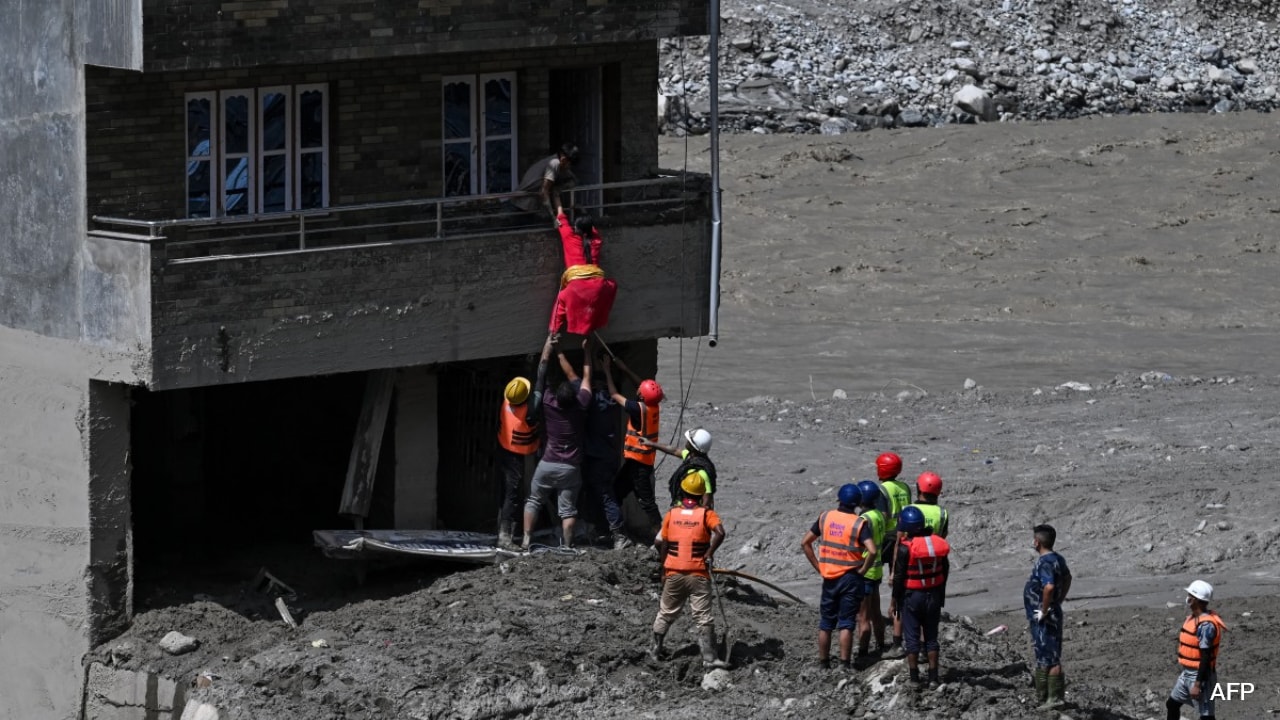
The monsoon does not knock. It arrives as a grey wall, swallowing the foothills of the Himalayas until the terraced rice fields blur into the sky and the rivers swell with the dark, heavy silt of a thousand eroding peaks.
Ask anyone who has spent an August in the valleys of Nepal, and they will tell you about the sound. It is a low, continuous rumble that vibrates through the floorboards of stone houses, a constant reminder that the earth is shifting, sliding, and washing away. When the floods come, they bring more than water. They bring isolation. Bridges snap like dry twigs. Roads turn into rivers of mud. Whole communities are cut off from the pulse of the country, left to stare at the churning brown chaos and wonder if help can possibly reach them in time.
And yet, when the international community rushed forward with heavy transport planes, specialized water rescue teams, and foreign aid packages following devastating monsoon disasters, something unexpected happened.
Nepal said no.
To an outside observer glued to a 24-hour news ticker, this refusal looks like stubborn pride or bureaucratic madness. Why turn away helicopters when people are stranded on rooftops? Why reject foreign hands when the mud is still wet and the bodies are still missing?
The answer requires looking past the dramatic footage of swirling floodwaters and stepping into the boots of the people who actually clear the drains.
Consider a hypothetical local disaster coordinator named Ramesh, standing ankle-deep in the grey sludge of a flooded market town outside Kathmandu. He has lived through three major flood cycles. He knows every bend in the local river, every unstable slope above the village, and every family living in the flood zone. More importantly, he knows the language of his neighbors. He knows which elderly resident refuses to leave without her livestock and which narrow alleyway will trap a rescue truck.
When a foreign rescue team arrives with state-of-the-art sonar equipment and massive amphibious vehicles, they bring brilliance, but they also bring a blinding language barrier and zero local geography. They do not know that the metal bridge they want to cross has been structurally compromised by three previous monsoons. They do not know the family dynamics that dictate who listens to whom in a crisis.
History shows us that disaster response is rarely just about mechanical capacity. It is about social architecture.
During the catastrophic earthquakes and subsequent seasonal floods that have scarred the region over the past decade, a quiet truth emerged from the rubble. The first responders are never the international delegations landing at Tribhuvan International Airport. The first responders are the teenagers hauling sandbags at two in the morning. They are the local shopkeepers pooling their dry rice to feed displaced families in temple courtyards. They are the youth clubs who organize makeshift medical camps long before the bureaucratic machinery of foreign aid even clears customs.
When the government of Nepal politely declines external rescue teams, it is making a calculated bet on indigenous resilience.
This is not isolationism. It is a hard-earned lesson written in mud and stone. International aid, for all its noble intentions, often comes with administrative friction. Planes sit on tarmacs waiting for clearance. Supply chains get tangled in red tape. By the time foreign specialists deploy to a remote district, local volunteers have often already improvised a rope bridge, evacuated the vulnerable, and begun the grueling work of digging out.
Pride plays a role, certainly, but it is a proudness born of competence. Nepal’s mountain communities have survived by mastering their harsh topography for centuries. They know how to read the clouds. They know the exact shade of grey the sky turns before a flash flood tears down a narrow gorge.
When outsiders step in and assume local populations are helpless victims waiting to be saved, they miss the reality on the ground. Victims, yes. Helpless, never.
The decision to wave away foreign rescue offers is an assertion of sovereignty over survival. It is an acknowledgment that while money and machinery are always welcome, agency cannot be imported. If a community is always rescued by someone else, they eventually forget how to save themselves. And in a country where the mountains shake and the rivers rise every single year, forgetting how to survive is a luxury no one can afford.
The monsoon eventually recedes. The brown water clears, leaving behind a crust of pale silt over the rocks, and the sun bakes the valley floor until it cracks. The tourists return to the trekking trails, cameras click, and the high peaks look pristine and indifferent against the blue autumn sky.
Somewhere down by the riverbank, a family is stacking rebuilt stones, rebuilding a wall that the water stole. No foreign flag flies over their work. Just calloused hands, quiet determination, and the deep, abiding knowledge that when the next flood comes, they will face it together, on their own terms.