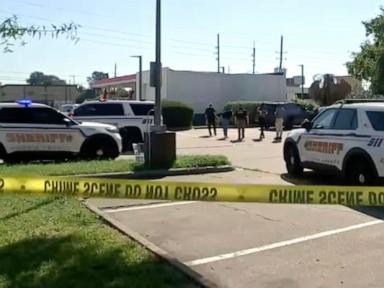
Every major newsroom in the country just ran the exact same story, and every single one of them missed the actual scandal.
When a District Attorney announces an indictment against an Immigration and Customs Enforcement (ICE) officer for striking a man with a vehicle during a pursuit, the media machine immediately splits into two predictable, brain-dead camps. Camp A cheers a rare victory for accountability against federal overreach. Camp B screams about a rogue local prosecutor hampering federal law enforcement just trying to do their jobs.
Both sides are arguing over the wrong frame.
Focusing entirely on the individual officer behind the wheel is the laziest possible take on law enforcement liability. It treats a systemic, predictable operational failure as an isolated moment of bad driving or criminal malice. If you actually understand how federal use-of-force law, vehicular pursuit policies, and Supremacy Clause immunity intersect, you realize the indictment isn't a triumph of justice—it is an admission that the entire enforcement apparatus failed before the cruiser ever left the parking lot.
The Myth of the Rogue Agent
Standard journalism loves a villain. It is much easier to write a 600-word summary of a grand jury indictment than it is to examine the Department of Homeland Security (DHS) pursuit directives that practically guarantee high-speed collisions in dense urban areas.
Let's look at the mechanics of what happens when a federal agent initiates a vehicular pursuit—or uses a vehicle as a blocking maneuver—during an administrative immigration arrest.
Most municipal police departments spent the last two decades tightening their pursuit policies. Why? Because the data is overwhelming. According to the National Highway Traffic Safety Administration (NHTSA) and decades of research by criminologists like Geoffrey Alpert at the University of South Carolina, high-speed chases and aggressive vehicular interceptions carry an astronomical risk of severe injury or death to suspects, officers, and uninvolved bystanders. For non-violent offenses, modern policing consensus says you let them go and catch them later.
Federal immigration enforcement operates in a completely different universe.
ICE agents are primarily enforcing civil administrative warrants, not criminal felony warrants. Yet, when an enforcement operation goes sideways in the field, agents frequently deploy tactical vehicle maneuvers—boxing in suspects, pursuing fleeing vehicles, or using cruisers to cut off foot traffic—that mimic high-stakes felony apprehension tactics.
When a human being is struck by a two-ton government SUV during one of these operations, the public is told to look at the officer's state of mind. Did he intend to hit the suspect? Was he reckless? Was he negligent?
Those are the legal questions a grand jury asks under state penal codes. They are completely inadequate for fixing the actual problem. If you put an agent in an unmarked vehicle, give them broad arrest quotas, equip them with vague "objective reasonableness" guidelines, and send them into residential neighborhoods without local police coordination, someone is going to get hit by a car. Indicting the driver after the fact is like suing a single bricklayer when the architect forgot to design a foundation.
What Everyone Gets Wrong About Federal Immunity
Whenever a local District Attorney indicts a federal officer, cable news panels immediately start throwing around terms like "qualified immunity" and "federal supremacy" without understanding how either actually works in a criminal courtroom.
Let's clear up the legal illiteracy right now: Qualified immunity does not exist in criminal prosecutions.
Qualified immunity is strictly a civil defense against financial liability in lawsuits brought under Section 1983 or Bivens actions. When a state prosecutor brings criminal charges—such as aggravated assault, vehicular assault, or reckless endangerment—against an ICE officer, the officer cannot hide behind qualified immunity.
Instead, the battleground shifts to Supremacy Clause immunity, rooted in the 1890 Supreme Court decision In re Neagle. Under this doctrine, a federal officer is immune from state criminal prosecution only if two strict conditions are met:
- The officer was performing an act they were authorized to do by federal law.
- In doing that act, the officer did no more than what was necessary and proper for them to do.
That second prong is where federal agents get crushed.
Even if an ICE officer has the statutory authority under 8 U.S.C. § 1357 to arrest a suspect without a warrant, federal law does not authorize the use of deadly force—and striking a pedestrian with a motor vehicle is universally recognized in use-of-force jurisprudence as deadly force—unless the suspect poses an immediate threat of death or serious bodily injury to the officer or others. This is the bedrock standard established by the Supreme Court in Tennessee v. Garner and Graham v. Connor.
Running from an immigration arrest is not a capital offense. Fleeing on foot or in a car does not automatically create an imminent threat of death to an officer. When a state DA secures an indictment in a case like this, it means the grand jury saw evidence that the officer's actions crossed far outside the "necessary and proper" boundary, stripping away the shield of the Supremacy Clause.
The Real Reason Local DAs Are Stepping In
You cannot understand this indictment without understanding the turf war between local prosecutors and the Department of Justice (DOJ).
Historically, local District Attorneys rarely touched federal agents. The unwritten rule in American law enforcement was simple: if a federal agent screws up, the DOJ's Civil Rights Division or the agency's Office of Inspector General (OIG) handles it. Local prosecutors stayed in their lane because federal cases immediately get removed to federal court under 28 U.S.C. § 1442, turning a routine state prosecution into a constitutional slugfest.
That deference is dead.
Local prosecutors in major metropolitan jurisdictions realized years ago that federal internal investigations move at glacial speeds and rarely result in criminal charges. Watching an internal DHS review drag on for three years while local constituents demand answers is political suicide for an elected DA.
By securing an indictment at the state level, the DA forces the issue immediately. Even when the U.S. Attorney's Office inevitably steps in to remove the case to federal district court—which happens in virtually every prosecution of a federal agent—the state prosecutor still retains control of the prosecution itself. A federal judge presides, and federal procedural rules apply, but the local DA's office argues the case.
This creates a massive friction point that the media completely ignores. The officer isn't just fighting a criminal charge; they are caught in the crossfire of a jurisdictional power struggle over who gets to police the federal police.
The Deadly Flaw in DHS Use-of-Force Policy
If you want to know why these vehicular strikes keep happening, stop reading press releases and start reading the actual DHS Use of Force Policy, updated most recently in 2023.
On paper, the policy looks strict. It explicitly prohibits agents from discharging firearms at moving vehicles unless deadly force is being used against the officer by means other than the vehicle itself. It emphasizes de-escalation. It mandates that force be proportional to the threat.
Here is the massive loophole nobody talks about: The policy treats firearms with extreme specificity while leaving vehicular tactics dangerously ambiguous.
A firearm has one primary function in a confrontation: projecting lethal force. A patrol vehicle, however, is simultaneously a mode of transportation, a mobile command post, a physical barrier, and a potential deadly weapon.
In tactical training, federal agents are taught "vehicle containment" and "blocking" techniques. The theory is that by positioning cruisers around a suspect's vehicle, agents prevent a high-speed pursuit before it starts.
Imagine a scenario where three unmarked SUVs converge on a suspect exiting a building or stepping toward a parked car. The agents are wearing plain clothes with tactical vests. Adrenaline spikes. The suspect panics and bolts. The driver of the lead SUV accelerates to cut off the suspect's path, misjudges the braking distance on wet asphalt, or attempts a dynamic block while the suspect is still on foot.
In a split second, a containment maneuver becomes a vehicular strike.
Because DHS policy does not enforce the same bright-line prohibitions on dynamic vehicle blocking near pedestrians that it enforces on shooting at moving cars, agents operate in a gray zone. They are encouraged to be aggressive in preventing escapes, yet they are given minimal margin for error when physics takes over. When the inevitable collision occurs, the agency distances itself, the DOJ evaluates whether the agent acted within the scope of employment, and the local DA steps in with an indictment.
The Trap of Prosecuting Individuals Instead of Fixing Systems
Let's be brutally honest about what happens next in this case, because the pattern is entirely predictable.
First, the defense will file a motion to remove the case to federal court. That motion will almost certainly be granted.
Second, the defense will file a motion to dismiss based on Supremacy Clause immunity. This will trigger an evidentiary hearing where a federal judge—not a jury—will decide whether the officer's actions were objectively reasonable and within the scope of federal duties.
If the judge denies immunity, the case goes to a federal jury trial, where the prosecution must prove beyond a reasonable doubt that the officer acted with the specific criminal intent required by the state statute—whether that is recklessness, criminal negligence, or intent to cause serious bodily harm.
Proving criminal intent in a split-second vehicle pursuit is notoriously difficult. Defense attorneys will bring in use-of-force experts who will testify about perception-reaction times, tunnel vision, auditory exclusion, and the dynamic nature of fleeing suspects. A single juror who believes the officer made a tragic mistake rather than a criminal choice results in an acquittal or a hung jury.
And here is the worst part: Whether the officer is convicted or acquitted, nothing about how ICE conducts street-level operations will change.
If the officer is acquitted, federal agencies treat it as total vindication of their tactics. If the officer is convicted, agency leadership writes him off as a rogue outlier who violated training, dusts off their hands, and sends the next squad out tomorrow morning using the exact same unmarked cars and the exact same aggressive containment maneuvers.
What Needs to Happen Instead
If policymakers, legal analysts, and agency leaders actually cared about preventing pedestrians and suspects from being run over during enforcement operations, they would stop treating criminal indictments as a policy solution. Criminal law is a blunt instrument designed to punish past conduct, not engineer safe systems.
Fixing this requires three concrete, structural changes that neither side of the political aisle wants to champion:
- Total Ban on Dynamic Vehicle Blocking Near Pedestrians: Federal law enforcement agencies must adopt a bright-line rule prohibiting the use of vehicles to cut off, box in, or intercept suspects who are on foot. Vehicles should never be used as kinetic barriers against human bodies under any circumstances.
- Strict Separation of Administrative and Criminal Pursuit Thresholds: Vehicular pursuits and aggressive tactical interceptions must be strictly barred for civil immigration violations and non-violent administrative warrants. If a suspect flees an administrative arrest, surveillance and later apprehension—not a high-speed chase or a vehicle block—must be the mandatory protocol.
- Mandatory In-Car Telemetry and Dashcams: While body-worn cameras have slowly rolled out across federal agencies, comprehensive front-and-rear dashcam systems paired with vehicle telemetry (recording speed, braking, and steering inputs) must be mandatory on every enforcement vehicle. Relying on eyewitness testimony and grainy surveillance footage from nearby storefronts is absurd in 2026.
The Bottom Line Nobody Wants to Hear
You have to admit the downside to taking a systemic view: it doesn't satisfy the immediate thirst for retribution. When someone is lying in a hospital bed after being hit by a government SUV, people want a name, a mugshot, and a prison sentence.
Holding individual officers criminally liable when they commit reckless or intentional violence is necessary. When an agent abandons basic human safety and uses a vehicle as a weapon against an unarmed person, the law must come down on them without mercy.
But do not confuse a grand jury indictment with reform. The District Attorney's announcement is not the end of a scandal; it is merely the opening chapter of a multi-year legal battle over federal immunity that will likely end in a quiet dismissal or a deadlocked jury. Meanwhile, the exact policies that put that SUV on a collision course with a human being remain completely intact, waiting for the next pursuit to go wrong.