Picture a Tuesday morning commute on a crowded Sydney train. A woman stands near the sliding doors, coffee cup warm in her palm, scrolling through messages on her phone. Across the aisle, a man wears thick-rimmed, stylish eyewear—the kind of frames you might spot at an upscale optometrist in Melbourne or Bondi. He isn't holding a phone. He isn't raising a lens. He is simply looking in her direction, maybe blinking once, maybe tapping the temple of his frames as if adjusting a slightly loose screw.
To everyone else in the carriage, nothing has happened. No shutter clicked. No flash fired. Yet in the span of three seconds, a high-definition video of her face, her outfit, and her posture has been captured, stored, and potentially uploaded to a cloud server without a single visible cue.
That hypothetical moment—ordinary, silent, and entirely plausible on any city street—is precisely why Australia’s national dictionary just handed us a linguistic mirror we might rather not look into.
Every November, the editors at Macquarie Dictionary gather to sift through the new words that have clawed their way into Australian English over the preceding twelve months. Historically, these selections capture the playful, irreverent spirit of the country. We have seen words like faux-sausage, bogan, and smashed avo enter the lexicon with a wink and a grin. Even when the dictionary turned toward more serious territory in recent years—naming coercive control in 2023 and enshittification in 2024—there was a sense that we were naming systemic forces, giant corporate machinations, or broad cultural shifts.
This year, the committee’s choice hits much closer to the skin.
The Macquarie Dictionary Word of the Year for 2025 is pervert glasses.
Stop and let those two words sit together. There is nothing clinical about the phrase. No sleek Silicon Valley branding. No sanitized corporate euphemism like "ambient visual capture" or "wearable lifelogging hardware." Instead, the public took a multi-billion-dollar piece of wearable technology—smart glasses equipped with covert cameras and audio recorders—and stripped away every ounce of marketing gloss in two blunt syllables.
The Lexicon of Quiet Dread
To understand why those two words beat out dozens of contenders, you have to look at the company they kept on the shortlist.
When the Macquarie committee released its finalists, the list read less like a celebration of human creativity and more like an incident report from the digital frontier. Alongside pervert glasses stood nudify—a verb describing the use of generative artificial intelligence to digitally strip clothing from photographs of real people without their consent. Right beside it sat AI;DR, an exhausted acronym standing for "Artificial Intelligence; Didn't Read," capturing the collective sigh of human beings confronted with walls of synthetic, machine-generated text.
Look at those three terms side by side. One names a physical device that turns a human gaze into a secret recording studio. Another names an algorithm that violates bodily autonomy with a few clicks. The third names our own numb withdrawal from a flood of synthetic noise.
Language does not lie. Dictionaries do not invent trends; they merely record the fever charts of a society trying to name what hurts it.
When I first read the announcement, I felt a strange, cold recognition. Like most people who write about technology, I spent the early years of the wearable computing boom marveling at the engineering. Think back to 2013, when Google Glass first appeared on the faces of tech executives and early adopters. Back then, the public had a different nickname for the wearers—one too crude for family newspapers, though it rhymed with "massholes." Yet Google Glass had a distinct, glowing prism hovering over the right eye. You could spot it from thirty feet away. It looked like a prop from a low-budget sci-fi movie, and because it looked absurd, it announced its presence. Social norms pushed back, bars banned them, and the hardware retreated into industrial warehouses.
A decade later, the hardware returned, and this time it learned how to hide.
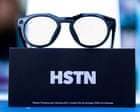
Modern smart glasses—led by sleek collaborations between tech giants and legacy eyewear makers—look indistinguishable from classic Wayfarers or wire-rimmed prescription frames. The camera lenses are tucked seamlessly into the corners of the hinges, no larger than a pinhead. While manufacturers include a tiny white LED light meant to blink when recording begins, hardware modifications, tiny stickers, and bright ambient sunlight easily render that safeguard invisible.
The boundary between looking and filming has evaporated.
When the Camera Disappears
Consider what happens next in our everyday spaces.
Imagine walking into a gym locker room, a public swimming pool, a school pickup zone, or a quiet corner of a neighborhood café. For over a century, photography carried an unmistakable physical choreography. Someone had to reach into a pocket, raise a heavy camera or a glowing rectangle of glass, frame the shot, and hold still. That physical gesture acted as a silent social contract. It gave everyone in the room a split second of warning—a chance to turn away, to pull a towel closer, to object, or simply to know they were being observed by a machine rather than a pair of eyes.
Human eyes forget. Human memory blurs the edges of a face, softens awkward angles, and eventually lets the moment dissolve into the past. A digital sensor does not forget. It records every pore, every stumble, every unguarded expression in 4K resolution, ready to be replayed, zoomed in on, or fed into the very nudify engines that shared the dictionary shortlist.
That is the invisible stake buried inside the phrase pervert glasses.
When ordinary citizens coined the term, they weren't attacking blind or low-vision users who rely on smart eyewear to read street signs or navigate crowded intersections—a vital, life-changing application of the exact same sensors. Nor were they targeting cyclists recording scenic mountain trails. They were naming a sudden, profound loss of trust in public space. When anyone wearing stylish frames might be secretly filming you, every glance becomes suspect. The burden of vigilance shifts entirely onto the person being watched.
In its official statement explaining the decision, the Macquarie Dictionary committee noted that the term reflects growing public unease around privacy and covert surveillance in daily life. Even the People’s Choice vote—where everyday Australians cast their own ballots independent of the lexicographers—crowned the exact same phrase.
Both the experts and the crowd reached the same verdict. We have a privacy problem, and we refuse to call it by its polite corporate name.
The Anatomy of a Linguistic Rebellion
Why did pervert glasses win instead of a more formal term? Because slang is the immune system of a language.
When institutions or corporations introduce a technology that disrupts social safety, they almost always wrap it in soothing, aspirational vocabulary. They talk about "capturing memories hands-free," "staying present in the moment," and "frictionless sharing." Notice how every one of those phrases centers the wearer’s convenience while erasing the bystander’s consent.
Regular people, sitting around dinner tables or scrolling through social media feeds after reading stories of strangers secretly filmed on trains or in retail changing rooms, needed a counter-spell. They needed words with teeth.
By slapping the word pervert onto the front of glasses, speakers accomplished something no government regulator could manage in a hundred pages of privacy legislation: they attached immediate social stigma to covert recording. Wearing a hidden camera on your face stops sounding like a futuristic lifestyle upgrade when everyone around you calls the hardware pervert glasses.
History is full of these quiet linguistic rebellions. In the late nineteenth century, when George Eastman introduced the handheld Kodak camera—the first device small enough to snap candid photos without setting up a tripod and a flash-powder pan—Victorian society panicked. Newspapers warned of "camera fiends" prowling beaches and parks, stealing likenesses of unsuspecting bathers. Towns passed ordinances banning handheld cameras on public boardwalks. Eventually, society negotiated new rules, helped along by the fact that early cameras still made a loud mechanical click and required the photographer to peer down into a viewfinder.
Today, there is no click. There is no viewfinder. And the photos don't sit in a leather album on a parlor table; they travel across fiber-optic cables in milliseconds.
Three Words, One Story
If you step back from the individual definitions, the 2025 Macquarie shortlist tells a single, cohesive story about how human beings are reacting to the current wave of consumer technology.
First, pervert glasses captures our fear of being watched without our knowledge. It is the anxiety of the body exposed in physical space.
Second, nudify captures our fear of what happens to our image once it enters the digital bloodstream. Even if you never step in front of a pair of smart frames, any innocent photo you posted to celebrate a birthday, a graduation, or a beach holiday can be scraped from the internet and fed into an AI generator. The software guesses what lies beneath fabric, fabricating realistic, non-consensual imagery that has already wreaked havoc in high schools and workplaces across the globe. It is the violation of identity in virtual space.
Third, AI;DR captures our exhaustion with the sheer volume of machine-generated clutter burying our attention. If pervert glasses and nudify represent active harms done to people, AI;DR represents the slow erosion of human connection. When an email, a news article, or a student essay carries the unmistakable, frictionless sheen of a chatbot, readers simply tune out. Why spend five minutes reading something nobody bothered to write?
Put those three words together and you get a stark emotional portrait of modern life: people feeling watched on the street, violated on the screen, and bored to tears by the machines doing all the talking.
It is easy to feel helpless in the face of that trio. For months, I found myself scanning the frames of everyone sitting across from me on buses and in coffee shops, squinting at the hinges of their glasses to see if there was a tiny glass lens nestled beside the temple. That low-grade paranoia is exhausting. It turns strangers into potential adversaries and strips away the casual warmth that makes city life bearable.
Reclaiming the Gaze
Yet there is a strange, stubborn hope hidden inside the dictionary’s announcement.
Naming a threat is always the first step toward containing it. Before coercive control entered everyday speech, victims of non-physical domestic abuse struggled to explain invisible patterns of isolation and intimidation to police, judges, and even their own families. Once the phrase took root in the public consciousness, laws followed. Once enshittification gave consumers a crisp label for why their favorite search engines and social platforms were steadily filling up with ads and junk, people stopped blaming themselves for feeling frustrated and started demanding better alternatives.
The same process is beginning now.
Across Australia and around the world, gyms, schools, medical clinics, and entertainment venues are updating their codes of conduct to explicitly ban smart eyewear with recording capabilities. Legal scholars are pointing out that existing surveillance and voyeurism statutes—many written decades before cameras could fit inside a spectacle hinge—must be enforced aggressively against covert recording in public and semi-public spaces. Tech companies, acutely sensitive to anything that tarnishes their brand image, now face a blunt marketing nightmare: nobody wants to spend four hundred dollars on a fashion accessory that strangers instinctively call pervert glasses.
Language has a way of setting boundaries that engineering refuses to respect. Engineers ask, Can we make the camera small enough to hide in a pair of frames? Society answers with two blunt words that ask, Should you?
Next Tuesday morning, that same train will pull into the same Sydney station. The doors will hiss open. A woman will step inside, holding a warm cup of coffee, and glance across the aisle at a man wearing thick-rimmed glasses.
He may still be wearing the future on the bridge of his nose—but thanks to a dictionary and a fed-up public, he can no longer pretend we don't see what's looking back.