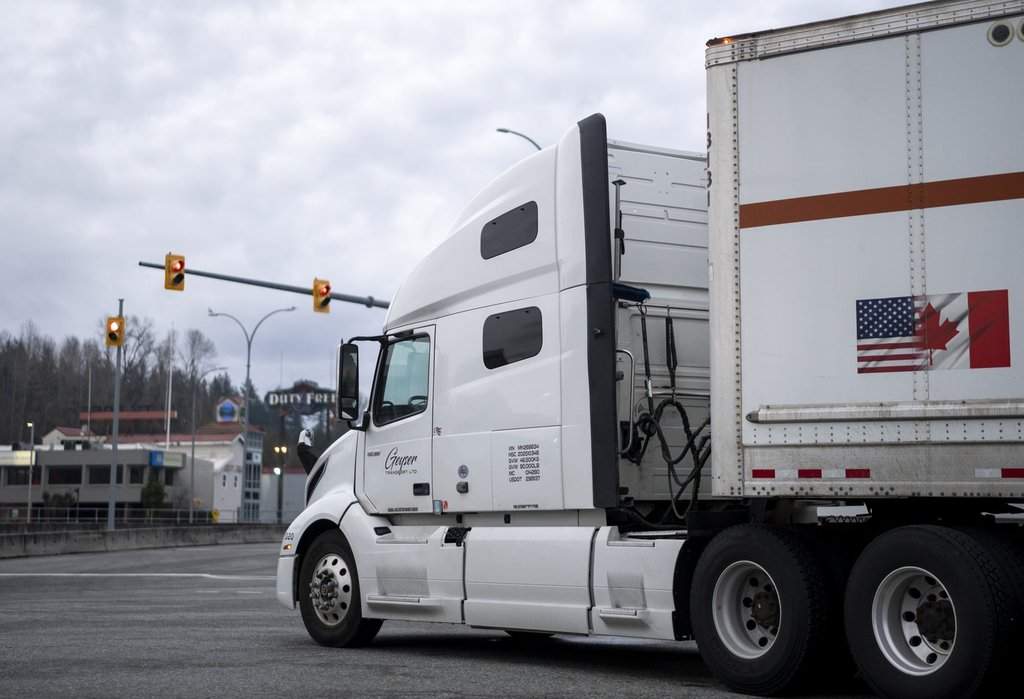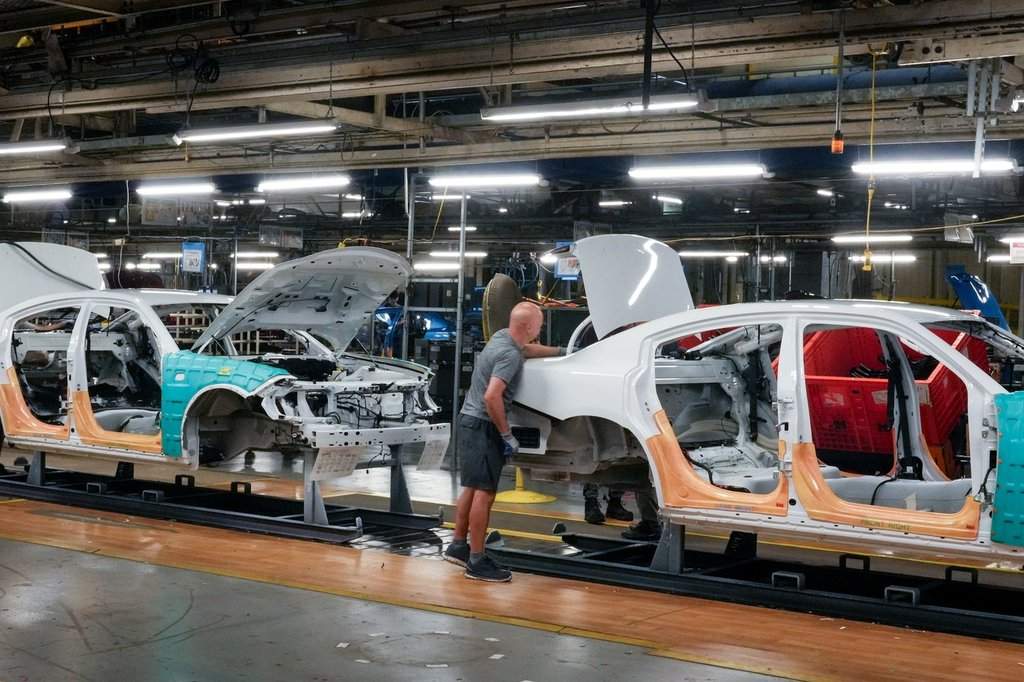
Silence in a three-million-square-foot factory is unnatural. It hums in your teeth.
If you have ever walked the floor of an automotive assembly plant during a shutdown, you know the specific, heavy stillness of idle stamping presses and frozen conveyor belts. The air smells faintly of stale hydraulic fluid, cold steel, and ozone. For nearly four decades, the Brampton Assembly Plant on Williams Parkway in Ontario had a heartbeat you could feel through the soles of your steel-toed boots. It built the muscle cars of a fading era—the Dodge Charger, the Dodge Challenger, the Chrysler 300. Three thousand workers clocked in, punched the clock, bolted chassis together, and went home to pay mortgages in Peel Region. Don't forget to check out our recent article on this related article.
Then, at the end of 2023, the line stopped.
Stellantis, the transatlantic corporate giant born from the merger of Fiat Chrysler and PSA Group, promised the silence was temporary. They promised a massive retooling. They promised electric vehicles, specifically the next-generation Jeep Compass, would roll off that floor by late 2025 or early 2026. Workers waited. Local diners along Highway 410 felt the immediate pinch of missing lunch rushes. Suppliers held their breath. To read more about the background here, The Motley Fool offers an informative breakdown.
Instead of electric crossovers, Brampton got a corporate pivot that nobody in the suburbs of Toronto saw coming.
Stellantis signed a deal to sell the Brampton assembly plant to Roshel.
Pause on that name for a second. Not Ford. Not Toyota. Not an ambitious Chinese EV startup looking for a North American foothold. Roshel—a Mississauga-based manufacturer of smart armored vehicles, tactical defense trucks, and cash-in-transit carriers. The very facility that once stamped out suburban family sedans and tire-smoking V8 coupes is changing hands to build bulletproof troop carriers and ballistic-grade security fleets.
To understand why this single real estate transaction matters far beyond the boundaries of Ontario, you have to strip away the sterile press releases and look at what is actually happening to North American manufacturing.
The Anatomy of a Broken Promise
Let us step back into the shoes of a hypothetical second-generation autoworker—call him Marcus. Marcus started on the Brampton line in 2004, right when the Chrysler 300 was turning heads across North America. His father worked the paint shop before him. When Stellantis announced the multi-billion-dollar Canadian investment plans alongside federal and provincial government subsidies, Marcus did what thousands of unionized workers represented by Unifor did. He believed the timeline. He planned his retirement around the promised electric retooling.
Then the market shifted beneath everyone's feet.
Global demand for electric vehicles hit a stubborn wall of consumer hesitation, high interest rates, and charging infrastructure anxiety. Automakers across Detroit and Europe quietly began pulling back on aggressive EV timelines, delaying battery plants, and reassessing where every dollar of capital expenditure was going. Meanwhile, trade tensions, tariff threats from Washington, and rising production costs in Canada made corporate boardrooms nervous about committing massive new vehicle platforms north of the border.
Stellantis paused the Brampton retooling. Months stretched into a year, and a year bled into profound uncertainty. For workers like Marcus, the anxiety wasn't abstract macroeconomic theory. It was the grocery bill. It was wondering whether to take a buyout, transfer to Windsor, or watch a storied industrial landmark turn into a hollow shell.
When a legacy automaker decides to offload a flagship assembly plant rather than finish retooling it, they are telling you something brutal about the economics of modern carmaking. Building passenger cars in high-cost jurisdictions has become a razor-thin margin game. Between battery raw material costs, software engineering overhead, and aggressive price wars, legacy automakers are shedding physical weight. They want fewer plants, higher capacity utilization, and less exposure to shifting consumer whims.
Enter Roshel.
From Muscle Cars to Ballistic Steel
If you drive past Roshel’s operations in Mississauga, you don't see flashy consumer showrooms. You see flat-black, angular, menacing machines designed to survive improvised explosive devices and high-caliber rifle fire. Founded in 2016 by Roman Shimonov, Roshel grew from a specialized niche player into one of North America's fastest-growing defense and security manufacturers.
Their flagship vehicle, the Senator, became globally recognizable over the last few years, deployed by law enforcement agencies, border patrols, and military forces across Ukraine and allied nations. While traditional passenger automakers were struggling to convince suburban commuters to buy seventy-thousand-dollar electric SUVs, Roshel couldn't build armored vehicles fast enough.
Think of the Brampton plant not as a building, but as an industrial organism. An automotive assembly plant has a very specific circulatory system: high-capacity electrical grids, reinforced concrete floors engineered to bear thousands of tons of stamping equipment, overhead crane infrastructure, massive paint booths, and rail spurs designed for heavy freight. Building that from scratch today would cost billions of dollars and take half a decade of environmental permitting.
For Roshel, acquiring Brampton isn't just buying square footage. It is inheriting the heavy-duty industrial skeleton of a Tier-1 automaker at a fraction of the time and cost of greenfield construction.
Consider the contrast in business models. Stellantis sells to millions of fickle retail buyers who worry about interest rates, cupholder placement, and touchscreen lag. Roshel sells to governments, defense ministries, police departments, and multinational security contractors. Their order books are backed by sovereign budgets, multi-year defense procurement contracts, and a geopolitical climate that has grown measurably more unstable over the past five years.
One industry is shrinking its footprint to survive a technological transition. The other is expanding rapidly to meet a world demanding physical protection.
The Invisible Stakes for Canadian Manufacturing
It is easy to look at this deal through a purely transactional lens: one company had an asset it no longer wanted, another company needed space to grow, and a check cleared. Done.
That misses the deeper story.
For over a century, the health of the southern Ontario economy was measured by one metric: automotive assembly. When Windsor, Oshawa, Oakville, and Brampton ran three shifts a day, the entire province prospered. Tool-and-die shops in Vaughan, logistics firms in Milton, steel mills in Hamilton—all of them fed off the predictable rhythm of passenger car production.
When Oshawa nearly closed a few years back, it triggered a national existential crisis. When Oakville’s EV transition was delayed in favor of Super Duty pickup trucks, workers breathed a temporary sigh of relief, recognizing how fragile the ecosystem had become. Now, Brampton’s exit from traditional passenger car assembly marks a permanent structural shift.
Let’s be candid about what this transition means for the people on the ground. It is messy, and anyone pretending this is an effortless win for every worker isn't telling you the whole truth.
Building an armored tactical vehicle is fundamentally different from assembling a unibody passenger sedan at sixty jobs per hour. High-volume auto assembly is a ballet of extreme automation—hundreds of robotic arms welding stamped sheet metal in synchronized perfection, supported by thousands of unionized workers performing specialized, rapid-cycle tasks.
Defense and specialty vehicle manufacturing is slower, heavier, and far more custom. It relies on thick ballistic steel plate, specialized welding certifications, heavy-duty commercial truck chassis modifications, and bespoke electrical integration. It typically requires fewer total workers per square foot than a peak-capacity passenger car plant, even if those roles demand high technical skill.
Unifor, the union representing Brampton’s workforce, has spent months fighting to protect livelihoods, pensions, and transfer rights. Some workers will find a path forward in this new industrial chapter. Others will inevitably be displaced, absorbed into other Stellantis facilities, or nudged toward early retirement. You cannot smooth over that human disruption with corporate optimism. A community built around one rhythm has to learn an entirely different tempo.
A Mirror Held Up to the Global Economy
Why did this happen here, and why now? Look at the larger forces colliding at the intersection of Williams Parkway and Bramalea Road.
First, there is the quiet retreat from the "EV-at-all-costs" doctrine. Between 2020 and 2023, automakers behaved as though internal combustion would vanish overnight. Governments handed out billions in subsidies to lock down battery supply chains and assembly lines. By 2025 and 2026, reality intervened. Consumers demanded hybrids and affordable gas vehicles; charging networks lagged; Chinese competitors flooded global markets with low-cost electric models that Western legacy brands couldn't match on price. Stellantis, grappling with bloated inventory in North America and sliding profit margins, had to make ruthless cuts. Brampton, caught mid-transition without an active product on its line, became the casualty of corporate triage.
Second, there is the industrialization of global insecurity. It is a sobering reality to confront, yet the numbers don't lie. Global defense spending has surged to record highs. Supply chains are fracturing along geopolitical fault lines. Governments in Ottawa, Washington, and Brussels are actively looking to reshore defense manufacturing, prioritizing domestic capacity over globalized efficiency. Roshel’s expansion into a massive former auto plant is the physical manifestation of a world shifting capital away from consumer leisure and toward sovereign security.
Look at the metaphor sitting right in front of us. In the twentieth century, the ultimate symbol of North American industrial might was the family car—the freedom of the open highway, suburban expansion, affordable mobility for the working class. In the mid-2020s, one of the continent’s best-known car factories is being retrofitted to build armored vehicles designed to withstand ballistic impacts and hostile environments.
You don't need a degree in sociology to feel the weight of that transition.
What Happens When the Lights Come Back On
Still, if you stand outside the gates of Brampton today, there is a crucial difference between a dead factory and a transformed one.
Drive through the Rust Belt of the American Midwest—through towns in Ohio, Michigan, or upstate New York—and you will see what true industrial abandonment looks like. You will see shattered factory windows, weeds pushing through cracked asphalt parking lots, and towns that never recovered the tax base when the automakers left. Once an industrial facility goes cold for five or ten years, the roof leaks, the copper wiring gets stripped, the skilled workforce scatters, and the building becomes a liability that costs millions just to demolish.
Brampton escaped that fate.
By stepping in while the facility is still intact, Roshel is keeping heavy manufacturing alive in Peel Region. They are preserving high-value industrial tax revenue for the city. They are creating an anchor for Canadian defense engineering, research, and specialized fabrication. In an era where too many prime industrial parcels in the Greater Toronto Area are plowed under to build generic e-commerce fulfillment warehouses—low-wage boxes where workers scan barcodes instead of building complex machinery—keeping actual heavy manufacturing in Brampton is no small victory.
There is a stubborn resilience in the people who build things for a living. The welders, millwrights, electricians, and machinists of southern Ontario possess generational muscle memory that cannot be replicated by software code or financial engineering. Whether they are aligning the door gaps on a V8 coupe or fabricating armored crew compartments for peacekeeping missions, the pride of craftsmanship remains the same.
Walk past the Brampton plant a year from now, and the unnatural silence will finally be broken. The loading docks will rumble again. The arc of welding torches will flash behind heavy curtains. The parking lot will fill up before dawn with thermoses of hot coffee and lunchboxes.
The machines rolling out of the bay doors won't be painted in glossy metallic red, and nobody will buy one to commute down the 401 on a Monday morning. They will be matte-black, heavy-plated, and built for a harsher world—proof that even when the old assembly lines stop, the instinct to build refuses to die.