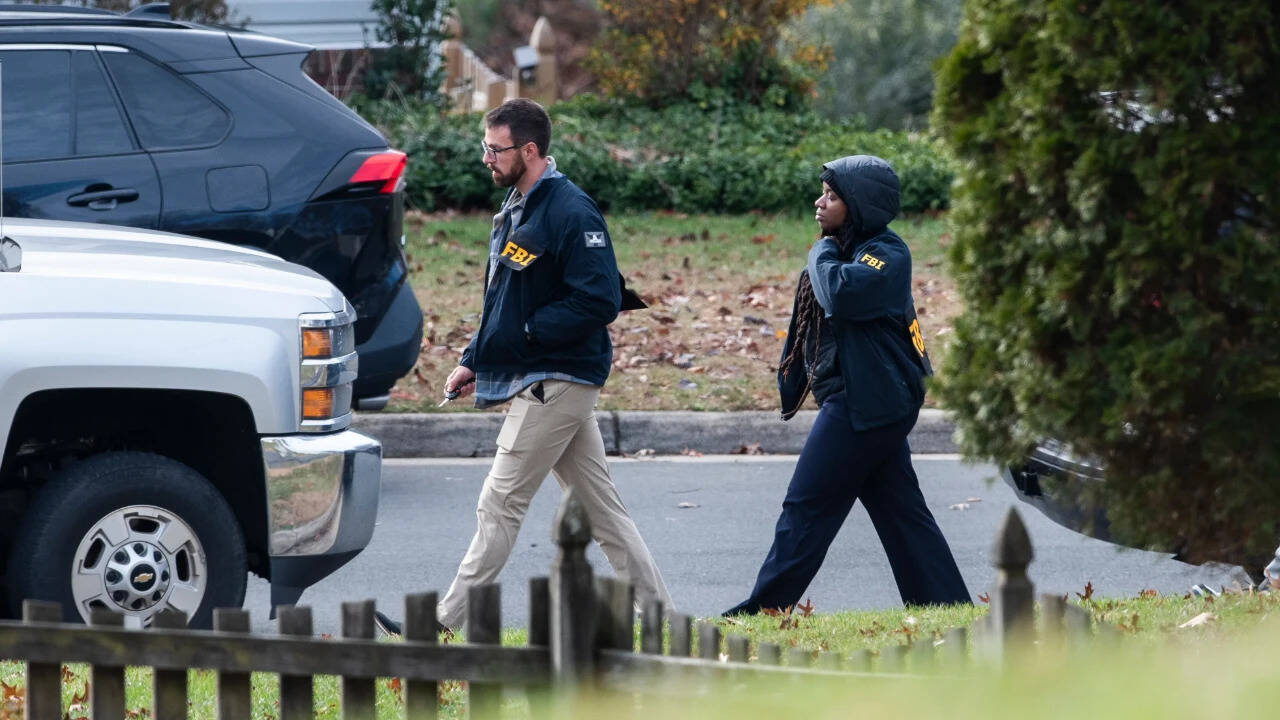
The kitchen table is usually where a family tells the truth.
It is the scarred oak surface where report cards get signed, where Sunday pancakes cool while someone reads the paper, and where the quiet, unglamorous negotiations of a shared life take place. You sit across from the people who raised you, or the cousin you grew up swimming with, and you assume a baseline of reality. You assume that when they ask for a loan to bridge a rough patch in a business venture, the venture actually exists. You assume that when your son says he is handling the paperwork, the ink isn't drying on a forged signature.
Trust.
It is the invisible currency that keeps households from collapsing under the weight of daily friction, yet when someone decides to counterfeit it from the inside, the collapse happens in total silence long before anyone hears a siren.
In California, a case unfolded that stripped away every comforting illusion we hold about family loyalty and financial desperation. A man who had spent years systematically draining the bank accounts of his closest friends and relatives—people who loved him, vouched for him, and handed over their savings out of sheer affection—eventually crossed the ultimate threshold. When the web of lies grew too tangled to untangle and the debts began closing in from every direction, he murdered his own parents to accelerate an inheritance.
Read that again, not as a sterile police blotter entry, but as a slow-motion detonation inside a living room.
Most true crime reporting treats cases like this as sudden, inexplicable ruptures in human nature, as if a normal person simply woke up one morning and chose monstrosity. That framing is comforting because it keeps the horror at arm's length, safely locked behind the label of a "monster" who bears no resemblance to anyone sitting at our own dinner tables.
But the real problem lies elsewhere.
Before a single act of physical violence ever occurs in an inheritance murder, there is almost always a long, agonizing prelude of financial cannibalism. I have watched this dynamic play out in slow motion within my own extended circle—not ending in murder, thankfully, but ending in the kind of scorched-earth ruin where elderly relatives lose their retirement homes and siblings never speak again. You remember the exact smell of stale coffee in a lawyer's office when someone finally admits the money is gone. You remember the physical nausea of realizing that every warm phone call over the past three years was actually a reconnaissance mission to see how much equity was left in the house.
When you live through financial betrayal by someone who shares your last name, you realize that the scammer does not view their family as people. They view them as an ATM with a pulse.
The Architecture of a Family Con
To understand how a California man could move from borrowing money from college friends to taking the lives of the two people who brought him into the world, you have to understand the mechanics of affinity fraud.
Think of affinity fraud like a termite infestation inside a load-bearing wall. From the outside, the drywall looks pristine, freshly painted, and solid enough to hang heavy frames upon. Because the destruction happens inside the dark cavities of shared history and mutual affection, nobody thinks to tap the wood until the roof begins to sag.
In standard financial scams, a stranger has to work hard to manufacture credibility. They need fake credentials, slick websites, and high-pressure sales tactics to overcome a victim's natural skepticism. Inside a family or a tight-knit friend group, credibility is already paid for in full. When a son, a brother, or a lifelong friend asks for capital, skepticism feels like an insult. Asking for a receipt feels like a betrayal.
Consider what happens next in a typical scenario—a hypothetical composite drawn from dozens of documented white-collar family frauds.
A young man, let's call him Julian, hits a wall. Maybe his lifestyle outpaces his income, or a legitimate business stumbles. Instead of admitting failure, which requires humility, he invents a phantom success. He tells his former roommate that he has access to a private investment pool or a real estate flip that guarantees a hefty return. The friend hands over twenty thousand dollars. Julian doesn't invest it; he uses five thousand to pay off a credit card, ten thousand to maintain the illusion of wealth, and five thousand to pay a fake "dividend" back to the friend three months later.
Hooked.
Now the friend tells another friend. Then Julian approaches an aunt, showing her the glowing statements he fabricated on a laptop in a coffee shop. Each new infusion of cash is not capital for growth; it is oxygen for a drowning man. Financial investigators call this a classic Ponzi structure, where new investor money pays off old obligations, creating a mathematical certainty of collapse.
In the California case, the perpetrator didn't target anonymous pensioners on the internet. He mined the exact people who would have forgiven him if he had simply told the truth early on. He took money from friends who trusted his word and relatives who wanted to see him succeed. Every dollar he pocketed carried an invisible timer. Once you start paying off yesterday's lie with today's theft, you are no longer living a life; you are sprinting ahead of an avalanche.
When the Walls Close In
Why do these schemes escalate rather than simply fizzle out into bankruptcy court?
The answer lies in the psychology of sunken costs and narcissistic preservation. To a chronic fraudster, exposure is not just an inconvenience; it is a form of ego death. If the truth comes out, the successful entrepreneur, the reliable son, and the generous friend vanishes overnight, replaced by a common thief facing prison time.
As the calendar pages turn, the math turns ruthless. Friends start asking when their principal will be returned. Relatives mention they need their cash back for a medical bill or a tuition payment. The excuses that worked six months ago—bank delays, tax audits, escrow hold-ups—begin to sound hollow even to the most trusting ears.
At this stage, desperation strips away morality piece by piece.
If you have spent years convincing yourself that your parents' savings are essentially yours anyway—just waiting behind an arbitrary timeline—then their continued existence slowly morphs in your mind from a source of love into a logistical obstacle. It is a chilling cognitive shift, documented repeatedly in forensic psychology studies of parricide motivated by financial gain. The perpetrator stops seeing a mother and a father. They see a balance sheet locked behind a heartbeat.
In California, prosecutors and investigators pieced together how that exact desperation curdled into lethal intent. Having exhausted the goodwill and bank accounts of his social circle and extended family, the defendant faced imminent exposure. The only pool of liquidity large enough to silence the angry creditors, plug the holes in his crumbling facade, and buy his way out of criminal prosecution was his parents' estate.
An inheritance, by definition, requires a death.
The Invisible Stains Left Behind
We rarely talk about what happens to the survivors of these crimes—not the ones in the ground, whose suffering ended in a terrible instant, but the ones left standing in the wreckage.
Imagine being one of the friends who lent him money. Imagine sitting on your couch when the news breaks, staring at a text message thread from two weeks earlier where he asked how your kids were doing while simultaneously plotting the murder of his own parents to pay you back. The guilt is a physical weight. Survivors of affinity fraud often torment themselves with the question of whether their demands for repayment pushed the killer over the edge, even though the responsibility belongs entirely to the person who stole the money and pulled the trigger.
And what of the surviving family members? They do not just grieve a double homicide. They grieve the erasure of their entire family history. Every holiday photograph on the mantle becomes a crime scene. Every childhood memory is retroactively poisoned by the realization that the person smiling beside them was capable of calculating the cash value of their parents' lives.
I confess that even after studying cases like this for years, there is a threshold of coldness here that remains genuinely terrifying to comprehend. We can understand anger. Most human beings, in a moment of brutal honesty, can understand the flash of rage that accompanies betrayal or fear. What defies easy comprehension is the sustained, administrative coldness required to hug your parents on a Sunday, forge a financial document on a Monday, and plan their execution by Friday so a probate check clears before your friends call the district attorney.
Spotting the Warning Signs Before the Ruin
It is easy to read a tragedy out of California and conclude that nothing could have prevented it. While no family member can ever be blamed for the violent choices of a relative, financial experts and forensic accountants point out that extreme domestic frauds rarely happen without leaving faint footprints in the snow long before the storm hits.
Silence is the primary enabler. Families treat money like a taboo subject, even more delicate than politics or religion. When an adult child or relative asks for money, parents often keep the loan secret from other siblings to avoid appearing judgmental or playing favorites. Friends don't compare notes because nobody wants to look nosy about another person's finances. That compartmentalization is exactly what allows a scammer to borrow from five different people simultaneously using the exact same story.
Urgency is the second major signal. Legitimate investments, real estate deals, and business emergencies rarely require wire transfers within twenty-four hours with zero written documentation. When a relative pressures you to act immediately and insists that putting terms in writing shows a lack of trust, they are weaponizing your affection against your common sense.
Then there is the opacity of lifestyle. When someone's outward spending—cars, watches, vacations, dinners—stays high or accelerates at the exact moment they are asking family members for emergency bridge loans, the numbers do not add up. In healthy financial distress, people cut expenses before they ask loved ones for bailouts. In fraudulent distress, people use bailouts to subsidize the illusion that they don't need help at all.
The Heavy Price of Unquestioned Loyalty
California's legal system eventually caught up to the man who traded his family's blood for solvency, bringing handcuffs, courtrooms, and the cold finality of prison walls where his victims' money was supposed to buy him freedom. The fraud collapsed anyway. The secrets came out anyway. Every friend, every relative, and every stranger reading the headlines learned the exact truth he killed to conceal.
Greed is remarkably bad at math. It always convinces the thief that one more lie, one more forged signature, or one more unthinkable act will finally balance the ledger and restore peace. Instead, it guarantees total bankruptcy of every kind.
Somewhere in a quiet suburban neighborhood tonight, a family is sitting around a scarred oak kitchen table, pouring coffee, passing the sugar, and writing a check to help someone they love get back on their feet—never once checking the balance on the other side of the ledger.