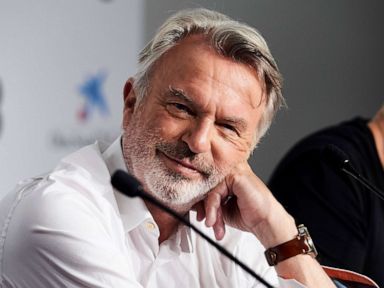
Sir Sam Neill, the New Zealand screen icon who anchored Steven Spielberg's world-conquering blockbusters with the laconic gravity of an old-school gentleman, has died in Sydney at the age of 78. His family confirmed his passing on July 13, 2026, describing the loss as sudden and unexpected. Crucially, the family noted that Neill passed away entirely free of the aggressive blood cancer he had spent years publicly fighting and conquering. For an industry that frequently mistakes loudness for presence, Neill stood as a rare, quiet giant.
The news shocked the international film community, largely because Neill had spent the previous months sharing updates about his successful experimental CAR T-cell therapy. He had openly discussed beating stage-three angioimmunoblastic T-cell lymphoma, a rare and ruthless malignancy that standard chemotherapy failed to stop. He was not supposed to go out like this. His death leaves a void in cinema that cannot be filled by the current assembly line of polished, hyper-managed modern movie stars.
The Anti Star Who Conquered the Box Office
To understand Neill's legacy is to understand an actor who spent fifty years actively resisting the traditional mechanics of Hollywood fame. Born Nigel John Dermot Neill in Northern Ireland before moving to New Zealand at age seven, he abandoned his given name because he found it too effete. He took up acting primarily to conquer a childhood stutter. That vulnerability became his greatest weapon on screen. He possessed an innate stillness. It was a quality that made him the perfect surrogate for audiences wandering into the terrifying, high-concept worlds of late-twentieth-century cinema.
When Steven Spielberg needed someone to ground the digital revolution of Jurassic Park in 1993, he did not hire an muscle-bound action hero. He hired Neill. As Dr. Alan Grant, Neill delivered one of the most iconic reactions in cinematic history, simply by ripping off a pair of sunglasses and letting his jaw drop at the sight of a CGI brachiosaurus. He gave the audience permission to believe the impossible.
The mega-franchise could have trapped him in a cycle of high-paying studio derivative work. Instead, Neill immediately pivoted back to the fringes of independent cinema, starring in Jane Campion's complex, haunting masterpiece The Piano. He refused to be categorized.
The Battle Beyond the Screen
In March 2023, Neill used the publication of his memoir, Did I Ever Tell You This?, to drop a bombshell. He had been diagnosed with a rare non-Hodgkin lymphoma. The diagnosis came during the promotional tour for Jurassic World Dominion, a return to the franchise that had defined his global profile.
When conventional treatments faltered, Neill entered an Australian clinical trial for a genetic therapy that reprogrammed his own immune cells to target the cancer. The treatment worked. By early 2026, he was officially in remission, frequently posting humorous videos from his beloved Central Otago organic vineyard, Two Paddocks.
His attitude toward mortality was remarkably devoid of Hollywood melodrama. He told interviewers that dying would be merely irritating because he still had too much left to do. He found joy in naming his farm animals after famous co-stars, ensuring that a chicken named Laura Dern and a cow named Helena Bonham Carter roamed his property. This grounded, dry wit defined his public persona until the very end.
A Legacy in the Margins
While the broader public will always associate him with fedoras and velociraptors, Neill's finest work occurred in the dark, uncomfortable corners of the medium. His performance as a unraveling husband in Andrzej Żuławski's 1981 psychological horror film Possession remains a masterclass in raw, unhinged emotion. In John Carpenter's In the Mouth of Madness, he perfectly captured the slow, terrifying descent of a rational man realizing the world around him has gone insane.
Later in life, he brought that same understated menace to television, playing the brutal, puritanical Chief Inspector Chester Campbell in Peaky Blinders. He understood that true authority on screen does not require shouting. It requires conviction.
Hollywood currently struggles to produce actors of Neill's specific, weathered texture. Modern celebrity culture demands constant accessibility, manicured perfection, and a willingness to become a brand. Neill belonged to a generation that viewed acting as a craft and fame as an unfortunate side effect. He remained fiercely loyal to the antipodean film industries that raised him, using his international clout to champion New Zealand and Australian stories when he could have easily retreated to a Malibu estate.
The suddenness of his departure hurts because he had seemingly just won his greatest battle. He beat the disease that tried to claim him, only for the curtain to fall on his own terms, cancer-free and defiant. Cinema lost more than a versatile performer this week. It lost its anchor of sanity in an increasingly artificial world.