The fluorescent lights in a Nazareth bakery hum at four in the morning, long before the street sweepers reach the main road.
Tariq—a hypothetical composite, though his exhaustion is real enough to touch—is kneading dough with flour up to his elbows while a small transistor radio on the stainless-steel counter crackles with the morning news from Jerusalem. For thirty years, the voices coming out of that radio belonged to men who spoke about Tariq's neighborhood as a demographic threat, a security problem, or, on the best days, a footnote. He paid his taxes. He fixed the potholes outside his shop with bags of cheap cement he bought himself because the municipal trucks rarely turned down his street. He voted sometimes, mostly out of habit, watching his ballot vanish into a system designed to ensure his representatives sat permanently in the cheap seats at the back of the Knesset, shouting into a wind tunnel.
Then the math broke.
Not with a riot. Not with a dramatic speech from a balcony. It happened with the quiet, terrifying precision of a ledger book that refuses to balance without a signature from the people you spent decades ignoring.
For seventy-plus years, Israeli politics operated on an unspoken iron rule. You could build a coalition from the left, you could build one from the right, and you could stitch together the most unlikely bedfellows in the Middle East—secular socialists beside ultra-Orthodox rabbis, hawkish generals beside dovish professors—so long as you never, under any circumstances, needed the Arab parties to keep the lights on in the Prime Minister’s office. They were the permanent opposition. Useful for speeches about democratic pluralism when foreign dignitaries visited, entirely excluded when the real money was divided at two in the morning in smoke-filled committee rooms.
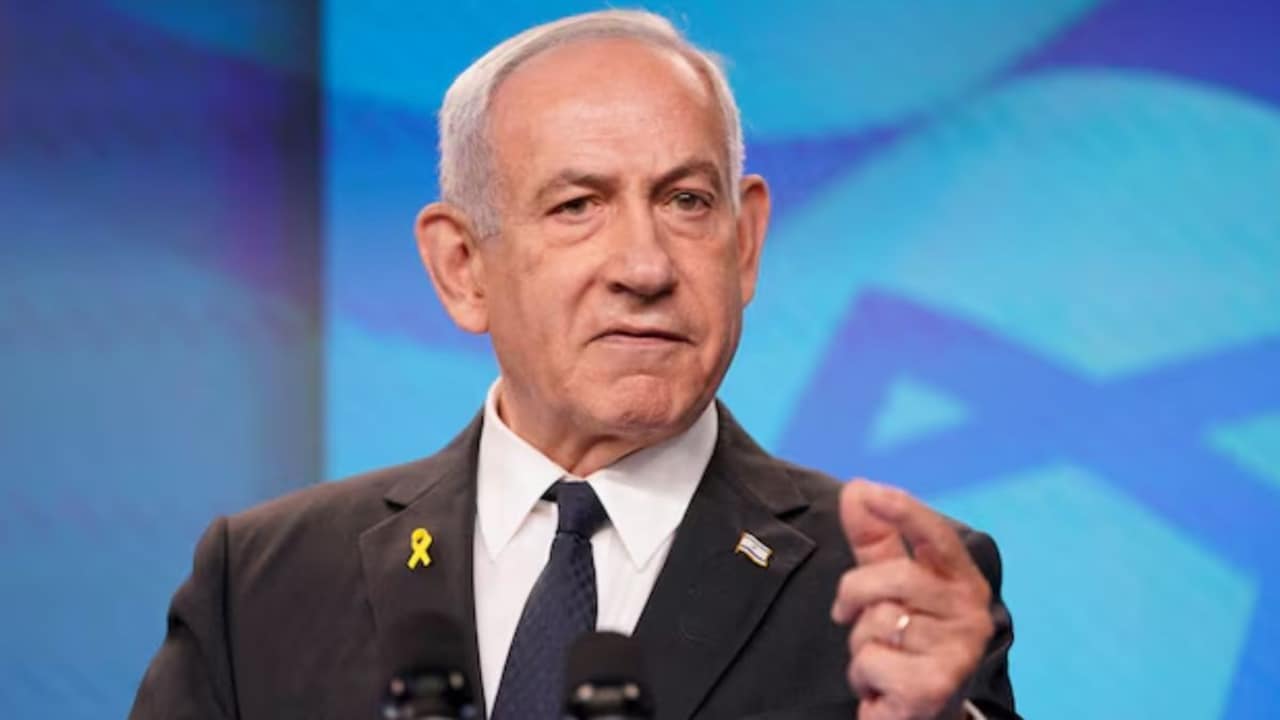
Benjamin Netanyahu built an entire political dynasty on mastering that geometry. He understood the tribal fault lines of Israeli society better than anyone who ever held the gavel. When his numbers dipped, he knew which levers to pull, which anxieties to stoke, and how to paint any rival who even glanced toward the Arab benches as a traitor to the state. Remember his infamous election-day warning in 2015, broadcast straight to his base, claiming Arab voters were heading to the polls "in droves"? It was crude, effective, and rooted in a certainty that the wall between Jewish political power and Arab civic participation was load-bearing. If you knocked it down, the roof would cave in.
Except the roof didn't cave in. The wall simply eroded from the inside out, worn down by repeated elections, deadlocked parliaments, and the sheer stubbornness of twenty percent of the country's population refusing to remain invisible.
The Architecture of a Kingmaker
To understand why the corridors of Jerusalem feel so charged right now, you have to picture the Knesset not as a grand ideological arena, but as a cramped, badly ventilated auction house where 120 seats are divided among a dozen splintered factions. To govern, you need sixty-one. Sixty gives you chaos. Sixty-one gives you the keys to the treasury, the ministries, and the police.
For decades, the Arab parties—frequently divided along ideological lines between secular nationalists, communists, and Islamists—fragmented their own strength or refused on principle to validate a government that maintained military rule over Palestinians in the West Bank. It was a standoff of mutual refusal. The state didn't want them in the room, and they wouldn't walk through the door under the state's terms.
Consider what happens when a pragmatic Islamist party leader looks at a crumbling sewage system in the Negev and decides that ideological purity doesn't pave roads.
When Mansour Abbas, the soft-spoken dentist who leads the United Arab List, known as Ra'am, decided to break ranks and treat political power like a currency rather than a purity test, he didn't just shift a few seats. He shattered the foundational taboo of Israeli governance. Suddenly, the Arab bloc wasn't a monolithic protest movement standing outside the gates. It was a swing vote. And in a parliament deadlocked for years between pro-Netanyahu and anti-Netanyahu camps, a swing vote isn't a minority. It is the entire game.
Netanyahu's reaction tells you everything you need to know about the stakes. Having spent years demonizing Arab political participation as an existential danger, he suddenly found himself quietly courting the very leaders he had spent a decade calling illegitimate, only to pivot back to outrage the moment his rivals actually sealed the deal to include an Arab party in a governing coalition for the first time in Israel's history. It was a masterclass in political whiplash, driven by a simple, terrifying realization: the old veto was dead.
What Happens When the Invisible Sign the Checks
If you haven't walked through a mixed city like Lod or Ramle during an election cycle, it is easy to view this as a dry parliamentary chess match. It isn't. Down at street level, the distance between having five Knesset seats in the opposition and five seats inside a governing coalition is measured in ambulances, classrooms, and body bags.
Ask any mother in Umm al-Fahm what political power actually means. She won't talk to you about diplomatic theory or constitutional phrasing. She will talk about the stray bullets from organized crime syndicates that have turned Arab towns into shooting galleries while police stations sat underfunded and indifferent. For years, violent crime inside Arab communities skyrocketed while the state treated it as an internal cultural issue rather than a national emergency. Hundreds of lives were lost annually, families shattered in broad daylight, while the budgets for community policing and youth programs evaporated somewhere between Jerusalem and the northern valleys.
When Arab lawmakers finally held the sixty-first vote—the vote that decided whether a budget passed or a government collapsed—those neglected streets suddenly became the most expensive real estate in Israeli politics.
Billions of shekels in multi-year development plans, frozen or ignored under previous administrations, were suddenly on the table. Money for high-tech incubators in Nazareth. Funding for unrecognized Bedouin villages in the south that had existed without running water or legal electricity grids since the founding of the state. Police task forces specifically mandated to dismantle the loan-shark mafias terrorizing Arab shopkeepers.
This is the invisible stake that terrifies the entrenched political establishment. Power in Israel has always been a zero-sum emotional economy. To give a budget line to an Arab municipality was framed by hardline nationalists not as basic governance, but as a theft from Jewish citizens. Never mind that Arab doctors, pharmacists, and nurses make up a massive backbone of Israel's public healthcare system—nearly half of all new medical licenses in recent years went to Arab citizens. In the hospital ward, coexistence was a daily, exhausting reality; in the parliament, it was treated as a heresy.
The Trap Inside the Triumph
I won't pretend this shift is a neat, triumphant fairy tale. Anyone who tells you that a handful of Knesset seats solves seventy years of deep structural inequality is selling you a brochure, not the truth.
The truth is messy, fragile, and deeply uncomfortable for everyone involved.
For Arab politicians, stepping inside the machinery of the Israeli state means owning its decisions. When clashes erupt at the Al-Aqsa compound in Jerusalem, or when military operations flare in Gaza, an Arab party sitting inside a coalition faces an impossible squeeze. Their own voters look at them and see collaborators propping up a government whose security forces are firing tear gas at their cousins. Meanwhile, their right-wing coalition partners look at them and demand constant, humiliating displays of loyalty, treating their citizenship like a probationary license that can be revoked the moment they speak out on Palestinian human rights.
It is an exhausting tightrope walk over open fire. You gain the budget to build a school in Tira, and the next morning a minister from a rival party calls you a fifth columnist on national television to score points with his base.
And yet, the genie refuses to go back into the bottle. Even when Netanyahu managed to claw his way back into power at the head of the most hardline, right-wing coalition in the nation's history—a government packed with figures who openly dream of rolling back Arab political influence entirely—the underlying demographic and political reality hadn't budged an inch.
You can pass laws raising the electoral threshold to squeeze smaller parties out. You can deploy rhetoric designed to depress turnout in Arab towns, hoping frustration and cynicism will keep voters home on election day. Sometimes it works. Turnout drops, seats are lost, and the old guard breathes a sigh of relief, convinced they have restored the natural order of things.
The Arithmetic That Won't Go Away
Think of Israeli democracy right now like an old bridge built for horse-drawn carriages that is now carrying forty-ton freight trucks every single minute. You can paint the railings. You can put up signs forbidding heavy loads. You can stand at one end and shout at the drivers. None of that changes the physics of weight and steel.
Arab citizens make up roughly one-fifth of Israel's population. They are younger on average than the Jewish majority, increasingly educated, urbanized, and deeply integrated into the daily economic engine of the country. You cannot run a modern hospital in Haifa, build a tower in Tel Aviv, or keep the pharmacies open in Jerusalem without them.
For decades, the political system operated on a lag, pretending that an economic and social reality could be kept permanently locked outside the doors of legislative power. Netanyahu's entire career was built on managing that lag—on convincing his voters that they could enjoy the fruits of a modern economy while keeping a fifth of the citizenry permanently sidelined from the steering wheel.
That illusion is finished. Even out of power, even fractured between competing factions that argue fiercely over strategy, Israel's Arab parties have proven a mathematical certainty that keeps every party strategist awake at night: nobody holds a stable majority in Jerusalem anymore without accounting for the votes coming out of Nazareth, Rahat, and Sakhnin. Either you include them in the conversation, or you spend your entire term paralyzed by a razor-thin majority that can be toppled by a single backbencher with a grudge.
Netanyahu hates this because his entire political survival relies on clear, binary enemies. Us versus them. Loyalists versus traitors. When the "them" suddenly becomes the indispensable hinge upon which the entire government swings, the old playbook stops working. Fear loses its edge when the people you are told to fear are the ones negotiating funding for your local hospital.
Back in that bakery in Nazareth, the sun is finally clearing the hills, turning the dusty street outside a pale, sharp gold. Tariq pulls the first tray of pita from the oven, the heat washing over his face, and turns down the volume on the radio. A politician in Jerusalem is shouting again about threats to the state, his voice tight with the familiar panic of a man watching a door swing open that he spent his whole life trying to nail shut.
Tariq doesn't turn the radio off. He wipes the flour from his hands onto his apron, unlocks the front door of the shop, and lets the morning crowd walk in.