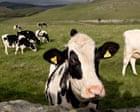
Four in the morning is a brutal hour. The mud in a Somerset milking parlour doesn’t just cling to your boots; it freezes to them, turning every step into a heavy, rhythmic slog before the rest of the country has even thought about reaching for the snooze button.
For three generations, that cold has been the wallpaper of Arthur’s life. (To be clear, Arthur is a composite character, a hypothetical stand-in built from the real testimonies of dozens of West Country producers currently staring down the barrel of insolvency).
He knows the individual temperament of every one of his two hundred Holstein-Friesians. He knows which ones kick when the winter wind rattles the corrugated iron, and which ones lean their heavy, warm flanks against his knees while the stainless-steel clusters pulse in the fluorescent gloom. He treats his soil like an heirloom, rotating clover leys to keep the earth breathing, and he hasn’t taken a proper holiday since the turn of the century.
Last Tuesday, Arthur sat at his kitchen table, the smell of silage still clinging to his fleece, and opened an email from his milk processor.
It wasn't an angry letter. Corporate executions rarely are. It was polite, sanitized, and devastating. Effective the first of next month, the farmgate price—the amount paid to Arthur for every litre of raw milk pumped from his bulk tank—was dropping by another three pence.
Three pence.
To someone standing in a brightly lit supermarket aisle in London or Manchester, three pence is the loose copper you leave at the bottom of a coat pocket. It is statistical noise. To Arthur, three pence per litre across two million litres a year is sixty thousand pounds vanishing into thin air overnight. It is the exact margin between keeping the lights on and selling the herd.
The Illusion of the Cheap Pint
We have spent decades conditioning ourselves to believe that milk should be cheaper than bottled water. Walk into any major British retailer and you will see four-pint jugs stacked high near the entrance, glowing under cool LED strips like a public utility.
They are what retail economists call "loss leaders." Supermarkets price them razor-thin—sometimes below the actual cost of handling—to lure you through the automatic doors, knowing that once you have the milk in your trolley, you will buy the high-margin biscuits, the ready meals, and the wine.
For years, that retail magic trick worked brilliantly for the consumer. You got a cheap splash for your tea; the supermarket got your weekly shop. Everybody won.
Except the person standing in the mud at four in the morning.
Because when retail margins tighten, or when global commodity markets hiccup, that financial pressure doesn't evaporate. It rolls downhill, gathering speed and weight until it crashes squarely onto the farmyard gate. Major UK milk processors—the corporate middlemen who collect raw milk, pasteurize it, bottle it, and sell it to supermarkets and foodservice giants—operate on notoriously thin margins themselves. When wholesale prices for bulk cream, butter, and skimmed milk powder dip on international exchanges, processors protect their balance sheets the only way they know how. They cut the farmgate price.
And here is the cruelest structural quirk of British agriculture: a dairy farmer cannot simply turn off the tap.
If you manufacture widgets and the market price drops below the cost of plastic and electricity, you idle the machines. You furlough the line, lock the warehouse, and wait for demand to recover. A cow is not a machine. She is a living, breathing biological engine that must be milked twice, sometimes three times a day, 365 days a year, regardless of what the commodity charts in Amsterdam or Chicago say. Stop milking her, and she develops agonizing, potentially fatal mastitis. You cannot put a herd on pause. You either feed them, milk them, and lose money on every single litre, or you send them to the abattoir and walk away from a century of family history.
The Arithmetic of Slow-Motion Ruin
To understand why this latest round of processor price cuts feels less like a routine market dip and more like an existential crisis, you have to look at the ledger sitting on Arthur’s kitchen table.
Think of a modern dairy farm as a hyper-specialized biological refinery. On one side of the ledger, you have the inputs: high-protein concentrate feeds, nitrogen fertilizers to grow summer grass, red diesel for the tractors, veterinary bills, bedding, and massive amounts of electricity to run the vacuum pumps and chillers.
Following the geopolitical shocks of the early 2020s, those input costs didn't just creep up; they detonated. Fertilizer prices tripled at their peak. Feed costs surged. Energy bills went vertical. While some of those commodity spikes have eased from their absolute highs, the baseline cost of running a farm never returned to pre-2020 levels. According to data from the Agriculture and Horticulture Development Board (AHDB), the average cost of production for a UK dairy farm has settled stubbornly between 38 and 42 pence per litre, depending on the system and the season.
Now look at the other side of the ledger.
When a processor slashes its payout down into the mid-to-low 30s, the math ceases to be business and becomes simple arithmetic of ruin. Every time the silver tanker backs up to Arthur’s dairy, hooks up the heavy rubber hose, and pumps out his chilled milk, Arthur isn't making a profit. He is writing a check to the processor for the privilege of working eighty hours a week.
He is, in effect, subsidizing your breakfast cereal out of his own equity.
"I don't understand how we got here," a real-world dairy farmer from Cumbria told me last winter, staring out over fields that have been in his family since the Victorian era. His voice wasn't bitter; it was just hollowed out by exhaustion. "We’ve followed every rule. We’ve invested hundreds of thousands into slurry storage to protect the rivers. We’ve cut antibiotics to almost nothing. We produce some of the highest-welfare milk on earth. And yet, I have zero say in what my product is worth. I don't set the price. I just get told what I'm getting paid after the milk has already left the yard."
That admission captures the terrifying power imbalance at the heart of the British food chain. In almost every other sector of the economy, a supplier calculates their costs, adds a modest margin, and presents an invoice. In dairy, the farmer absorbs 100% of the volatility, carries 100% of the biological and weather risk, and accepts whatever price is dictated by a handful of dominant processors.
The Invisible Exodus
When the numbers stop working, the countryside doesn't explode in dramatic protests. Not usually. In Britain, the collapse happens quietly, behind stone walls and hawthorn hedges, one dispersion sale at a time.
Look at the trajectory of the UK dairy sector over the last generation. In 1995, there were roughly 35,700 registered dairy farms across the United Kingdom. By the mid-2020s, that number had cratered to fewer than 7,500. Every single month, dozens more family farms quietly call the auctioneer, walk their herds into the ring for the last time, and padlock the parlour doors.
Wait. If thousands of farms are closing, why aren't supermarket shelves empty?
Because the milk hasn't disappeared—it has consolidated. The surviving farms have been forced to get radically bigger just to survive on microscopic margins, spreading fixed costs over thousands of cows rather than hundreds. While the traditional family farm of 120 cows grazing on green pasture is vanishing, massive, capital-intensive mega-dairies are taking their place.
Perhaps you think that sounds like standard economic efficiency. Survival of the fittest. Modern consolidation.
But consider what happens next when you hollow out the mid-sized family farm:
First, you lose ecological resilience. Mixed, pasture-based family farms are the architects of the British countryside. Their grazing rotations maintain permanent grassland—one of our most effective natural carbon sinks—and their hedgerows and stone walls support entire ecosystems of pollinators, farmland birds, and small mammals. Industrialize the production model completely, and the ecology of rural Britain changes forever.
Second, you surrender national food security. Britain is already heavily reliant on imported food, hovering around 60% self-sufficiency overall. Dairy has historically been one of our great domestic strengths, a sector where our wet, mild climate gives us a natural advantage for growing grass. When we drive domestic producers out of business through predatory pricing, we don't eliminate our demand for cheese, butter, and yoghurt. We simply outsource production to countries with lower environmental standards, weaker animal welfare laws, and longer, more fragile supply chains.
Third, you break the generational chain. A dairy farm is not an app you can code in a weekend if market conditions improve next year. Once a herd is dispersed and the specialized infrastructure is dismantled, it almost never comes back. The average age of a British farmer is already hovering near sixty. When a twenty-five-year-old daughter or son watches their parents work themselves into the ground for negative returns, they don't ask to take over the business. They take a job in town. And with them goes centuries of accumulated, hyper-local knowledge about soil, weather, and animal husbandry.
Why Processors Cut When Retail Prices Stay High
If you have walked down a dairy aisle recently, you might be feeling a flash of confusion—or outright anger.
Hold on, you might be thinking. If farmers are getting paid less for their milk, why am I still paying £1.45 or £1.55 for four pints at the checkout? Why hasn't the price of cheddar dropped?
It is a fair question, and the answer lies in the lag and the labyrinth of the modern supply chain.
The liquid milk you pour into your coffee only accounts for roughly half of the milk produced in the UK. The rest goes into manufacturing: cheese, butter, cream, yoghurt, and milk powders. Those manufactured dairy products are traded on global markets, competing directly with surpluses from Ireland, New Zealand, the Netherlands, and the United States.
When global demand softens—say, because economic sluggishness in East Asia reduces imports of whole milk powder, or because a mild European spring triggers a flush of excess milk across the continent—wholesale commodity prices tumble. Processors holding contracts tied to those commodity markets suddenly find their revenues shrinking. Meanwhile, their own processing costs—the energy required to run massive pasteurization plants, the packaging plastics, the HGV driver wages—remain stubbornly high.
To protect their operating margins, processors pass the pain backward to the farmgate immediately. Retail prices, however, are "sticky." Supermarkets lock in supply agreements months in advance, and retailers are deeply reluctant to slash shelf prices when their own store overheads are elevated. The result is a grotesque optical illusion: consumers feel squeezed at the till, farmers are bled dry in the parlour, and the middle of the chain absorbs the spread just to stay afloat.
The Myth of the "Aligned" Contract
To be completely honest, not every British dairy farmer is staring at the exact same cliff edge. The industry is quietly split into two tiers, and understanding that divide explains why some farms survive while others perish.
A fortunate minority of farmers hold what are known as "aligned" contracts. These are direct supply agreements with major supermarkets—think Tesco, Sainsbury’s, or Marks & Spencer—where the farmgate price is calculated using a transparent cost-of-production tracker. When the price of cattle feed or diesel goes up, the supermarket’s formula automatically adjusts the farmer’s payout upward so they can cover their bills and make a modest return.
It is a sane, dignified way to do business.
The problem? Only a fraction of UK dairy farmers have access to those aligned contracts. The vast majority supply non-aligned processors—companies selling into wholesale markets, foodservice, hospitality, or smaller retail tiers. Those farmers are completely exposed to the brutal whiplash of the spot market. When the wind blows cold, they have no shelter.
And even within aligned contracts, the scrutiny is relentless. Farmers must meet stringent environmental targets, carbon footprint audits, and welfare benchmarks—all worthy goals, certainly, yet ones that require heavy capital investment without any long-term guarantee that the contract won't be rewritten when corporate leadership changes.
Rewriting the Rules of the Food Chain
So, is the slow death of the British dairy farm inevitable? Are we destined to wake up in ten years to a countryside emptied of cattle, importing our butter in refrigerated shipping containers while old milking parlours crumble into nettles?
Not necessarily. Because unlike the weather, market structures are human inventions. They can be redesigned.
In the wake of recent agricultural crises, the UK government introduced statutory dairy contract regulations—the Fair Dealing Obligations (Milk) Regulations—designed to stop processors from unilaterally slashing prices overnight without warning or clear pricing mechanisms. For decades, a processor could simply send a letter stating the price was dropping next month, leaving the farmer zero recourse. The new rules force contracts to be clearer about how prices are calculated and how disputes are resolved.
It is a start. A fragile, overdue start.
Regulation alone, however, cannot conjure profit out of a broken market if processors have no margin to give. True survival requires a deeper shift in how we value food—and how farmers organize themselves.
Look across the North Sea to countries like Denmark or the Netherlands, or look at successful domestic models like Arla or First Milk. Farmer-owned cooperatives, where producers collectively own the processing plants, the brands, and the intellectual property, change the equation entirely. When farmers own the facility that turns raw milk into branded cheese or butter, they capture the value added further down the chain instead of handing it over to external shareholders.
At the same time, a quiet rebellion is happening at the hyper-local level. Drive through Devon, Yorkshire, or Cumbria today, and you will see a small but fierce wave of farmers bypassing the processors altogether. They are installing pasteurizers in converted barns and setting up automated milk vending machines at the end of their farm lanes.
Customers bring reusable glass bottles, tap their contactless cards, and pay £1.50 or £1.80 for a single litre of rich, unhomogenized, gently pasteurized whole milk—and every single penny stays on the farm. Suddenly, a herd of eighty cows isn't a financial liability; it is a thriving, community-anchored enterprise.
What Happens at Tomorrow's Dawn
You cannot solve a national structural crisis purely with farm-gate vending machines. The scale of the British food system demands massive, efficient processing infrastructure to feed sixty-eight million people every day.
Yet those vending machines reveal a profound truth that supermarket executives and commodity traders routinely miss: people actually care where their food comes from, and they are willing to pay a fair price when the story isn't hidden behind corporate opacity.
The next time you stand in the supermarket aisle, reaching automatically for that four-pint jug of milk, pause for just three seconds. Look past the bright plastic label and the artificially suppressed price tag.
Think about the biological clock that never stops ticking. Think about the silage, the diesel, the veterinary rounds, and the three pence per litre that decides whether a family keeps their home.
Tomorrow morning, long before your alarm goes off, Arthur will pull on his stiff, mud-caked boots, step out into the freezing dark of the yard, and switch on the parlour lights. He will do it because the cows need him, and because caring for the land is the only life he knows. Whether he will still be there next winter depends entirely on whether we decide his work is worth paying for.



