Gate B14 smells like burnt espresso and static electricity.
Outside the floor-to-ceiling glass, a Boeing 737 sits motionless on the tarmac, its belly cargo door hanging open like a slack jaw while three ground crew members lean against a baggage tug, staring at their phones. Inside the terminal, four hundred people are performing the modern ritual of stranded air travel. They crouch beside pillars to guard dying outlets. They refresh airline apps with the frantic thumb-flick of slot machine addicts. They stare at the departure board as if sheer willpower might flip the amber letters from DELAYED to BOARDING.
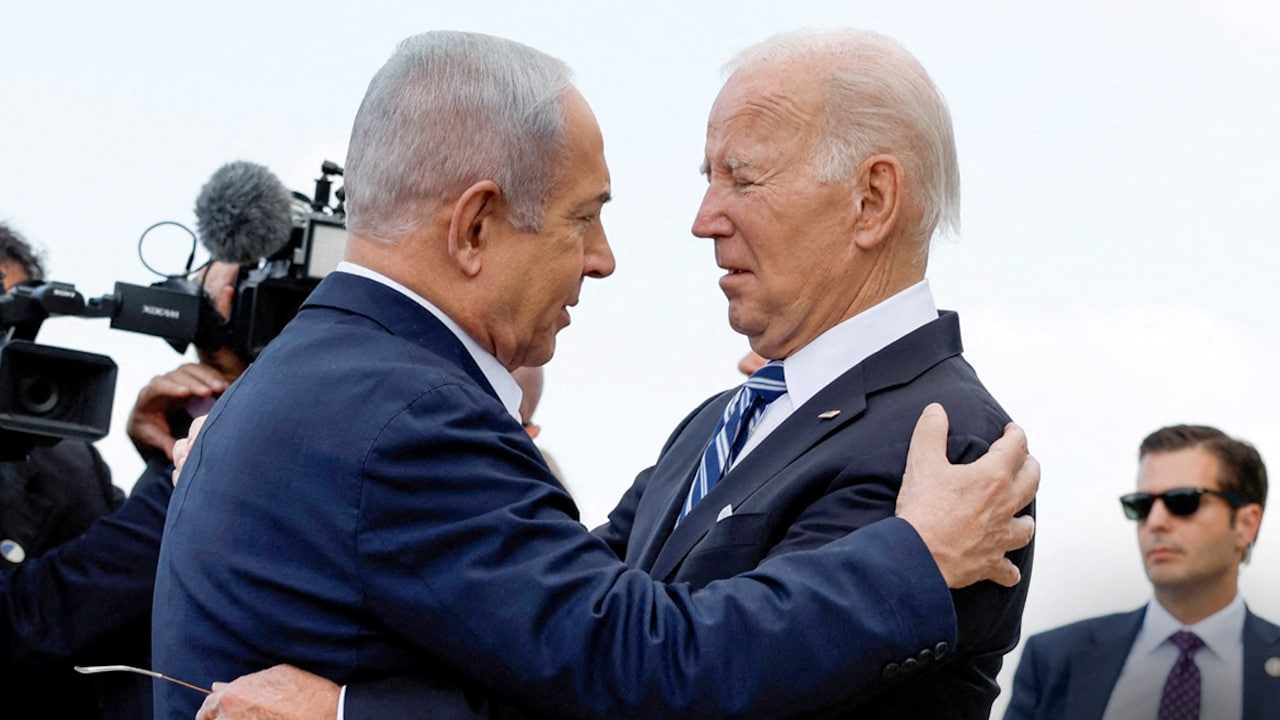
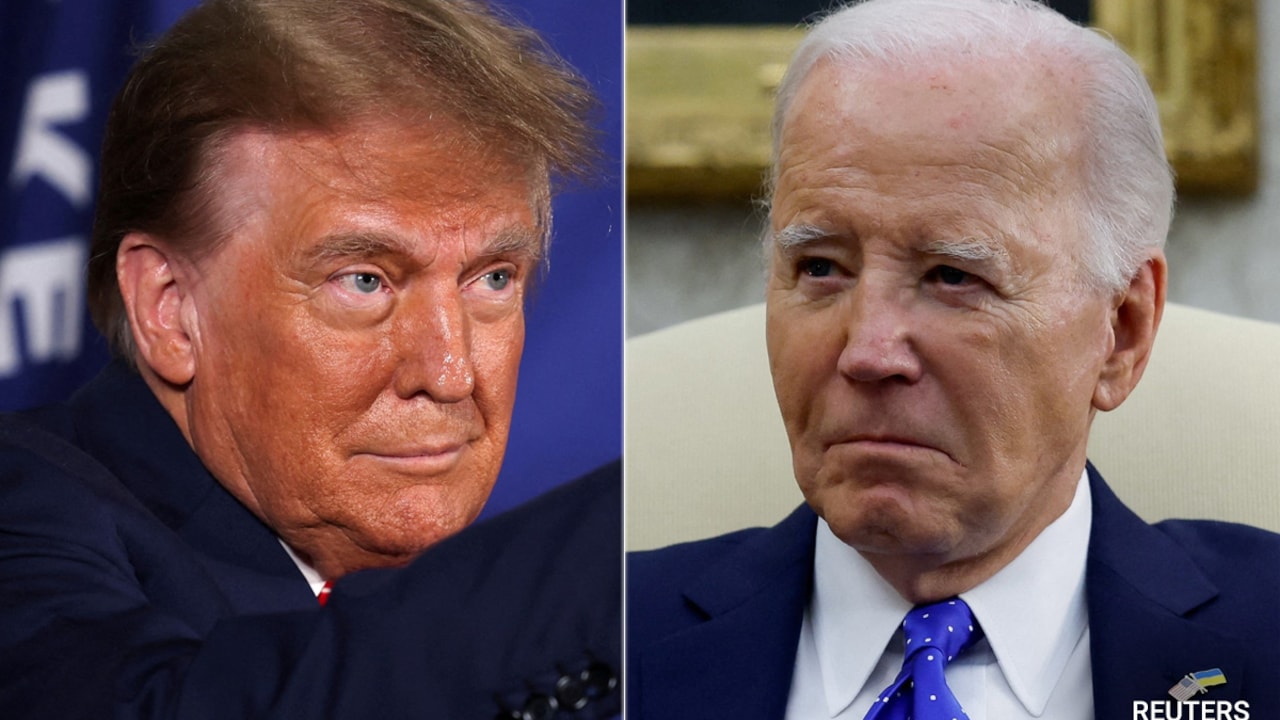
Consider a hypothetical traveler sitting on the carpet near Gate B14—call her Elena, a pediatric nurse trying to get from Chicago to Denver before her sister’s wedding rehearsal. To Elena, the delay is an acute personal crisis measured in missed toasts and non-refundable hotel nights. To the airline, it is an operational cascading failure. To Donald Trump, speaking at rallies and posting across social media platforms, that motionless plane on the tarmac is something else entirely: an indictment of the Biden administration’s stewardship of the Federal Aviation Administration.
When political rhetoric collides with aviation infrastructure, the resulting noise often drowns out the machinery underneath. Yet if you strip away the campaign-trail hyperbole, you find a story far more unsettling than a simple partisan shouting match. It is the story of an invisible architecture—wires, radar screens, aging copper lines, and exhausted human beings—buckling under the weight of modern ambition.
The Architecture of a Standstill
To understand why a political critique of the FAA strikes such a raw nerve with the American public, you have to understand what happens when the sky stops moving.
We tend to think of air travel as a miracle of aerodynamics, all gleaming aluminum and thrust. In reality, commercial aviation is a miracle of choreography. On any given day in the United States, the FAA manages more than 45,000 flights and 2.9 million airline passengers across more than 29 million square miles of airspace. Imagine a three-dimensional highway system with no shoulder, no traffic lights, and vehicles moving at five hundred miles per hour that cannot simply pull over when a fender bender happens up ahead.
According to statements made by Donald Trump during his campaign appearances and public commentary, the mass cancellations and chronic delays plaguing American flyers are the direct result of mismanagement under President Joe Biden and Transportation Secretary Pete Buttigieg. Trump has repeatedly argued that the administration prioritized ideological initiatives over core operational competence, pointing to high-profile system failures—most notably the January 2023 Notice to Air Missions (NOTAM) outage that grounded every domestic flight in the country for the first time since September 11, 2001—as proof of systemic decay at the agency.
Supporters of the Biden administration, alongside Department of Transportation officials, offer a sharply contrasting diagnosis. They point out that the post-pandemic surge in travel demand collided with years of deferred modernization, an acute shortage of certified air traffic controllers that predates the current White House, and airlines scheduling more flights than their crews or airport gates could realistically absorb during severe weather events. From their perspective, the administration’s passage of the Bipartisan Infrastructure Law—which injected billions of dollars into airport terminals, runway safety, and air traffic control facilities—represents the most aggressive attempt in decades to fix a system left vulnerable by years of underinvestment.
Both narratives live in the public consciousness. Neither fully captures the quiet, terrifying fragility of the room where your flight’s fate is actually decided.
Inside the Dark Room
Walk into a Terminal Radar Approach Control facility—a TRACON—and the first thing that hits you is the dark.
The room is chilled to keep the computers from overheating, illuminated only by the eerie emerald and cyan glow of radar scopes. Here, men and women wear headsets that press indentions into their temples over ten-hour shifts. They speak in a clipped, rhythmic cadence that sounds like jazz percussion: “Delta four-niner-two, descend and maintain four thousand, turn left heading two-seven-zero, cleared ILS runway two-two left.”
Every dot on those screens represents two hundred souls hurtling through thin air.
For years, the men and women in these dark rooms have been sounding an alarm that rarely makes the evening news until a holiday weekend melts down. According to data from the Department of Transportation’s Office of Inspector General and the National Air Traffic Controllers Association, the FAA has faced a persistent deficit of roughly 3,000 fully certified professional controllers compared to targeted staffing levels. At critical facilities serving the congested Northeast corridor—such as the New York TRACON, which manages the overlapping airspace of JFK, LaGuardia, and Newark—controller staffing has hovered around 54 percent of target capacity.
Stop and let that number sit for a second.
Fifty-four percent.
When a facility operates at barely half its intended strength, there is no margin for error. If two controllers call in sick with the flu, or if a thunderstorm cell parks itself over New Jersey at four o’clock on a Friday afternoon, the FAA cannot safely pack planes into the sky at normal intervals. The agency is forced to issue a Ground Delay Program or a Ground Stop. Suddenly, Elena’s flight in Chicago isn't moving, even though the sky above O'Hare is crystal clear blue. The bottleneck isn't the weather in Illinois; it is the human bandwidth in a darkened room eight hundred miles away.
Training a controller is not like onboarding a seasonal retail worker. Candidates must pass rigorous cognitive and psychological screening, survive the FAA Academy in Oklahoma City, and then spend anywhere from two to five years training on the live floor of a specific facility before they are certified to work airspace alone. During the COVID-19 pandemic, training pipelines ground to a halt for nearly two years. You cannot print a certified air traffic controller overnight, regardless of who sits in the Oval Office.
The Ghost in the Copper Wire
If staffing is the human vulnerability of the National Airspace System, technology is its silent, aging skeleton.
Think of the FAA’s infrastructure like a Victorian mansion that has been renovated one room at a time since 1958 without anyone ever rewiring the basement. While passengers stream 4K movies at 35,000 feet via satellite Wi-Fi, the ground systems keeping those planes apart frequently rely on technology that belongs in a museum.
A 2023 Government Accountability Office (GAO) report delivered a sobering assessment of the FAA’s air traffic control systems. Of the 138 systems reviewed by federal auditors, 51 were deemed unsustainable and another 54 were classified as potentially unsustainable. Together, more than three-quarters of the systems governing American skies were flagged as aging, difficult to maintain, or reliant on parts that manufacturers stopped making decades ago. Some facilities still rely on floppy disks, paper flight strips, and copper telecommunications lines vulnerable to water seepage and physical degradation.
When the NOTAM system crashed in January 2023—halting more than 11,000 flights across the United States in a single morning—investigators traced the collapse not to a sophisticated foreign cyberattack, but to a damaged database file corrupted during routine maintenance on a legacy system running on hardware from the 1990s.
To Trump and his allies, that outage was a smoking gun—a visible manifestation of an administration taking its eye off the ball while focusing on administrative initiatives, environmental grants, and diversity hiring metrics. Critics of the administration’s FAA leadership argued that prolonged vacancies at the top of the agency—the FAA went without a Senate-confirmed administrator for more than eighteen months between Steve Dickson’s departure in March 2022 and Michael Whitaker’s confirmation in October 2023—left the agency rudderless during a critical recovery period.
Conversely, aviation historians and administration defenders note that the bureaucratic inertia surrounding FAA modernization spans four presidencies. Transforming an active, twenty-four-hour-a-day safety network without shutting down global commerce is like performing open-heart surgery on a marathon runner mid-race. Under Whitaker’s leadership, the agency accelerated controller hiring—surpassing its goal of 1,500 new hires in 2023 and targeting 1,800 in 2024—while tightening oversight on both airline scheduling practices and aircraft manufacturing quality control.
The Invisible Tax on Ordinary Lives
Out in the terminal, nobody cares about GAO audit classifications or Senate confirmation timelines.
They care about the geometry of lost time.
When an airline cancels a flight at 8:00 PM, the economic damage doesn't show up neatly on a single federal ledger. It splinters into a million private emergencies. It is the small-business owner in Atlanta who misses a pitch meeting in Seattle and loses a contract that would have funded three new jobs. It is the cancer patient in Phoenix whose clinical trial appointment in Houston gets pushed back by six weeks because the connection in Dallas evaporated. It is the hourly baggage handler who gets screamed at by exhausted passengers because an algorithm three states away reassigned an aircraft tail number.
During the summer of 2022 and the infamous Southwest Airlines meltdown of December 2022—when more than 16,700 flights were canceled over ten days—the Department of Transportation under Pete Buttigieg responded by tightening consumer protection rules. The agency launched public airline cancellation dashboards, mandated automatic cash refunds for significantly delayed or canceled flights, and levied record civil penalties against carriers for chronic scheduling abuses and tarmac delays.
By 2024, those interventions, combined with stabilized airline staffing, began to show measurable statistical improvement. According to Department of Transportation data, the overall flight cancellation rate in the United States dropped below 1.2 percent during the first half of 2024—the lowest rate in a decade—even as total passenger volumes shattered all-time records, routinely exceeding three million travelers screened by the TSA on peak days.
Yet statistics offer cold comfort when you are the one percent.
For the traveler stuck on the carpet at Gate B14, the system feels broken because the friction of flying has become unbearable. Planes fly at nearly 90 percent load factors—meaning almost every seat on every flight is sold. In the old days of aviation, if your 2:00 PM flight canceled, the gate agent could easily tuck you onto the 4:00 PM flight. Today, the 4:00 PM flight is already full. So is the 6:00 PM flight. One cancellation doesn't cost you two hours anymore; it costs you two days.
The Weight of the Lever
Politics thrives on the illusion of the single lever—the seductive idea that one leader, one executive order, or one change of personnel at the top can instantly bend a massive, complex machine to their will.
When Donald Trump attacks the Biden administration’s handling of the FAA, he is tapping into a very real, very visceral public exhaustion. Americans feel that the foundational systems of daily life—the power grid, the supply chain, the air travel network—have grown brittle. They see ticket prices rising while legroom shrinks and reliability wavers, and they want someone in power to be held accountable for the decline.
At the same time, treating the National Airspace System as a partisan football obscures the uncomfortable truth that both parties will eventually have to confront: American aviation is running on borrowed time from an infrastructure standpoint, and fixing it requires sustained, unglamorous investment that outlasts any single four-year election cycle.
The radar scopes in the dark rooms don't register political parties. They register altitude, airspeed, and separation. They register physics.
Back at Gate B14, the amber letters on the monitor finally flicker. A new departure time appears, pushed back another ninety minutes. Around the terminal, a collective groan rises—a low, tired sound of resignation. Elena unplugs her phone from the pillar, gathers her garment bag, and walks toward the window to look out at the motionless jet. Across the tarmac, the fuel truck finally pulls away, leaving behind a faint shimmer of heat rising off the concrete into the gathering dusk.