The espresso machine at Bar Sant’Ambrogio in central Milan hisses at 7:45 in the morning, a sound as familiar to northern Italians as church bells.
Across the marble counter, Matteo—a composite character representing the thousands of mid-sized manufacturing owners across Lombardy and Veneto—stares at a paper statement he still insists on receiving by post. His family has banked with the same regional Italian institution for three generations. The branch manager knows his father’s name. He knows when Matteo’s daughter graduated from Bocconi. He knows that every August, cash flow tightens before the autumn orders clear. Discover more on a similar issue: this related article.
Yet the logo on the letterhead has changed twice in ten years. Soon, if the architects in Paris get their way, the entire architecture of Italian banking will shift beneath Matteo’s feet.
Crédit Agricole, the French cooperative titan known affectionately back home as La Banque Verte, is quietly executing one of the most audacious cross-border maneuvers in European financial history. Their ambition is blunt. They want to forge the third-largest banking group in Italy, standing shoulder to shoulder with domestic giants Intesa Sanpaolo and UniCredit. Additional reporting by Financial Times explores comparable perspectives on this issue.
To a casual observer reading financial wires, this looks like another dry exercise in corporate consolidation, a chess game of basis points, Tier 1 capital ratios, and regulatory filings.
Look closer.
When a foreign bank decides to become a systemic pillar of a neighbor’s economy, it ceases to be a story about spreadsheets. It becomes a story about sovereignty, the survival of small businesses, and the quiet disappearance of the local banker who used to bet on a handshake rather than an algorithm.
The Architecture of a Quiet Takeover
To understand why Paris is so obsessed with Milan, you have to follow the money—not the speculative capital sloshing around London or Frankfurt, but the stubborn, mattress-stuffed savings of ordinary Italian households.
Italy has long been a paradox. Its public debt hovers above 135 percent of GDP, a perennial headache for bond traders in Brussels and New York. Yet Italian private households are among the thriftiest in the developed world, sitting on more than five trillion euros in financial wealth. For decades, much of that money sat idle in low-yield checking accounts or domestic government bonds, guarded by a fragmented network of regional banks that operated like medieval city-states.
Crédit Agricole saw the vulnerability in that fragmentation twenty years ago.
While other foreign banks arrived in Italy with loud press conferences and expensive investment banking teams—only to retreat when margins compressed—the French took a different path. They bought brick by brick. They started in 2007 by acquiring Cariparma and FriulAdria when Intesa and Sanpaolo merged and regulators forced them to shed branches. They did not slap a foreign name over the doors immediately; they kept the local crests, the regional pride, and the familiar faces behind the glass.
Then came the 2021 acquisition of Credito Valtellinese, a fiercely independent Alpine lender. Then came strategic stakes in Banco BPM, Italy’s third-largest lender, creeping upward toward regulatory thresholds with the patience of a chess grandmaster who knows his opponent is running out of clock.
By the mid-2020s, Italy had officially become Crédit Agricole’s second domestic market, generating roughly a fifth of the group’s total net profit. With over six million Italian customers, more than 1,600 points of sale, and tens of billions in consumer credit through Agos and asset management via Amundi, the French were no longer guests in the house. They were redesigning the foundation.
Why Third Place Is the Only Place That Matters
In European banking, scale is no longer a vanity metric. It is an existential shield.
Consider what happens when a mid-sized bank tries to survive alone today. Every year, the cost of compliance with European Central Bank rules climbs higher. Cybersecurity threats require billions in defensive spending. Artificial intelligence models for credit scoring and fraud detection demand massive datasets that a regional lender in Emilia-Romagna simply cannot generate on its own.
Think of banking infrastructure like a modern high-speed rail network. Building the tracks, maintaining the signals, and powering the grid costs a fortune whether ten trains run on it or ten thousand. If you only run ten trains, ticket prices bankrupt your passengers. If you run ten thousand, the cost per rider drops to pennies.
Intesa Sanpaolo and UniCredit own the big tracks in Italy. Behind them sits a messy, contested middle tier—institutions like Banco BPM, BPER Banca, and the historically troubled Monte dei Paschi di Siena.
Crédit Agricole’s ambition to lock down the number-three spot is an attempt to build a third rail system before anyone else can merge the remaining pieces. By combining its existing Crédit Agricole Italia network with deeper control or formal integration with a major domestic player like Banco BPM, the French group secures enough scale to spread those colossal technology and regulatory costs across millions of accounts.
From a purely financial standpoint, the logic is airtight. Yet having spent years watching cross-border mergers unfold from the inside, I can tell you that what looks immaculate on an investment banker’s slide deck often feels like an earthquake at street level.
The Human Friction Behind the Balance Sheet
Walk into any merged bank branch six months after the celebratory champagne has gone flat, and you can smell the anxiety before you see it.
The fluorescent lights hum a little louder. The tellers—those who survived the initial voluntary redundancy packages—spend half their morning toggling between two incompatible computer systems that refuse to speak the same language. Customers wait forty minutes to resolve a blocked debit card because the legacy software from Milan does not recognize the new security protocol imported from Paris.
I remember sitting across from a veteran branch director in northern Italy during an earlier wave of consolidation. He kept an old brass paperweight on his desk—a relic from the regional Cassa di Risparmio where he had started as a clerk in 1988. He told me that before the merger, if a local winemaker needed forty thousand euros to replace hail-damaged barrels before the harvest, he could approve it by Tuesday afternoon. He knew the soil, he knew the man’s family, and he knew the wine would sell.
"After the restructuring," he said, tapping the brass weight, "I had to feed his tax returns into a risk engine calibrated in another country. The machine saw a seasonal dip in liquidity and flagged him as high risk. My signature became decoration."
This is the invisible stake at the heart of Crédit Agricole’s Italian push.
When a banking group scales up to claim the bronze medal in a G7 economy, centralization is inevitable. Underwriting standards harmonize. Risk committees move further away from the factory floor. Products become standardized—mutual funds manufactured by Amundi in Paris, insurance policies underwritten by Crédit Agricole Assurances, consumer loans processed through automated pipelines.
For retail customers, this often brings real benefits. Mobile apps actually work. International transfers happen in seconds rather than days. Mortgage rates become more competitive because a giant balance sheet can borrow cheaply on global markets.
For Matteo, our hypothetical manufacturer in Milan, the trade-off is far sharper.
When his order book fluctuates, he does not need a sleek user interface. He needs human judgment. If Crédit Agricole’s rise to number three forces remaining Italian competitors into defensive mergers of their own, the middle-market business owner loses his most potent weapon: the ability to walk across the piazza and pit one local banker against another.
The Political Nerve Center
Of course, banks in Italy have never been mere businesses. They are political ecosystems.
For generations, banking foundations—non-profit entities created during the privatizations of the 1990s—controlled the boards of Italy’s major lenders, using bank dividends to fund local hospitals, opera houses, restoration projects, and university scholarships. When a bank belonged to a city, its profits stayed in the city.
A French-controlled third pillar changes that gravitational pull. Even though Crédit Agricole operates through an Italian subsidiary with local board members and contributes heavily to Italian tax revenues, the ultimate strategic compass points north-west toward Montrouge, just outside Paris.
Rome watches this dynamic with barely concealed tension. Italian governments, regardless of whether they lean left or right, have long dreamed of a terzo polo—a purely domestic third banking giant capable of balancing Intesa and UniCredit while keeping decision-making power firmly inside Italian borders.
Watching a French cooperative—owned ultimately by millions of French regional mutual members—assemble that exact third pillar right under Rome’s nose stings national pride.
Yet Rome’s hands are largely tied by European Union single-market rules. The European Central Bank in Frankfurt actively encourages cross-border banking consolidation. Regulators argue, not without reason, that Europe will never build a true Capital Markets Union capable of rivaling Wall Street as long as banks remain trapped behind national borders. To Frankfurt, Crédit Agricole’s expansion in Italy is not an invasion; it is proof that the European banking union is finally functioning as designed.
What Happens When the Dust Settles
Let us admit something that financial analysts rarely put in their research notes: nobody truly knows if mega-mergers deliver the long-term magic they promise.
History is littered with banking marriages that promised cost savings and cross-selling miracles, only to drown in cultural clashes and departed talent. French corporate culture—hierarchical, analytical, deeply rooted in elite grandes écoles—does not always blend effortlessly with the improvisational, relationship-driven rhythm of Italian commerce.
Still, bet against Crédit Agricole at your peril.
Unlike Wall Street raiders looking for a quick flip, La Banque Verte operates on a generational clock. Because it is majority-owned by regional mutual banks rather than activist hedge funds demanding quarterly stock buybacks, it can afford to absorb short-term integration pain for ten-year market dominance. It has already proven in Italy that it knows how to wait out political storms, soothe regulators, and slowly digest acquisitions without triggering public backlash.
If they succeed in cementing that third-place throne, the ripple effects will touch every corner of Italian economic life.
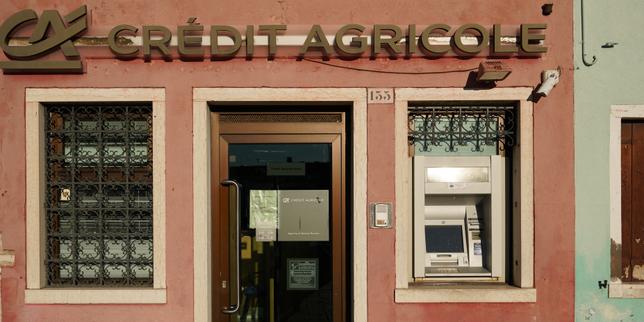
Smaller regional banks will face a stark choice: sell out at a discount or starve from lack of tech investment. Amundi’s dominance in managing Italian household wealth will deepen, funneling billions of euros of Italian savings into global asset allocation models designed in Paris. And millions of customers will gradually forget that the green logo above the ATM ever spoke with a French accent.
Back at Bar Sant’Ambrogio, Matteo finishes his espresso and folds his paper statement neatly into his jacket pocket. Outside, delivery vans rattle over the cobblestones, heading toward the ring road and the industrial estates beyond.
He does not read ECB regulatory filings, and he has never heard of a Tier 1 capital ratio. He only knows that next month he needs to finance a new automated lathe from Germany, and that when he walks through the glass doors of his branch at nine o’clock, he will be looking at the person across the desk—trying to figure out whether the real decision is being made in Milan, or three hundred miles away across the Alps.