Vienna smells like roasted chestnuts and damp limestone in late October, the kind of crisp autumn air that makes a café window feel like sanctuary. Inside a quiet corner booth near the Ringstrasse, a security analyst watches a diplomat walk past—briefcase tucked neatly, coat buttoned against the Danube chill, polite nod offered to no one in particular. On paper, the man holds accreditation. In practice, counterintelligence files tell a colder story.
Note: The analyst in that coffee shop is a hypothetical composite character built to ground how counterintelligence observers read Vienna's diplomatic streets; every policy detail, expulsion figure, and legal controversy that follows comes from verified reporting.
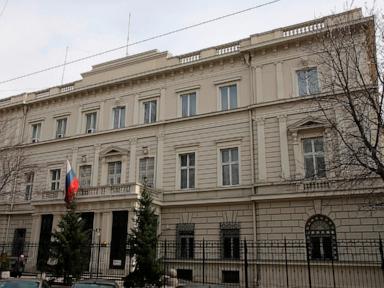
On October 23, 2026, Austria ordered four Russian diplomats to leave the country after officials linked them to espionage. Three worked at the Russian Embassy in Vienna; the fourth was accredited to the Organization for Security and Co-operation in Europe (OSCE), which keeps its permanent headquarters in the city. Vienna's Foreign Ministry used its customary, measured language—declaring them personae non gratae for "activities incompatible with their diplomatic status" and giving them days to pack.
Expelled. Again.
If you have watched European security over the past few years, a single expulsion can feel like background noise—another diplomatic tit-for-tat in a long, grinding winter between Moscow and European capitals. Yet four departures in late October do not arrive in a vacuum. Earlier in May 2026, Austria expelled three Russian embassy employees amid allegations tied to signals intelligence and a cluster of antennas mounted on diplomatic rooftops. And in mid-August, Austria's Ministry of Defense issued an internal warning circular to active-duty troops and reservists—complete with photographs and biographical details for 21 suspected individuals—after counterintelligence verification and investigative reporting by Proekt spotlighted ties between Russian diplomats in Europe and three intelligence services: military intelligence (the GRU), the Foreign Intelligence Service (SVR), and the Federal Security Service (FSB).
To understand why four expulsions carry weight far beyond four plane tickets, think of Vienna as a grand hotel with hundreds of rooms and a front desk that rarely checks IDs—at least when the guest claims to be aiming at someone else's door. That hotel comparison is a metaphor for how legal gaps have historically shaped Vienna's intelligence footprint. For decades, Austria's military neutrality and its role hosting major multilateral institutions—including the International Atomic Energy Agency, the United Nations Office on Drugs and Crime, OPEC, and the OSCE—turned the city into a crossroads where rival intelligence services brushed shoulders over espresso.
Why Neutrality Became a Blind Spot
I have sat in enough briefing rooms across Central Europe to know how frustrating it is when counterintelligence officers have a name, a face, and a pattern of behavior, yet still cannot pull a lever until a line is crossed. Neutrality is a proud constitutional identity for Austrians. It kept the country out of military alliances and positioned Vienna as a place where adversaries could talk when every other channel froze.
Still, neutrality is not armor.
Under existing Austrian espionage law, foreign intelligence activity is generally criminalized only when it directly targets Austrian interests. Read that sentence twice. If a foreign operative uses Vienna as a staging post to gather intelligence against another country, or against an international organization seated on Austrian soil rather than the Austrian state itself, prosecutors have historically faced narrow legal boundaries. Estimates cited in reporting on Vienna's intelligence scene have suggested that among roughly 17,000 accredited diplomats in the capital, as many as 7,000 could be tied to secret services—a stark reminder of how crowded the shadows around multilateral diplomacy can become.
Foreign Minister Beate Meinl-Reisinger and her liberal Neos party, governing alongside the conservative People's Party (ÖVP) and the Social Democrats (SPÖ) in Austria's three-party coalition, have pressed to close that gap. Negotiations have focused on expanding espionage laws so they punish intelligence operations aimed at international organizations and the European Union, not solely those directed at Austria itself.
Why does that distinction matter to a citizen who never sets foot inside a ministry? Because international bodies in Vienna deal with nuclear oversight, transnational crime, energy markets, and regional security. Compromising data or people around those institutions erodes trust across entire continents.
The Human Cost Behind a Diplomatic Cable
Spy novels love dead drops and trench coats. Real counterintelligence is quieter, messier, and far more personal.
Consider a hypothetical mid-level analyst at an international agency in Vienna—someone who wakes up to an alarm at 6:30 a.m., checks school schedules, and spends the day reviewing technical reports. This analyst is a hypothetical illustration of how routine professional lives intersect with intelligence pressure. They are not a James Bond figure. They are simply someone with access to useful context or contacts. One evening, a friendly acquaintance at a reception lingers a beat too long, asks pointed questions about staffing or travel, or offers a seemingly harmless favor. Most people brush it off. A few feel a slow knot tighten in their stomach.
When you live inside a city where intelligence outreach happens in plain daylight, paranoia is a real hazard—and so is naivety. You start wondering which introductions are genuine and which ones carry an agenda. You second-guess a casual message. Even when nothing dramatic happens, the quiet erosion of trust changes how people move through a room.
That human vulnerability is not abstract in Austria. In May 2026, a jury convicted former Austrian intelligence officer Egisto Ott of espionage following a high-profile case that shook public confidence in domestic security. Prosecutors alleged he passed sensitive data and secure devices to Russian intelligence and searched police databases to help track down people Moscow wanted—charges he denied. Watching someone who once guarded secrets stand accused of trading them forces an uncomfortable question on any society: how do you protect open institutions when the threat can come from outside or wear a familiar badge?
A City Rewriting Its Rules
Doubt lingers. It should. Expelling four diplomats does not magically empty an embassy compound or erase years of tradecraft. Moscow routinely threatens retaliation whenever European capitals expel its envoys, and intelligence services adapt—shifting from classic diplomatic cover to digital collection, cutouts, or indirect recruitment.
Yet something real is shifting in Vienna's posture. May's expulsions over suspected antenna-based signals collection, August's military warning backed by vetted dossiers, ongoing work to modernize espionage statutes, and October's expulsion of four officials across both the embassy and the OSCE mission point toward a harder line. Austria remains militarily neutral and continues to pair humanitarian and financial support for Ukraine with EU sanctions, but neutrality no longer means looking the other way when clandestine operations test its sovereignty and its multilateral hosts.
A metaphor worth keeping in mind: drawing a firm boundary in a crowded room does not start a brawl; it simply reminds everyone present where the walls are.
Outside, evening settles over Vienna's old stone facades. A tram bell clangs softly down the avenue, carrying commuters home past illuminated windows where ordinary lives unfold—and behind which diplomats, investigators, and policymakers keep testing where openness ends and self-defense begins.