Listen.
If you stand near the edge of a newly rezoned cornfield in Northern Virginia, or outside a dusty warehouse corridor in central Ohio, or beside an irrigation canal in the Arizona desert at three in the morning, you will hear it. It is not the wind rustling through dry stalks, and it is not the distant thrum of an interstate highway. It is a low, relentless, mechanical vibration—a sound somewhere between a jet engine idling three counties away and a refrigerator that never, ever cycles off.
For years, that hum was the soundtrack of the invisible cloud. When you tapped a screen to ask an artificial intelligence model to summarize an email, or streamed a high-definition movie on a rainy Tuesday, the magic felt weightless. Clean. Ethereal.
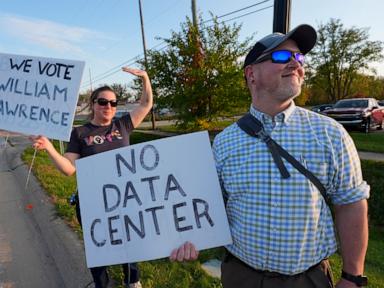
Then came the November 2026 midterm elections. And across the country, from county commission races to statehouse showdowns, voters walked into booths and pulled the lever against the hum.
They did not vote against the internet. They voted against the concrete boxes swallowing their skylines, draining their aquifers, and hiking their monthly electric bills. For the wealthiest technology companies on earth, the ballot box just delivered a brutal, unmistakable message. The era of silent, frictionless expansion is over.
The Myth of the Weightless Cloud
To understand why a local zoning board meeting in a rural county suddenly carries the weight of a Wall Street earnings call, you have to strip away the marketing language Silicon Valley used for two decades.
"The cloud" is the greatest branding triumph in modern corporate history. The word conjures images of vapor and sky, of data floating effortlessly above the messy physical constraints of earth, water, and copper wire. In reality, the cloud is heavy. It is made of poured concrete, steel rebar, miles of fiber-optic trenching, diesel backup generators, and millions of servers stacked floor to ceiling in windowless fortresses the size of aircraft carriers.
Consider a hypothetical family—let’s call them the Millers—living three miles outside a mid-sized town in the American Midwest. Five years ago, their view out the kitchen window was eighty acres of soybeans and a line of oak trees catching the sunset. Two years ago, a limited liability company with an anonymous, two-word name bought the land for triple its agricultural value. County officials, dazzled by promises of "digital infrastructure" and short-term construction jobs, fast-tracked the permits behind closed doors.
Today, the Millers look out at a forty-foot-tall beige wall wrapped in razor wire. The oak trees are gone. In the summer, when temperatures climb past ninety degrees, the facility’s evaporative cooling towers drink hundreds of thousands of gallons of municipal water every single day—water pulled from the same underground aquifer that feeds the Millers' well. And when the Millers open their utility bill each month, they find a mysterious new line item: a grid-modernization surcharge designed to pay for the high-voltage transmission lines built to feed their new neighbor's insatiable appetite for electricity.
Multiply the Millers by tens of thousands of households across Virginia, Ohio, Georgia, Texas, and Oregon. That is the tinderbox that ignited during the 2026 midterms.
When the Power Bill Becomes a Ballot Issue
I have spent years tracking how abstract technological shifts collide with physical reality, and I will admit something that rarely makes it into glossy tech forecasts: the math of artificial intelligence scares even the people building it.
Training and running modern AI models requires an almost incomprehensible amount of electricity. A single query to a generative AI system consumes roughly ten times the power of a traditional web search. Now scale that across billions of daily prompts, autonomous coding agents, and real-time video generation. According to federal energy projections and grid operators from PJM Interconnection to ERCOT, data center power demand in the United States is on track to double—and in some regions triple—before the end of the decade.
You cannot conjure gigawatts of electricity out of thin air. Someone has to build the substations. Someone has to keep aging coal and natural gas plants running past their scheduled retirement dates. Someone has to string high-tension wires across family farms and nature preserves.
And in regulated utility markets, the cost of building that infrastructure rarely falls solely on the tech giants demanding it. It gets socialized. It gets baked into the rate base and spread across every residential customer on the grid.
During the 2026 campaign cycle, political strategists on both sides of the aisle realized they had stumbled onto the rare issue capable of uniting suburban environmentalists, rural property-rights conservatives, and working-class families squeezed by inflation. You did not need a degree in electrical engineering to understand the grievance. Voters looked at their rising utility bills, looked down the road at a billion-dollar hyperscale facility employing only thirty full-time security guards and technicians, and did the math themselves.
In state legislative races across the Mid-Atlantic and the Midwest, candidates who had previously accepted generous campaign contributions from tech industry political action committees suddenly found themselves on the defensive. Challengers ran devastatingly simple ads: a split screen showing a family opening an overdue electric bill on the left, and a tech billionaire announcing record quarterly profits on the right.
The results were swift. Candidates campaigning on strict moratoriums, mandatory water-recycling rules, and "bring your own power" mandates for new data centers unseated entrenched incumbents who had championed lax industrial zoning. Local ballot measures stripping data center developers of decades-long sales and property tax exemptions passed by wide margins. Even in regions where the economy had long relied on tech investment, voters drew a hard line in the dirt.
The Anatomy of a Reckoning
What makes this political backlash so dangerous for Silicon Valley is that it strikes at the exact moment the industry has bet its entire future on physical scale.
Think of the AI boom as a gold rush where the gold is buried beneath a mountain of granite. To reach it, tech companies must spend hundreds of billions of dollars on capital expenditures—buying specialized chips, securing land, and locking up megawatts of power capacity years in advance. In corporate boardrooms from Redmond to Menlo Park, the prevailing wisdom has been that whoever builds the biggest clusters fastest wins the twenty-first century.
That strategy depends entirely on speed and predictability. A tech giant can raise fifty billion dollars in bond markets, design a custom chip architecture in eighteen months, and manufacture thousands of server racks. What it cannot manufacture is a favorable vote from a five-person county zoning board in rural Georgia.
History offers a clear warning here. In the late nineteenth century, American railroad barons believed their control over commerce made them untouchable. They bought land aggressively, extracted massive public subsidies, and treated local communities as mere obstacles between Point A and Point B. The result was the Granger movement—a fierce, grassroots political revolt by farmers and small-town residents that birthed state railroad commissions, rate regulations, and the first federal antitrust laws. The railroads kept running, of course, but their era of unchecked impunity died at the ballot box.
Data center operators are staring down their own Granger moment.
When a community feels ambushed by a project, trust evaporates overnight. Consider what happens when a tech company uses shell corporations and strict non-disclosure agreements to negotiate tax breaks with local officials before the public even knows a project exists. Even if the facility promises millions in future property tax revenue, the secrecy itself becomes the scandal. Citizens begin asking uncomfortable questions. If this project is such a blessing for our town, why did you hide it from us until the ink was dry?
Once that suspicion takes root, no amount of corporate philanthropy—no donated laptops for the high school, no sponsorship of the county fair—can put the genie back in the bottle.
Rewriting the Social Contract of the Grid
Yet anger alone does not keep the lights on, nor does it stop the world's transition toward automated computing. If we simply ban new data centers everywhere, the bottleneck does not disappear; it merely shifts, driving up the cost of digital services, stalling medical research, and pushing critical infrastructure overseas.
The real challenge—and the path forward that emerged from the sharpest policy debates of the 2026 midterms—lies in rewriting the social contract between Big Tech and the communities that host its machinery.
Some forward-thinking utilities and state regulators have already begun sketching the blueprint. In states like Ohio and Virginia, new tariff structures are forcing large-load customers—defined as facilities drawing more than fifty or one hundred megawatts—to pay upfront for the transmission upgrades they require, even if the project is later canceled. No more sticking residential ratepayers with stranded costs.
Other jurisdictions are moving toward strict resource-efficiency mandates. Instead of allowing data centers to evaporate millions of gallons of potable drinking water into the atmosphere, new permits increasingly require closed-loop liquid cooling systems that recirculate the same water endlessly, or direct-to-chip cooling technologies that slash thermal waste.
Even more ambitious is the push for "colocated" clean energy. Rather than plugging a city-sized server farm directly into an already strained public grid, regulators and activists are demanding that tech companies fund and build dedicated power generation—whether through utility-scale solar paired with massive battery storage, geothermal wells, or next-generation nuclear reactors—that adds new electrons to the system rather than cannibalizing existing ones.
Imagine a different future for our hypothetical family, the Millers.
Imagine that before a single bulldozer touched that eighty-acre soybean field, the developer held open town halls—without non-disclosure agreements—to lay out the exact water, noise, and power footprint of the facility. Imagine the company paid one hundred percent of the substation costs, funded a closed-loop cooling system that drew zero gallons from the local aquifer, and installed acoustic baffling walls engineered to drop that mechanical hum below the sound of rustling leaves. Better yet, imagine the waste heat generated by those thousands of humming servers was piped directly into neighboring commercial greenhouses, letting local farmers grow fresh produce through the dead of a Midwestern winter.
None of that is science fiction. Every single one of those technologies exists today. The only thing missing has been the financial and political incentive to make them mandatory rather than optional.
The Heavy Reality
For twenty years, the technology industry operated under a convenient illusion: that bits could exist without atoms, that software could conquer the world without ever asking permission from the dirt beneath its feet.
The 2026 midterms shattered that illusion for good.
Somewhere tonight, in a dimly lit municipal building with folding metal chairs and fluorescent lights that flicker slightly when the heater kicks on, a county commissioner is opening a thick binder labeled Zoning Application 402-B. Outside the window, the parking lot is full of pickup trucks and minivans. Inside, three hundred neighbors have taken time away from their families, their jobs, and their sleep to sign up for three minutes each at a brass microphone.
They are not Luddites. Half of them used a GPS app to find the building, checked their kids' soccer schedules on a cloud calendar in the lobby, and will ask an AI assistant to summarize the meeting minutes before they go to bed.
They understand the value of the machine. They just refuse to be fed into it.
And as the first speaker steps up to the microphone, clears their throat, and taps the stand to make sure it is on, the trillion-dollar giants of Silicon Valley are finally forced to do something they have avoided for a generation.
They have to listen.



