The grease trap at the Puritan Backroom does not care who wins a primary in New Hampshire.
At six in the morning on a Tuesday in Manchester, the industrial dishwashers roar with the indifferent rhythm of a diesel engine, spitting steam into the fluorescent-lit kitchen while trays of chicken tenders—marinated in the same secret pineapple-and-soy brine the Pappas family has used since the Eisenhower administration—are hauled out of walk-in coolers. Outside, the Merrimack River runs dark and cold beneath a sky the color of wet slate. Inside, before the first rotary club member claims a booth and before the local reporters start nursing lukewarm coffee near the register, the work is simply work. Heavy. Unforgiving. Entirely devoid of historical fanfare. For a more detailed analysis into similar topics, we suggest: this related article.
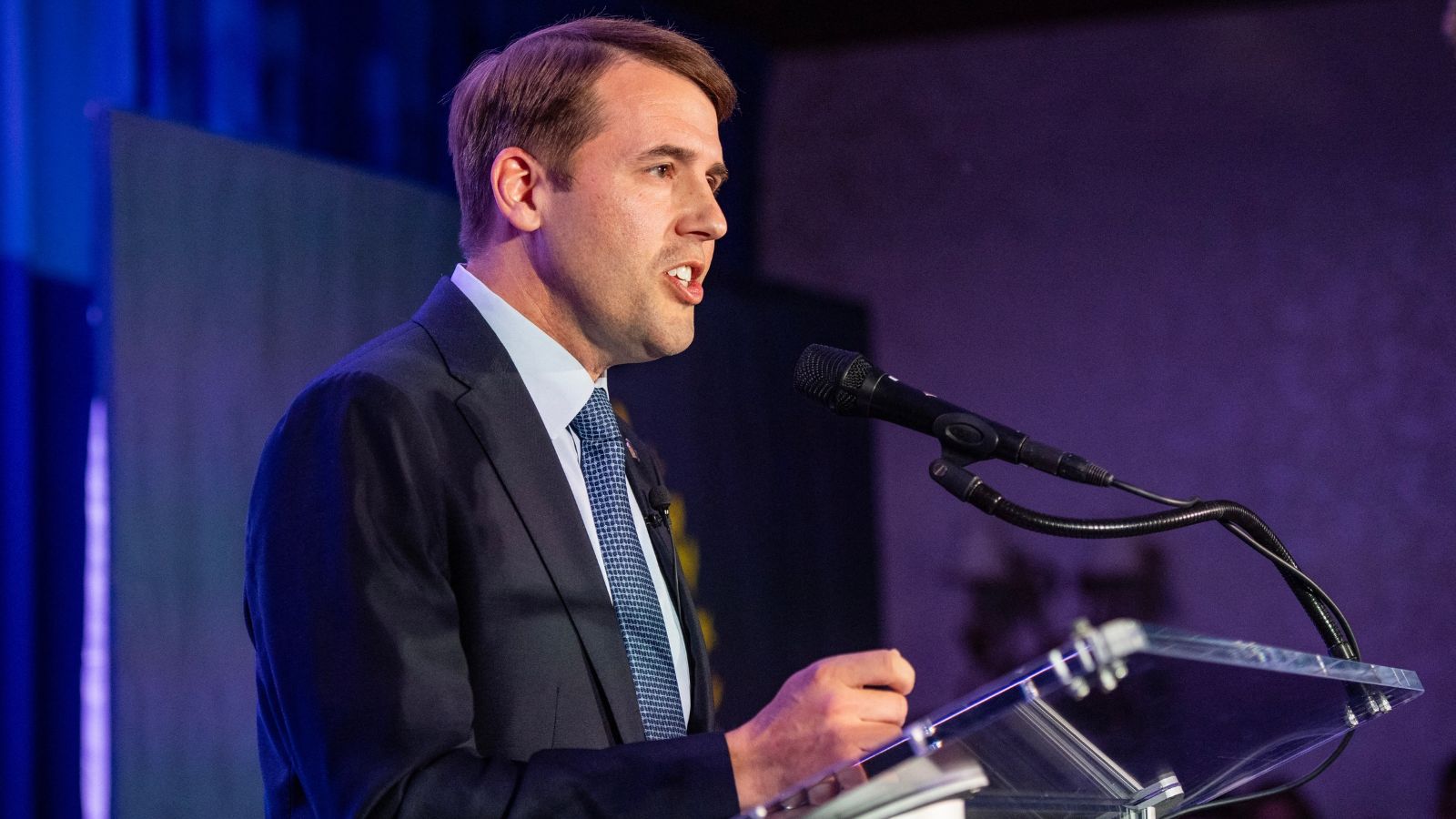
For most of his adult life, Chris Pappas lived inside that rhythm. Long before he became the U.S. Representative for New Hampshire’s 1st Congressional District, and long before the 2026 Senate race turned his name into a milestone printed in bold ink across every major political desk in Washington, he was the guy checking inventory sheets and greeting regulars at the family restaurant on Hooksett Road. You learn a specific kind of patience in a dining room that feeds thousands of people a week. You learn to read a table before anyone speaks. You learn that loud promises mean nothing if the food arrives cold, and that trust is built one unremarkable interaction at a time.
Wait. Look at the calendar. For additional context on this issue, extensive coverage can also be found on The New York Times.
Two hundred and thirty-seven years. That is how long the United States Senate existed without a single openly gay man taking the oath of office on the chamber floor. Think about that span of time. Empires rose and dissolved into dust. Men walked on the moon, mapped the human genome, and carried supercomputers in their trouser pockets. The Senate itself seated openly lesbian and bisexual women—Tammy Baldwin of Wisconsin shattered that barrier in 2013, followed later by Kyrsten Sinema and Laphonza Butler—and yet the upper chamber of American democracy remained an unbroken wall when it came to openly gay men.
Until a soft-spoken fourth-generation restaurateur from Manchester stepped into the open seat left by Senator Jeanne Shaheen’s retirement, won the 2026 election, and quietly rewrote the architecture of American representation.
To understand why this moment feels less like a fireworks display and more like a tectonic plate shifting ten miles beneath your boots, you have to strip away the cable-news confetti. History rarely announces itself with a trumpet blast when it is actually happening. Usually, it sounds like a screen door slamming shut on a brisk November morning in New England.
The Architecture of an Unspoken Rule
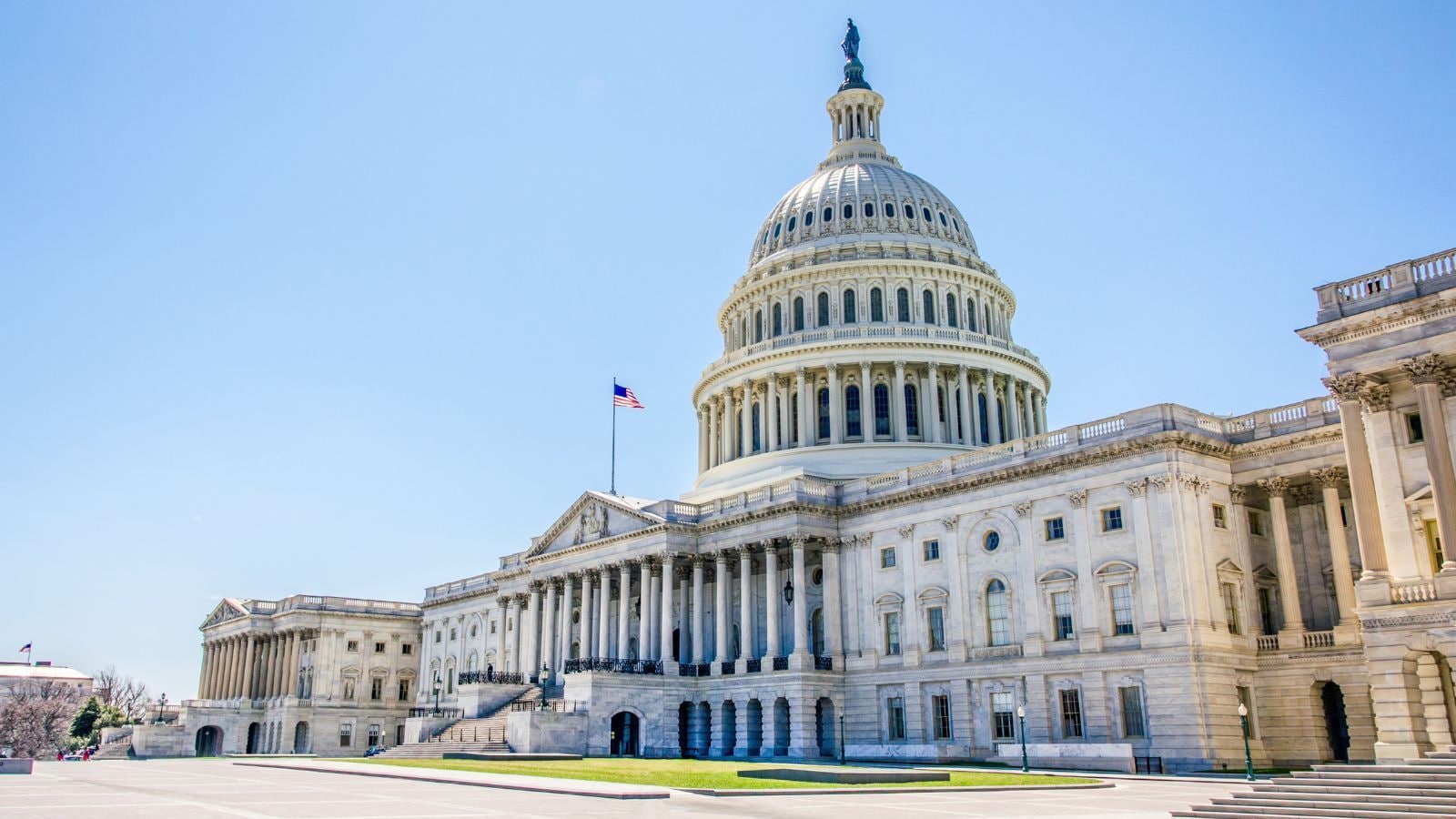
Let us step back into the corridors of the Capitol, not as tourists, but as people who have spent years watching how power actually moves through marble hallways.
There is a particular posture young staffers adopt when they first arrive in Washington. Call it the defensive tuck. You learn it in your twenties if you are a gay man working near the levers of national politics. You edit your pronouns at happy hour until you know who is buying the round. You keep the framed photograph on your desk angled slightly toward the window rather than the door. You develop an exhausting, second-nature radar for how much of yourself you can bring into a committee room before the air turns thin.
Imagine, as a hypothetical composite of a thousand real resumes sitting in Capitol Hill filing cabinets today, a twenty-four-year-old legislative correspondent named Julian. Julian grew up in a mid-sized town where the local paper still prints high school honor rolls on page four. He came to Washington because he believed, with the slightly bruised idealism that keeps the city running, that policy could make life fairer for people like him. Every morning on his walk past the Russell Senate Office Building, he passes the bronze busts and oil portraits of the men who shaped the republic. None of them looked at the world through his eyes. None of them ever had to calculate whether holding a partner’s hand on a Tuesday evening walk down Pennsylvania Avenue would cost them a committee chairmanship or a primary endorsement.
For decades, the unwritten rule of the United States Senate was simple: the House of Representatives could absorb the vanguard, because House districts are small, idiosyncratic, and forgiving of difference, while the Senate required the smooth, homogenized polish of statewide acceptability. A statewide race demands that you win over suburban commuters, rural loggers, retired schoolteachers, and skeptical independents all at once. Conventional wisdom—that stubborn, cowardly ghost that haunts every campaign strategy meeting—insisted that an openly gay man could never thread that needle.
Conventional wisdom was wrong. It was wrong because it mistook noise for reality.
How New Hampshire Broke the Mold
If you want to know how Chris Pappas dismantled a two-century barrier, do not look at viral campaign commercials or theatrical floor speeches. Look at the map of New Hampshire’s 1st Congressional District.
Political cartographers call it a swing district, though that phrase is far too tidy for the jagged reality on the ground. It stretches from the working-class mill neighborhoods of Manchester out to the academic enclaves of Durham, down through the conservative commuter towns along the Massachusetts border, and up into the rugged, independent-minded stretches of the Lakes Region and the White Mountains. It is a place where voters routinely split their tickets out of sheer Yankee stubbornness, electing a Republican governor on the exact same ballot where they send a Democrat to Congress.
Pappas first won that seat in 2018, becoming New Hampshire’s first openly gay member of Congress. Then he won it again in 2020. Then again in 2022. Then again in 2024.
Each cycle, national political operatives poured millions of dollars into the state, convinced that this would finally be the year the pendulum swung back and knocked him off his perch. Each cycle, they threw every partisan label in the book at him. And each cycle, Pappas kept showing up at town halls in Derry, diner counters in Rochester, and VFW halls in Laconia with the exact same unhurried demeanor.
There is an old rule in carpentry: if you want a joint to hold under winter frost, you do not rely on glue; you cut the wood so precisely that the grain locks together on its own. Pappas built his political durability the same way. He focused relentlessly on kitchen-table mechanics—lowering prescription drug costs, protecting clean drinking water from PFAS contamination, funding veterans’ clinics, and keeping small businesses afloat when supply chains snapped. He did not hide his identity, nor did he turn his biography into a lecture. When he married Vann Bentley in 2021, the news ran in the local papers with the warm, matter-of-fact tone of a community watching one of its own build a life.
By the time Senator Jeanne Shaheen announced she would not seek another term in 2026, leaving open a Senate seat that national strategists immediately circled in red ink as a must-win battleground, the old fear-mongering playbook had already lost its teeth in the Granite State. Voters did not have to guess what kind of senator Chris Pappas would be. They had watched him work for eight years.
The Invisible Weight of Being First
Still, even when the path is paved by years of steady work, crossing the threshold carries a weight that outsiders rarely appreciate.
I remember sitting in a cramped living room in Concord a few winters ago, watching an older man in a faded flannel shirt listen to a candidate talk about health care. Afterward, over Styrofoam cups of black coffee, the man—a retired machinist in his late seventies who had spent forty years keeping his personal life locked inside a closet so tight even his siblings barely knew him—said something that has stayed with me ever since. "When you grow up thinking you have to disappear just to stay safe," he murmured, staring down at his knuckles, "you don't actually believe the rules have changed until you see someone standing right in the middle of the room where they used to throw you out."
That is the invisible stake behind a headline that otherwise reads like a dry civics trivia question.
A legislative body is not merely a machine for passing bills and confirming judges. It is a mirror a nation holds up to itself to decide who belongs inside the circle of full citizenship. Every time a barrier falls in that chamber—when Hiram Revels took his seat in 1870, when Hattie Caraway became the first woman elected to the Senate in 1932, when Tammy Baldwin walked down the center aisle in 2013—the geometry of what feels possible shifts for millions of people who will never step foot inside the Capitol.
Consider what happens next in small towns across America when an openly gay man sits on the Senate Judiciary Committee or questions a cabinet nominee on the Armed Services panel. A teenager sitting at a kitchen table in Ohio or Texas, terrified of what his parents will say if he tells them the truth about who he is, sees a man from New Hampshire doing the most ordinary, authoritative work in the country. Not as a punchline. Not as a cautionary tale. Not as a footnote. Just as a United States Senator.
And yet, honesty demands we admit something uncomfortable: milestones do not magically cure the anxieties of the moment we are living through.
Even as Pappas prepares to take his seat in the 120th Congress, the broader terrain for LGBTQ+ Americans remains jagged and contested. Across dozens of state legislatures, battles over healthcare access, school curricula, and basic nondiscrimination protections continue to rage with fierce intensity. Celebration, in this climate, can feel fragile—like lighting a match in a stiff November wind. Nobody who has lived through the whiplash of American cultural politics is naive enough to think one election ends the argument.
What Changes When the Door Opens
So what actually changes when Chris Pappas raises his right hand on the Senate floor?
First, the excuse dies. Every political consultant who ever whispered behind closed doors that a candidate was "too risky" for a statewide ballot because of whom he loves just lost their favorite talking point. Data has a ruthless way of silencing prejudice in politics; once a candidate proves that an openly gay man can win a competitive Senate race in a purple state, the donor class and party committees stop treating identity as a liability and start treating competence as the only metric that matters.
Second, the conversation inside the room changes. Anyone who has ever worked in policy knows that the most important decisions rarely happen during televised hearings. They happen in the quiet ten-minute conversations in the cloakroom, in the phrasing of an amendment drafted at eleven o'clock at night, and in the instinct to ask a question nobody else in the room thought to raise because none of them ever lived the consequence of the law being written. When your lived experience is finally present at the table, blind spots shrink.
Third, the mythology of the outsider begins to dissolve. For generations, gay men in American public life were cast in one of two tragic roles: the brilliant, tortured secret kept behind velvet curtains—men like Senator David Walsh of Massachusetts in the 1940s, whose private life was weaponized in headlines and whispered about in cloakrooms—or the flamboyant foil used to stoke cultural panic during election years. Pappas represents the quiet, radical power of normalcy. He is a guy who loves his home state, knows the price of cooking oil and property taxes, and happened to marry the man he loves.
There is nothing flashy about that. Which is precisely why it is unstoppable.
Back on Hooksett Road
If you drive past the Puritan Backroom on a Friday night in Manchester, the parking lot is packed bumper-to-bumper with sedans, pickup trucks, and minivans bearing plates from across New England. Inside, families crowd around wooden tables piled high with baskets of chicken tenders, mudslides, and plates of fried haddock. Nobody is delivering speeches about constitutional history. Kids are dropping French fries on the floor. Grandparents are celebrating anniversaries. Waitresses are weaving through narrow aisles with trays balanced effortlessly on one palm.
This is the world that shaped the man who will soon walk onto the floor of the United States Senate.
History loves dramatic monuments, carved into granite and lit by floodlights against the night sky. Real progress looks much simpler. It looks like a door swinging open on well-oiled hinges, a chair being pulled up to a long mahogany table, and a quiet voice from New Hampshire answering aye when the clerk calls the roll.